
News
Obama issues Syria “red line” warning over use of chemical/ biological weapons
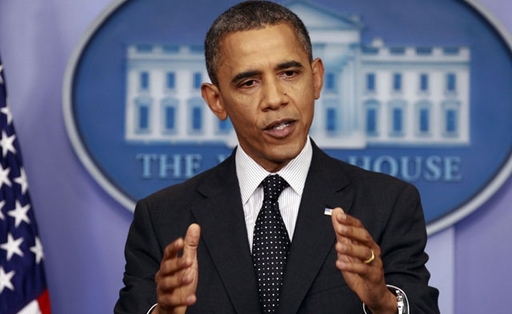
Obama said U.S. officials were monitoring the situation ‘‘very carefully,’’ and have assembled a range of contingency plans.
His declaration of a ‘‘red line’’ comes two days before the top U.S. diplomat for the Mideast, Beth Jones, leads an interagency delegation to Turkey to begin work on plans for worst-case scenarios in Syria, paramount among them a chemical or biological weapons attack on regime opponents.
State Department spokeswoman Victoria Nuland said representatives of the Defense Department and U.S. intelligence community would be represented in the delegation. The U.S. and its NATO ally will sit down ‘‘together to share operational picture, to talk about the effectiveness of what we’re doing now and about what more we can do,’’ she said.
The planning work follows a meeting earlier this month between Secretary of State Hillary Rodham Clinton and Turkish Foreign Ahmet Davutoglu in Istanbul, where they announced the creation of a Syria response team to coordinate military, intelligence and political strategies in the event of a chemical attack.
Israel is among the most concerned. It is worried that as Assad’s grip on power loosens, it could transfer weapons to groups such as Hezbollah or Hamas that it has supported in the past. And it fears that if rebels seize chemical or biological agents, they could fall into the hands of al-Qaida linked fighters or other extremist elements now fighting for the opposition.
In Syria, government forces heavily shelled the cities of Aleppo and Daraa and a suburb of Damascus on the second day of the major Muslim holiday of the Eid al-Fitr marking the end of the holy month of Ramadan. Up to 30 people were killed, rights groups and activists said. After a lull in the civil war on the holiday’s first day, Monday’s renewed fighting showed Assad’s regime was not letting up on its drive to quell the 18-month-old uprising out of respect for the occasion.
The U.S. has limited its aid so far to humanitarian relief and communications equipment while trying to help the opposition come up with a blueprint for a post-Assad future, which the U.S. says is only a question of time. The approach aims to avoid a repeat of the post-Saddam chaos in Iraq by preventing sectarian strife and ensuring that the state continues to supply water, electricity and other basic services. Officials have called this regime change with a ‘‘soft landing.’’
