
News
Guinea: Vote counting continues after legislative elections that could usher in a new level of political stability
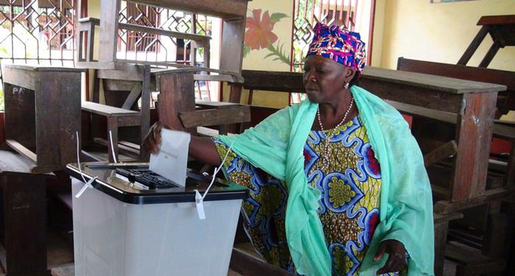
Voter casts ballot in Guinea legislative elections. PHOTO/Reuters
Guineans voted in the first parliamentary elections for more than a decade in the once troubled west African nation, after numerous delays.
Voters on Saturday, September 28, chose from more than 1,700 candidates vying for 114 seats in a national assembly, which will replace the transitional body that has been running the country since military rule came to an end in 2010.
The vote, originally due within six months of the swearing-in of President Alpha Conde in 2010, had been delayed amid disputes over its organization, stoking tensions that have dogged Guinean politics since the country’s independence in 1958.
No major incident was reported Saturday.
“We faced the challenge of a huge turnout, and a participation rate of over 80 percent. We had a calm day of voting and there was no violence – Guineans behaved well,” election commission chief Alpha Yero Conde told reporters.
Large crowds gathered in the capital Conakry for what was regarded as Guinea’s first genuinely democratic parliamentary election. Polls held during the military dictatorship in 2002, which were faced with opposition boycotts, were widely dismissed as a sham.
“These elections will allow us to emerge from a chaotic 5-year transition,” the president told reporters on the eve of the vote, expressing the hope that Guinea was about to enter a new era of prosperity.
