
Politics
“Fiscal Cliff”: What Obama and Boehner stand for
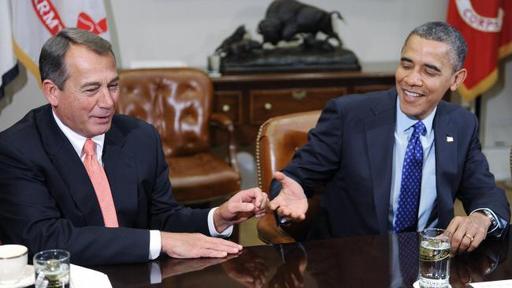
Economists say the tens of billions of dollars separating the president and speaker are relatively minuscule, especially when compared to the size of the U.S. economy, which exceeds US$15 trillion a year.
“It’s not vanishingly small, but it is minor,” said Alan D. Viard, a tax scholar at the conservative American Enterprise Institute. “It certainly would be a disappointment if that minor of a gap would end up blocking an agreement.”
Even though Obama’s and Boehner’s dollar differences are small, one hindrance to a deal could be the symbolic political consequence of retreating on their numbers, even just by a little.
For Boehner to add, say, another US$100 billion to the tax increase over 10 years could well mean that people with incomes well below US$1 million a year would get a tax increase, something he wants to limit.
On the other hand, adding US$100 billion more in spending cuts could mean a deeper hit than Obama wants to Medicare. The president prefers to limit Medicare cuts to the reimbursements that doctors and other health care providers receive, but ever deeper cuts could mean more doctors would be likely to stop treating Medicare patients — an outcome Democrats don’t want.
None of this means there aren’t real budget differences between Democrats and Republicans.
Obama says he’s proposed raising taxes by US$1.2 trillion over the coming decade by boosting the current top 35 percent rate to 39.6 percent for income over US$400,000, plus other increases on the highest earning Americans. He’s also offered about $1.2 trillion in spending cuts over 10 years, including US$400 billion from Medicare and Medicaid, the health care programs for the elderly and poor whose defense Democrats consider precious priorities.
