
News
Ethiopian Prime Minister visits Sudan, trying to ease deadly crisis
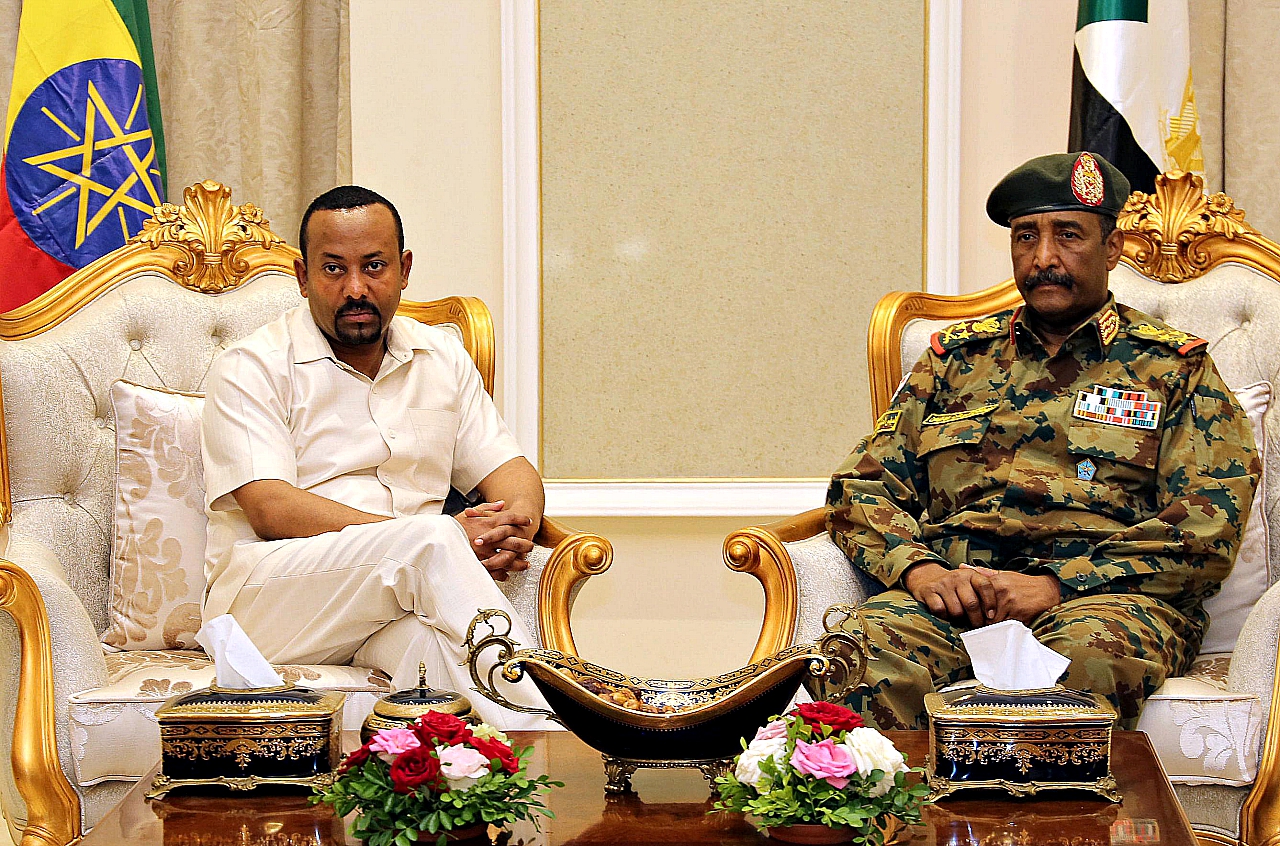
AP | Ethiopia’s prime minister arrived in Sudan on Friday to try and mediate between the ruling military and the country’s protest leaders amid an army crackdown.
Prime Minister Abiy Ahmed first met with Sudanese generals who in April removed longtime autocrat Omar al-Bashir and took over the country after 4 months of mass protests against his rule. The protesters, however, remained in the streets, demanding the military hand over power to civilians.
The Ethiopian reformist Prime Minister – who since taking office a year ago has been at the center of high-profile diplomatic efforts in the Horn of Africa region, including a surprise restoration of diplomatic ties with rival Eritrea – held talks with Gen. Abdel-Fattah Burhan, the head of the ruling military council, in Khartoum.
The visit comes after the African Union (AU), based in Ethiopia, suspended Sudan on Thursday over the deadly crisis roiling the nation. The AU also threatened “punitive sanctions” if the military does not quickly relinquish power to civilians.
The crackdown – a new violent chapter for Sudan – started on Monday when security forces dispersed the protest movement’s main sit-in outside the military headquarters in the capital, Khartoum. Protesters alleged that since then, the paramilitary Rapid Support Forces and other security forces have carried out attacks in over a dozen cities and towns.
As Abiy met with Burhan and other generals, the head of the Rapid Support Forces (RSF), Gen. Mohammed Hamdan Dagalo – better known as Hemedti – was “conspicuously absent” in photos shared by the Ethiopian prime minister’s office, according to Rashid Abdi, a former project director with the International Crisis Group.
“That is significant,” he wrote on Twitter. “Lends credence to reports of push to sideline the RSF commander.”
Dagalo’s forces are blamed for most of the atrocities in the crackdown. The RSF grew out of the Janjaweed militias used by al-Bashir’s government to suppress the Darfur insurgency in the early 2000s.
Later Friday, Abiy also held talks with the Forces for the Declaration of Freedom and Change, a coalition of political groups and parties representing the protesters.
After al-Bashir’s ouster, the Ethiopian prime minister had congratulated the Sudanese people for their “resilience in leading change” toward a democratic Sudan. He had met with Burhan during the general’s visit to Addis Ababa last week, when he committed to “non-interference” in the situation but urged inclusiveness in the political process.
Awol Allo, a lecturer in law at Keele University, and an Africa analyst, told The Associated Press he believes Ethiopia’s Abiy stands a “much better chance” than anyone else in bringing both sides in Sudan’s crisis together.
Abiy “brings a lot to the table, from his own experience of leading a complex transition to a massive amount of positive energy, and the weight of Ethiopia’s power within the region,” the analyst said.
Talks between the ruling military council and protesters over the make-up of a transitional government following al-Bashir’s ouster were halted amid the crackdown.
Leaders of the protest movement turned down an offer by Burhan to resume talks this week, saying they could no longer trust the generals while troops are shooting and killing protesters.
The Sudanese Professionals’ Association, which has been spearheading the anti-government protests since December, said it would instead press its campaign of civil disobedience until the military council is ousted and killers of protesters are brought to justice.
