
News
COVID-19: ECLAC predicts further plunge in Caribbean FDI
In the Caribbean and Latin America, the COVID-19 crisis shows the growing importance of stimulating regional cooperation and the development of a regional health-care and medical devices market and of cross-border industrial centers.
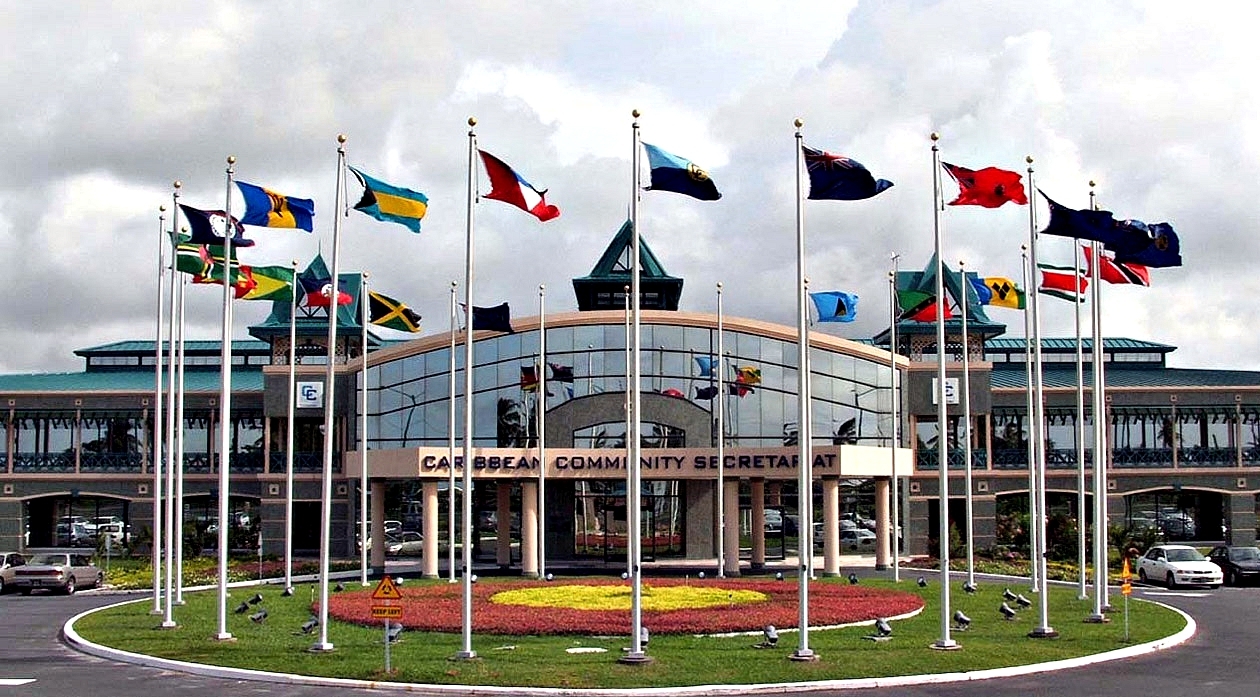
The Economic Commission for Latin America and the Caribbean (ECLAC) says foreign direct investment (FDI) in the region fell significantly in 2019 and is expected to plunge even further this year.
In its annual study titled, “Foreign Direct Investment in Latin America and the Caribbean 2020,” ECLAC said that the region received US$160.721 billion in FDI in 2019, at least 7.8 percent less than in 2018.
ECLAC forecast that the decline will intensify sharply in 2020, when inflows are expected to drop by between 45 and 55 percent as a result of the crisis stemming from the COVID-19 pandemic.
Worldwide, ECLAC said the amount of FDI is seen shrinking by 40 percent in 2020 and by between 5 and 10 percent in 2021. “Thus, FDI would mark in 2021 its lowest value since 2005,” ECLAC said.
The Caribbean and Latin America is the region forecast to have the steepest decline, according to the document that was launched by ECLAC’S Executive Secretary, Alicia Bárcena, during a virtual press conference.
Since 2012, when a historic high was reached, the report notes “foreign investment flows have experienced a nearly uninterrupted decline in the Caribbean and Latin America, which has demonstrated – primarily in South American countries – the relationship existing in the region between FDI flows, the macroeconomic cycle and commodity price cycles.”
As in prior years, the study points to “great heterogeneity in national results and no subregional pattern emerges”.
In 17 countries, the report says inflows declined in 2019 versus 2018; in 9 others, the document says inflows increased.
The report states that in the Caribbean, Trinidad & Tobago had positive levels of investment after 3 years of negative growth.
In Guyana, as in 2018, “there was a very significant year-on-year increase, fueled by investment in hydrocarbons exploitation and related sectors, positioning the country as the second-largest FDI recipient in the subregion.”
In analyzing the 2010-2019 period, it says Europe consolidated its status as the most important investor in the region, followed by the United States.
Intra-regional investments, meanwhile, fell from 12 to 6 percent and the study states notes that, of all sectors, renewable energy accounted for the greatest number of project announcements in the last 5 years.
“The contributions that FDI has made in the region have been relevant, as a complement to national investment and a source of new capital, as well as for expanding export-related activities and developing the automotive industry, telecommunications, some segments of the digital economy and also sectors that have acquired strategic importance today in the context of the COVID-19 pandemic, such as the pharmaceutical industry and that of medical devices.”
However, it states “the structural problems of the region’s economies and new international scenarios also make it necessary for FDI and the policies that seek to promote it to be part of a broader project that drives a progressive structural change, meaning a change that would allow for increasing productivity and achieving social inclusion, equality and environmental sustainability.”
Bárcena said that the FDI received by the Caribbean and Latin America “has not catalyzed relevant changes in the region’s productive structure, largely because the policies to attract these flows have not been articulated with those focused on productive development.”
“FDI offers major opportunities to move towards a new sustainable economy. It is urgently necessary to restore the role of industrial policies as an instrument for transforming the region’s productive structure.”
Bárcena said that ECLAC has identified 7 dynamic sectors that have a strategic role to play, “because they promote a technical shift, create jobs and reduce external constraints and the environmental footprint”.
“These sectors, which could be bolstered by FDI, are the transformation of the energy matrix based on renewable energy; sustainable mobility and urban spaces; the digital revolution for sustainability; the health-care manufacturing industry; the bio-economy, meaning sustainability based on biological resources and natural ecosystems; the circular economy; and sustainable tourism,” the ECLAC chief said.
In the second chapter of the report, entitled “Towards a new, post-pandemic global productive geography: The reorganisation of global value chains,” ECLAC outlines, as challenges for the region, containing the pressure for relocating nationally (reshoring) in the United States, seizing opportunities for relocation that would allow for strengthening regional productive systems (nearshoring), and articulating strategies to attract FDI with industrial policies in order to create local capacities.
The third chapter in the study indicates that the Caribbean and Latin America has achieved “a good position in terms of exporting medical devices, driven precisely by transnational corporations”.
“In the Caribbean and Latin America, the COVID-19 crisis shows the growing importance of stimulating regional cooperation and the development of a regional health-care and medical devices market and of cross-border industrial centres. The medical devices industry requires manufacturing, scientific and technological capacities that are present in several countries in the region, the potential of which was revealed amid the health emergency.”
“The development of national industrial and technological capacities and improved access to medical devices for the inhabitants of the Caribbean and Latin America is a strategic challenge,” the report states, adding that, to successfully tackle it, “national and regional policy guidelines will be needed”. -(CMC)
