
News
CARICOM tries to resolve vote dispute in oil-rich Guyana
Fifteen-nation CARICOM intervens in dispute that erupted after March 2 elections
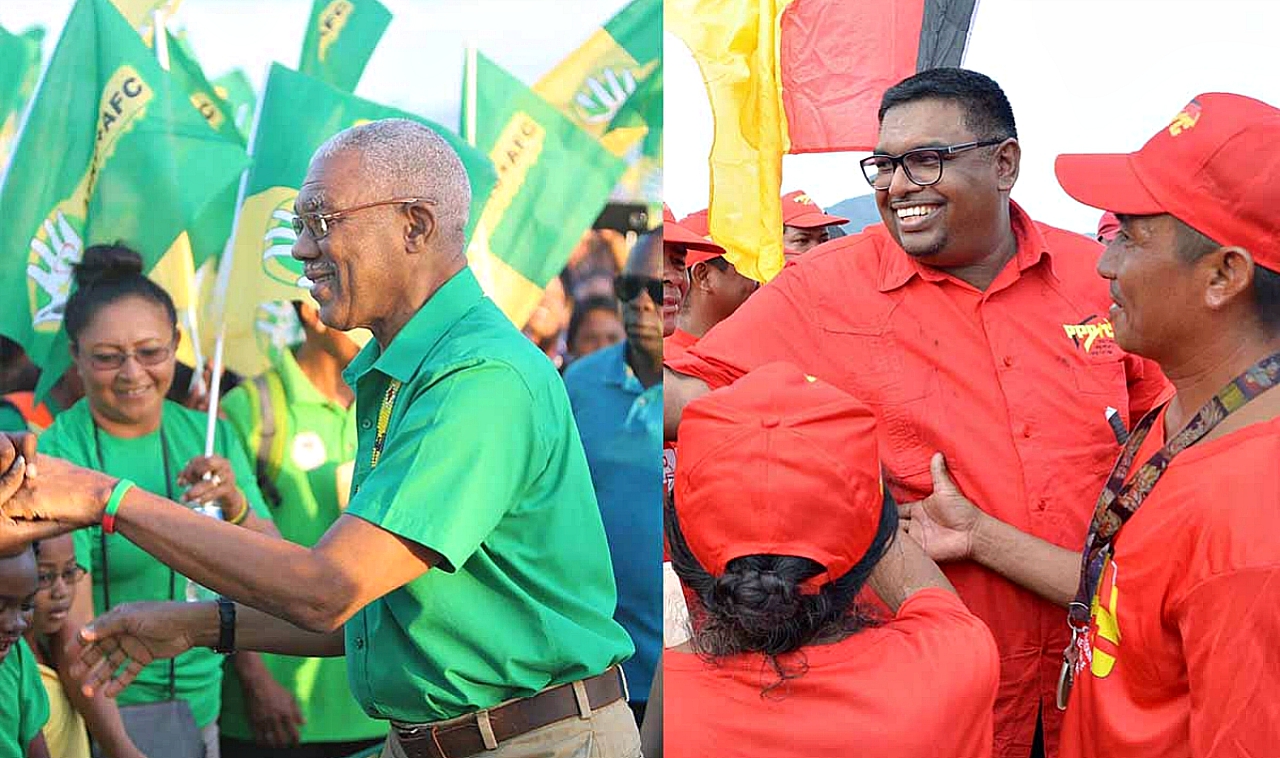
AP | Several Caribbean prime ministers traveled to Guyana on Wednesday to try to help resolve an election crisis in the South American country, where rival factions are competing for control of massive oil revenues expected in years to come.
The 15-nation Caribbean Community (GARICOM) was intervening in a dispute that erupted after March 2 elections in which both of the main political groups claimed victory, prompting street protests.
The political instability comes as the country faces the prospect that oil revenues in the next decade could make it one of the wealthiest in the hemisphere.
“The delegation will meet with the leadership of all parties that contested the poll,” the Community said in a statement.
The regional bloc said its delegation includes current chair and Barbados Prime Minister Mia Mottley, Keith Rowley of Trinidad & Tobago, Keith Mitchell of Grenada, Roosevelt Skerrit of Dominica and Ralph Gonsalves of St. Vincent & the Grenadines.
The governing coalition led by incumbent president David Granger said it won the elections by 2 seats in the 65-seat parliament, while the main opposition People’s Progressive Party, or PPP, said it won by 3 seats.
The factions are mainly divided along ethnic lines, with Granger’s coalition supported by the Afro-Guyanese population and the PPP opposition backed by the Indo-Guyanese community. There is also a smaller number of indigenous Guyanese.
A court was expected to rule this week on the election, whose results have yet to be formally announced.
The dispute had led to street protests, mostly by opposition supporters, in the past week. Both sides have appealed for calm. The protests have faded for now.
This year’s elections have been widely viewed as the most crucial since independence in 1966, largely because the country is one of the world’s newest producers of oil and could earn billions in revenues.
Guyana recently sold its first million barrels to markets in the Far East and southern U.S. states. It will get 4 more similar sized shipments this year worth about US$300 million as part of production-sharing arrangements with a consortium led by ExxonMobil, along with Hess Oil of the U.S., and Nexen of China.
