
Opinion
Brazil and Africa: The Rhythm Behind a Rising Trade Partnership
Why African exporters should look past Brazil’s samba and see a $2 trillion economy hungry for what the continent produces.

By Jacqueléne Coetzer
Rio de Janeiro’s beaches and São Paulo’s skyline tend to dominate the world’s imagination of Brazil. But behind the carnival imagery sits the ninth-largest economy on Earth, a nation of 215 million consumers, and – less obviously to many African exporters – one of the continent’s most natural trading partners.
Brazil is home to roughly 100 million people of African descent, the largest Afro-descendant population outside Africa itself. That demographic fact is not a curiosity. It is a market signal.
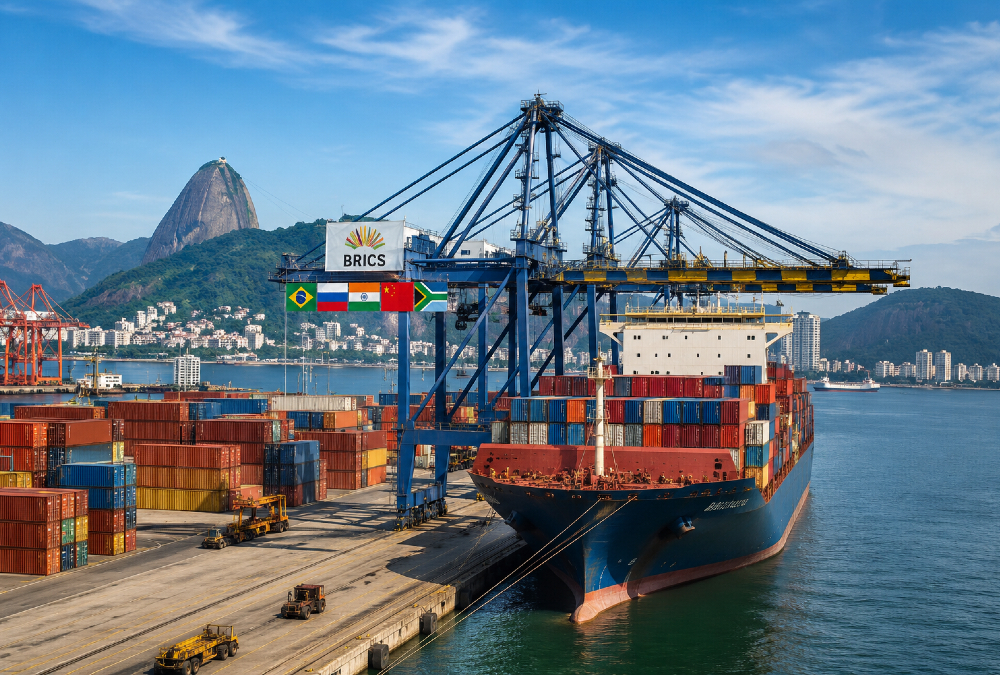
For African businesses eyeing expansion beyond traditional partners in Europe, China, and the Gulf, Brazil deserves a harder look. As a founding member of BRICS alongside South Africa, Brazil shares the continent’s stake in reshaping global trade rules, from climate finance to commodity pricing.
The two economies are, in many respects, mirror images: Africa’s mineral wealth and agricultural output map neatly onto Brazil’s industrial and agrochemical strengths. That complementarity, rather than competition, is what makes the relationship worth building.
A Market of Complements, Not Rivals
Trade between Brazil and Africa already flows in both directions, even if the traffic remains lighter than its potential suggests. African exporters ship gold, aluminum, phosphates, coffee, cocoa, cashews, and cotton into Brazilian ports, alongside natural oils and botanicals feeding Brazil’s sizable cosmetics industry.
In return, Brazilian firms send machinery, fertilizer, automotive parts, and processed foods across the Atlantic – inputs that African farmers and manufacturers rely on to boost their own productivity.
This is the essence of South-South trade done right: each side supplying what the other struggles to produce at scale. Brazil ranks among the world’s largest producers of agricultural inputs, a fact of particular relevance to African governments trying to close the yield gap in staple crops.
Brazilian construction and engineering firms have already built roads, housing, and power infrastructure across several African countries, evidence that the relationship extends well beyond raw commodities into shared industrial capacity.
BRICS cooperation adds a further layer of opportunity. Strengthening logistics corridors and policy alignment among member states are gradually easing the path for African exporters into a Latin American market of roughly 600 million consumers, with Brazil as the entry point.
Culture Is Not a Footnote – It Is the Strategy
Business in Brazil does not begin with a contract. It begins with trust. Brazilians tend to do business with people they like before they do business with people they merely respect, and rushing the relationship is one of the fastest ways to lose it. Expect warmth, physical closeness, and enthusiastic greetings as standard professional conduct rather than informality – and expect that charisma and personal rapport will often carry more weight in a negotiation than a job title on a business card.
A few cultural missteps recur often enough to be worth naming directly. Portuguese is not Spanish, and treating the two as interchangeable can read as carelessness rather than charm. Even a modest effort – a few words of Portuguese, a correctly pronounced name – signals respect that Brazilian counterparts tend to notice and reward.
Directness, prized in some markets, can backfire in Brazil, where a diplomatic tone tends to serve negotiations better, particularly in early conversations. And because race, class, and gender remain sensitive terrain in Brazilian society, African companies marketing products that draw on the country’s African heritage should do so with genuine cultural fluency, not as decoration. Done authentically, that heritage connection is a genuine commercial advantage; done carelessly, it can alienate the very consumers a brand hopes to reach.
The Compliance Maze
None of this cultural goodwill substitutes for regulatory homework. Brazil’s bureaucracy has a well-earned reputation for complexity, and companies entering the market should expect several layers of requirements before the first shipment clears customs.
Product labeling and packaging must be translated into Portuguese, and depending on the category, cleared through ANVISA (Brazil’s health, beauty, and pharmaceutical regulator) or MAPA (its agricultural authority). Regulated goods – cosmetics, food, and wellness products among them – typically require a Certificate of Origin and a Certificate of Analysis.
Shipments must carry the correct Brazilian NCM (harmonized system) codes and pass through a licensed customs clearing agent. Legal representation inside Brazil is strongly advisable, and non-disclosure agreements should be signed before any substantive commercial discussion begins.
The common thread across all of this is that a knowledgeable local partner – a compliance consultant, distributor, or clearing agent – is not a luxury. It is what stands between a smooth market entry and a shipment stuck in a warehouse, or worse, seized at the border.
Where the Real Risk Hides
Brazil’s opportunities are real, but so are its friction points. Currency volatility in the real can erode margins quickly. Inland logistics costs run high given the country’s geography and infrastructure gaps. Domestic manufacturers, protected in places by import substitution policies, compete hard in sectors like pharmaceuticals, diagnostics, and agri-processing. And pricing sensitivity is more pronounced than Brazil’s scale might suggest – this is not a market where premium positioning alone guarantees success outside the luxury segment.
One risk deserves particular attention because it has nothing to do with regulation or culture: fraud. African exporters pursuing deals in sectors like sugar have increasingly encountered hackers intercepting emails and contact forms, often operating from outside Brazil entirely and impersonating legitimate buyers.
Verifying that the company on the other end of a negotiation is who it claims to be – through independent contact channels, not just the email thread – has become a basic precondition for doing business safely in this market.
The Strategic Takeaway
Brazil rewards patience. Companies that treat market entry as a long-term relationship-building exercise, rather than a transactional sprint, tend to fare far better than those chasing a quick deal.
For African exporters, the BRICS framework offers something more than diplomatic symbolism: it provides a measure of protection against traditional trade barriers and a credible path toward co-production and technology sharing with Brazilian partners, rather than straightforward import competition.
Brazil is not simply another market to add to an export spreadsheet. It is a bridge between two halves of the Global South that share more – demographically, economically, and diplomatically – than most trade strategists give them credit for.
African companies that lead with cultural empathy, invest in the compliance groundwork, and commit to the long game will find that Brazil, once it opens up, tends to open up generously.
Jacqueléne Coetzer is a strategic trade and market analyst specialising in African and emerging markets. Her work focuses on structuring cross-border commercial relationships, connecting buyers and sellers, and facilitating trade across key sectors including commodities, diagnostics, and premium agricultural products. Her writing explores the realities behind global trade architecture, BRICS, and African economic development – not from a theoretical lens, but from active market engagement and transaction-level insight.
