
Politics
Boko Haram Takes Advantage of Nigeria’s Slow Military Decline
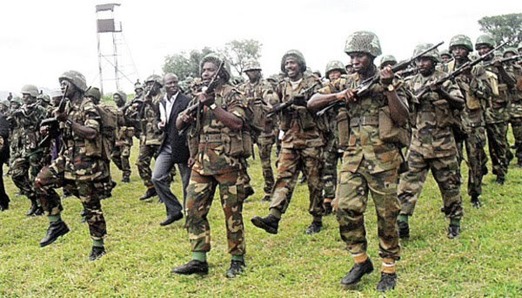
Two decades ago Nigeria’s military was seen as a force for stability across West Africa. Now it struggles to keep security within its own borders as an Islamist insurgency in the northeast kills thousands. A lack of investment in training, failure to maintain equipment and dwindling cooperation with Western forces has damaged Nigeria’s armed services, while in Boko Haram they face an increasingly well-armed, determined foe.
A foe that abducted more than 200 secondary school girls in Chibok, northeastern Nigeria, nearly a month ago. The military still appears to have no idea exactly where they are, but denies it lacks the capacity to get them back. President Goodluck Jonathan has said that Boko Haram has “infiltrated … the armed forces and police”, sometimes giving the militants a headstart, but the problems go much deeper.
“The Nigerian military is a shadow of what it’s reputed to have once been,” said James Hall, a retired colonel and former British military attache to Nigeria. He continued, “They’ve fallen apart.” Unlike Nigerian peacekeepers in the 1990s, who were effective in curbing ethnic bloodshed in Sierra Leone and Liberia, those in Mali last year lacked the equipment and training needed to be of much use in the fight against al Qaeda-linked forces, sources involved in that mission say.
Hall said the Nigerian peacekeepers had to buy pick-up trucks and their armour kept breaking down. They spent a lot of time on base or manning checkpoints. Military education is still taken very seriously, he said, but equipment and training to use it have been neglected, with radio equipment in particularly short supply.
Army spokesman Brigadier-General Olajide Laleye recognized some of these problems in a news conference on Tuesday. He said the army would “undertake an equipment audit … with a view to identifying areas where equipment and material are in short supply, unserviceable or even obsolete”.
The defence headquarters did not respond to a request for comment, but the military argues that counter-insurgency is something new that they are slowly learning to take on, just as the U.S. military had to learn they couldn’t fight al Qaeda in western Iraq using conventional warfare.
“They’re having to learn new counter-insurgency skills and get new equipment … like armoured vehicles,” said Kayode Akindele of 46 Parallels, a Lagos-based investment management firm that also consults on financial, political and security risks for foreign investors.
