
News
Augmenting Africa’s Economic Progress
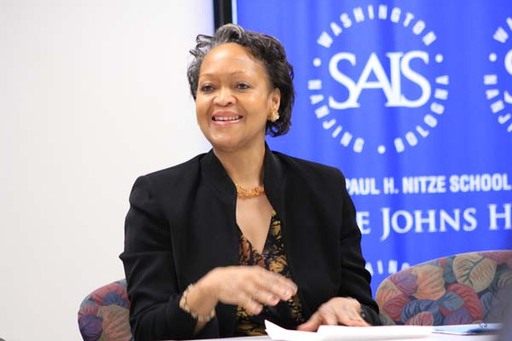
For example, South Africa – a major beneficiary of AGOA non-oil trade amongst the Africans – is already making economic strides from a two-way trade agreement with the European Union, but is yet to pursue a potentially lucrative trade partnership with the world’s largest singular market in the United States. Likewise, the United States stands to benefit a great deal by doing even more business with Africa – the world’s fastest growing region. In taking advantage of the natural synergies that exist between the two regions, this could contribute to a more dynamic, 21st century U.S.-Africa trade relationship that builds on and potentially goes beyond AGOA.
There are prospects in Africa’s market of 1 billion people, Liser said: In the growing middle class, and yes – in the economies of scale realized by eliminating cross-border barriers across Africa. With barriers dispensed with, and national infrastructure developed or expanded to facilitate regional and global trade, Africa stands a greater chance of establishing its place in global supply chains and distribution networks.
A book, Why Nations Fail by Acemoglu & Robinson presents the nebulous notion that Africa’s economic doldrums are this severe not because people do not know which policies foster growth but because political machination prevents growth if deemed detrimental to the few oligarchs – industry incumbents – benefiting from the status-quo. But this view is not supported when one looks at a number of African nations, including the blossoming economies of the Ivory Coast, Niger or Ghana highlighted in a recent expose in The Economist.
Already speaking volumes, African countries are swimming against the tide – overcoming the administrative and capacity challenges of the past. McKinsey tells us that Africa is on track to create between 54 million to 72 million more stable wage-paying jobs by 2020 as a result of current investment in manufacturing, agriculture, retail and hospitality, and as agreed by most experts, infrastructure, financing, business environment and workforce will be key to Africa’s prosperity. With wage-paying jobs growing to more than 36 percent of the total workforce in less than a decade, this 54–country ‘diverse mosaic’ of pre-transition, transition, diversified and oil exporting on the African continent could create stable jobs at a faster rate than those created by Thailand, South Korea and Brazil when these three were at Africa’s stage of development.
That’s why Liser is very optimistic. Notwithstanding some of the cautions and widely recognized challenges, the U.S. government will continue to work with its African partners, the U.S. and African private sectors, and other stakeholders to help realize Africa’s great and full potential to grow its economies through trade and investment.
With additional comments and suggestions from Emmanuel Musaazi, Ryan Elcock, Stephen Lande, Florie Liser and Oscar Sekyewa. For comments, please write to The Editor: [email protected] .
The author is an American Politics & Government post graduate scholar from Uganda and concurrently works in both New York and Washington, DC while serving as editor and on the editorial board at the The Habari Network. He lives with his wife Rachel in Princeton, NJ and is finishing his second book, Master of the Sagging Cheeks, a work of political fiction.
