
News
Zimbabwe: Voters cast their ballots first post-Mugabe election
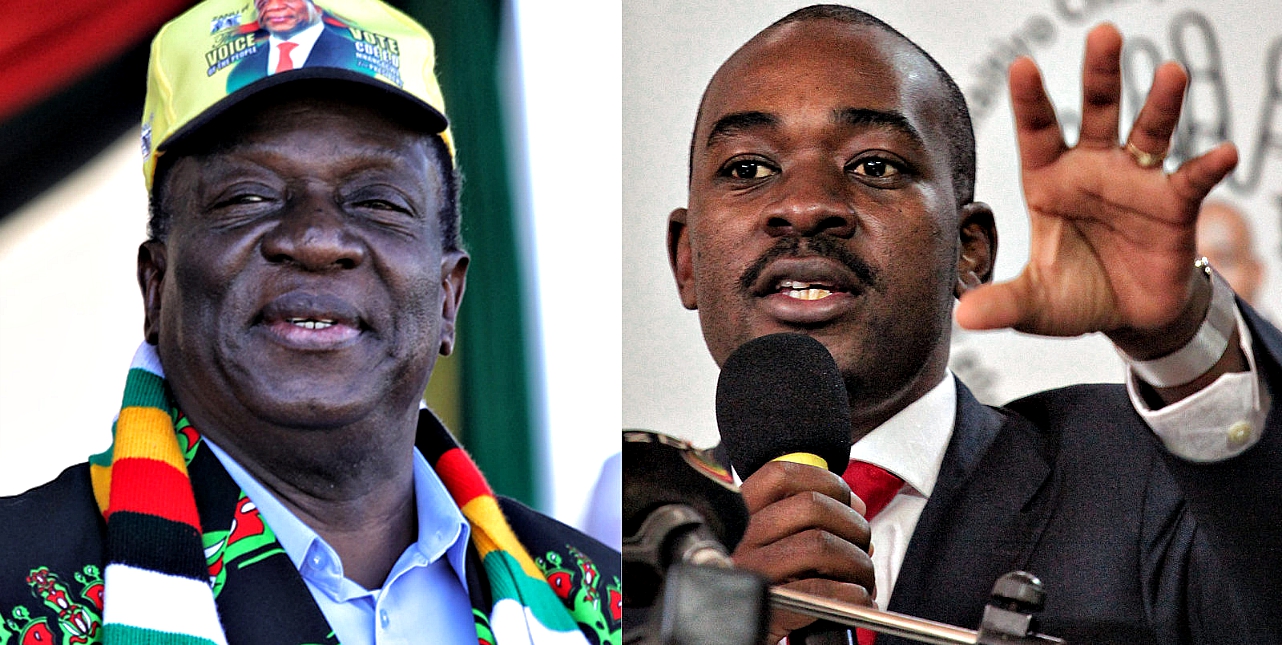
Zimbabweans voted on Monday in the first election since the resignation of former president Robert Mugabe, a watershed moment they hope will spark a recovery in its failed economy.
The election pits 75-year-old President Emmerson Mnangagwa, a long-time Mugabe ally, against 40-year-old Nelson Chamisa, a lawyer and pastor vying to become Zimbabwe’s youngest head of state.
On the eve of the election, Mugabe emerged from 8 months of obscurity, to announce he would vote for the opposition, surprising former ally Mnangagwa who accused him of striking a deal with Chamisa.
“I can assure you that this country is enjoying democratic space which has never been experienced before,” Mnangagwa told public television outside the polling booth. “In any democratic space and country, people have the freedom to express their views, negative or positive.”
Opinion polls give the former intelligence chief, who took over as president after the army ousted Mugabe, only a slim lead over Chamisa. There will be a runoff on September 8 if no candidate wins more than half the votes.
Nicknamed “the Crocodile”, Mnangagwa, of the Zimbabwe African National Union-Patriotic Front (ZANU–PF), has pledged to revive the moribund economy, attract foreign investment and mend racial and tribal divisions.
The consensus is the build-up to this vote has been better than before, although Chamisa has complained of bias by the Zimbabwe Electoral Commission.
Chamisa, who honed his rhetorical skills in the courtroom and the pulpit, has attracted young and unemployed voters frustrated with nearly four decades of ZANU–PF rule.
“Victory is certain, the people have spoken,” Chamisa said after casting his ballot in Harare as a cheering crowd chanted: “President! president! The president is here!” “I have no doubt that by end of day today we should be very clear as to an emphatic voice for change,” Chamisa said.
He will need a large turnout from his supporters in towns and cities, with ZANU-PF dominant in the countryside.
International observers from the African Union, and the Commonwealth are watching polling stations across the country.
“It is exciting to see so many Zimbabweans casting ballots,” said former Liberian president Ellen Johnson Sirleaf, co-leader of the National Democratic Institute’s observer mission. “However the public’s faith in the secrecy of the ballot is essential for the credibility of the process. We urge the authorities to do everything possible to ensure the secrecy of today’s vote.”
Whoever wins will face the mammoth task of putting Zimbabwe back on track after 37 years of Mugabe rule tainted by corruption, mismanagement and diplomatic isolation, sending one of Africa’s most promising economies into crisis.
