
News
Zimbabwe: Former President Robert Mugabe dies at 95
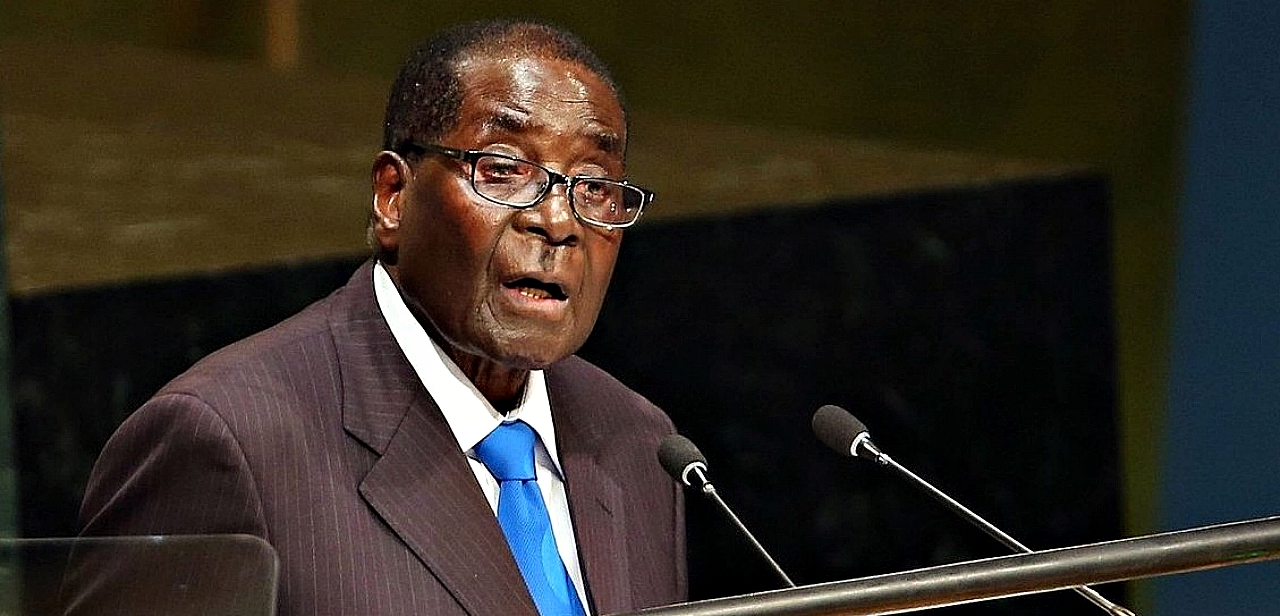
AP | Robert Mugabe, the longtime leader of Zimbabwe who was forced to resign in 2017, has died at 95.
His successor, Emmerson Mnangagwa, confirmed Mugabe’s death in a tweet Friday, mourning him as an “icon of liberation.”
The former president died at the Gleneagles Hospital in Singapore, according to the city-state’s Ministry of Foreign Affairs. He had been seeking medical treatment for an undisclosed illness in Singapore in recent months.
Mugabe, who took power after racist white minority rule ended in 1980, blamed Zimbabwe’s economic problems on international sanctions. But growing discontent about the southern African country’s fractured leadership and other problems prompted a military intervention, impeachment proceedings by the parliament and large street demonstrations for his removal.
The announcement of Mugabe’s November 21, 2017 resignation after he initially ignored escalating calls to quit triggered wild celebrations in the streets of the capital, Harare. Well into the night, cars honked and people danced and sang in a spectacle of free expression that would have been impossible during his years in power and reflected hopes for a better future.
Mugabe’s decline in his last years as president was partly linked to the political ambitions of his wife, Grace, a brash, divisive figure whose ruling party faction eventually lost out in a power struggle with supporters of Mnangagwa.
Despite Zimbabwe’s decline during his rule, Mugabe remained defiant, railing against the West for what he called its neo-colonialist attitude and urging Africans to take control of their resources, a populist message that was often a hit even as many nations on the continent shed the strongman model and moved toward democracy.
Mugabe enjoyed acceptance among peers in Africa who chose not to judge him in the same way as the U.K., the United States and other Western detractors. Toward the end of his rule, he served as rotating chairman of the 54-nation African Union and the 15-nation Southern African Development Community; his criticism of the International Criminal Court was welcomed by regional leaders who also thought it was being unfairly used to target Africans.
“They are the ones who say they gave Christianity to Africa,” Mugabe said of the West during a visit to South Africa. “We say: ‘We came, we saw and we were conquered.”‘
Mugabe as leader maintained a schedule of events and international travel that defied his advancing age, though signs of weariness mounted toward the end. He fell after stepping off a plane in Zimbabwe, read the wrong speech at the opening of parliament and appeared to be dozing during a news conference in Japan. However, his longevity and frequently dashed rumours of ill health delighted supporters and infuriated opponents who had sardonically predicted he would live forever.
“Do you want me to punch you to the floor to realize I am still there?” Mugabe told an interviewer from state television who asked him in early 2016 about retirement plans.
After independence, Mugabe reached out to whites after a long war between black guerrillas and the brutal white rulers of Rhodesia, as Zimbabwe was known. He stressed education and built new schools. Tourism and mining flourished and Zimbabwe was a regional breadbasket.
Reacting to Mugabe’s death, Namibia’s President Hage Geingob said, “He was a committed freedom fighter, revolutionary, not compromising.”
Zimbabwe’s opposition leader said he is “mourning with the rest of Africa” over the death of the former president, but also acknowledged the pain that the country faced over “decades of political disputes” surrounding his governance.
Speaking on Friday, Nelson Chamisa, the leader of Zimbabwe’s opposition Movement for Democratic Change (MDC) gave his condolences to the family of Mugabe.
He acknowledged Mugabe’s place as one of Zimbabwe’s founding fathers, but also referred to problems of human rights in Zimbabwe and the “deficits of governance” during his years of rule.
Mugabe was born in Zvimba, 60 kilometers (37 miles) west of the capital of Harare. As a child, he tended his grandfather’s cattle and goats, fished for bream in muddy water holes, played football and “boxed a lot,” as he recalled later.
He drew admirers in some quarters for taking a hard line with the West, and he could be disarming despite his sometimes harsh demeanor.
“The gift of politicians is never to stop speaking until the people say, `Ah, we are tired,”‘ he said at a 2015 news conference. “You are now tired. I say thank you.”
