
Politics
Opposition unlikely to unite for Congo election in November that threatens to spark violence
KINSHASA, Congo — The race to lead sub-Saharan Africa’s largest country kicks off this week with presidential candidates registering for the November election, a vote that threatens to spark even more violence in this nation already wracked by bac…
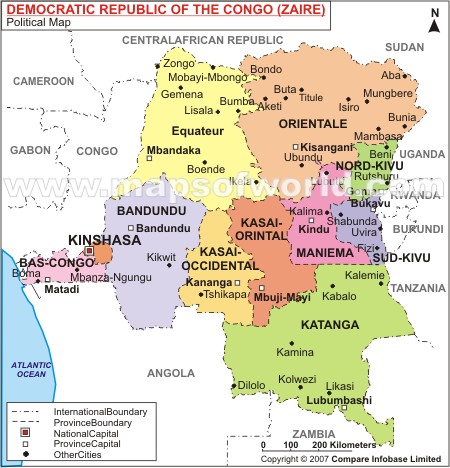
The race to lead sub-Saharan Africa’s largest country kicks off this week with presidential candidates registering for the November election, a vote that threatens to spark even more violence in this nation already wracked by back-to-back civil wars, and still haunted by a myriad of armed groups.
Incumbent Joseph Kabila, who first took power after his father’s assassination more than a decade ago, had appeared all but certain of victory until the opposition announced some surprising challengers. Among them is Kabila’s main rival in the 2006 vote: Jean-Pierre Bemba, who awaits his war crimes trial at the International Criminal Court at the Hague.
Even months before the election, analysts are already warning that this sprawling Central African nation could confront an electoral dilemma similar to the one that ravaged Ivory Coast earlier this year when the incumbent refused to acknowledge defeat after losing the November runoff.
The International Crisis Group said Congo’s vote could “easily become as violent” as Ivory Coast, where thousands were killed and 1 million displaced.
Kabila already has pushed a series of constitutional changes through Parliament that strengthen his powers and most importantly, replace the two-round voting system with just one winner-takes-all round. That move forces the opposition to band together if they have any hope of ousting him.
Analysts, though, doubt that any of these politicians are willing to abandon their own personal ambitions in a country where parties are based on personalities, with each one’s ego bigger than the last.
“There is such egocentricity … Each has such pride, each believes that without him, nothing can be achieved,” said analyst Banza Mukalay Nsungu.
At a rally last week in Kinshasa, leading opposition candidate Etienne Tshisekedi announced to the crowds overflowing an 80,000-seat stadium that he is ready to negotiate with other opposition parties for a joint fight against Kabila.
But Tshisekedi, making his first historic bid at the presidency since he formed the nation’s first opposition party in 1982, also has made clear his desire to run. And at 78 years old, he is unlikely to get another chance.
Tshisekedi returned to Congo in December after being treated for three years for an unspecified ailment in South Africa and Belgium, Congo’s former colonizer. To counter concerns about his health, he walked the 15 miles (25 kilometers) from the airport to his suburban home in Kinshasa upon his triumphant return.
Another leading contender, former Kabila ally Vital Kamerhe, also has stressed the need for the opposition to unite.
“I want to say loud and clear to Jean-Pierre Bemba and Etienne Tshisekedi that I am ready for talks,” said Kamerhe. “We are convinced that there is no political or social force, no individual, who can win the 2011 elections alone.”
Kamerhe, 52, ran President Kabila’s campaign in 2006, when the constitution was changed so that he could run at 35 years old, the youngest president in the world.
