
Politics
Nigeria Beats South Africa for Africa’s Largest Economy
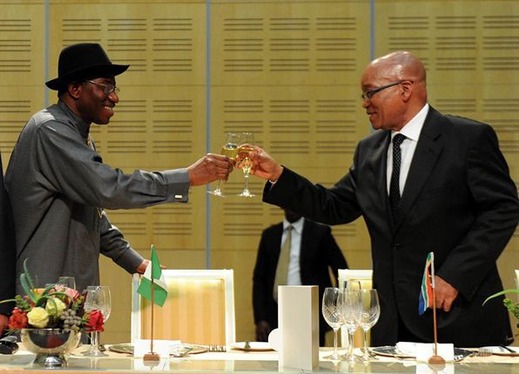
Nigeria overtook South Africa as Africa’s largest economy after a rebasing calculation almost doubled its GDP to more than $500 billion. Gross domestic product (GDP) for 2013 in Africa’s top oil producer was 80.22 trillion naira, or 509.9 billion dollars, the Nigeria Bureau of Statistics said, up from the 42.3 trillion estimated before the rebasing.
The new figure shrank Nigeria’s debt-to-GDP ratio to 11 per cent for 2013, against 19 per cent in 2012, statistics chief Yemi Kale told reporters in the capital of Abuja. Most governments overhaul GDP calculations every few years to reflect changes in output, but Nigeria had not done so since 1990, so sectors such as e-commerce, mobile phones and its prolific “Nollywood” film industry (now worth 1.4 percent of GDP, according to Kale) had to be factored in to give a better picture.
Growing attention from foreign investors was forcing Nigeria to more accurately calculate its statistics, including GDP, Kale said, adding that the base year would now be recalibrated every five years, in line with global norms. Nigeria, Africa’s most populous country with 170 million people, has been growing as an investment destination owing to the size of its consumer market and growing capital markets.
The jump in the official GDP figure ranks Nigeria as 26th biggest economy in the world, up from 33rd before the rebasing, Kale said. It comes at a time of rising investor interest in the African continent’s growth potential and expanding middle class. Finance Minister Ngozi Okonjo-Iweala told Reuters last week that billions of dollars of foreign and domestic investment were envisaged for this year, including 1.5 billion dollars in agriculture.
But political risks as Nigeria approaches what will be hotly contested elections next February remain a concern, as do multiple security headaches, especially an insurgency waged by Boko Haram, an Islamist sect, in the under-developed northeast.
Vanity
Analysts said the recalculated GDP would raise Nigeria’s profile, but change little on the ground. “Is the money in your bank account more on Sunday than it was on Saturday? If you had no job yesterday, are you going to have a job today?” asked Bismarck Rewane, CEO of Lagos-based consultancy Financial Derivatives.
Rewane continued, “If the answer to those questions is ‘no’, then this is an exercise in vanity.” Although he said this, he also pointed out that the new figure was more accurate. However, many Nigerians shrugged off the GDP news. “I’m not really impressed. I don’t feel it in my pocket,” said Richard Babs-Jonah, 47, a small farmer, rubbing his thumb against his index and middle fingers to signify cash, before fumbling in his pocket for small change to buy traditional ‘suya’ – spicy grilled meat served at roadside barbecues.
