
Politics
Hashtags and activism as search continues for abducted Nigerian girls
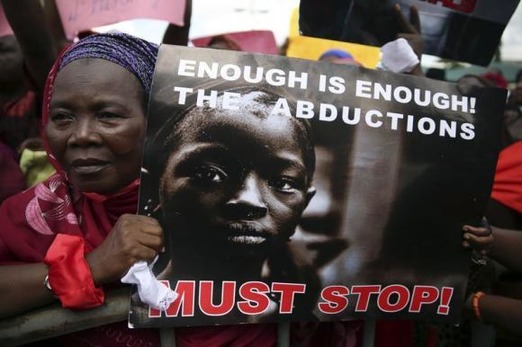
The hashtag “Bring Back Our Girls” has become a global catchphrase and that’s a good thing. Nigerians and sympathizers have held up posters from Chibok to New York, and from Ogun to Cancun, compelling the international community into action. However, the rhetorical implications of the catchphrase must be expanded to cover the larger struggle and gruesome narrative of the Nigerian state and terrorism.
Before and beyond the kidnapping of our daughters of Chibok town, are the complexities of the asymmetrical warfare which the Nigerian Federal Government must continue to engage against Boko Haram, and its leader Abubakar Shekau. Under the dictates of Shekau, Boko Haram has spared no one: government workers, police officers, journalists, villagers, students, churchgoers, and young girls. This is the nature of asymmetrical warfare, and as we have seen with the Taliban in Afghanistan and rebel groups from East Timor to Somalia, governments are often left high and dry.
Boko Haram is an asymmetrical enemy that operates outside the conventions of human rights, human dignity, and the dictates of conventional war norms, thus the Federal Government is at a disadvantage in its war against them. Knowing this, Shekau resurfaces every once in a while in video messages to mock the powerlessness of the Nigerian military and government. “I abducted your girls. I will sell them in the market by Allah. There is a market for selling humans. Allah says I should sell. He commands me to sell. I will sell women. I sell women,” Shekau mocked in his latest video.
What Shekau’s sadistic bombast tells us is that even when our daughters are brought back to us, Boko Haram will continue to exploit the characteristic weaknesses and limitations of the Nigerian state. Whether it is blowing up churches, bombing governmental buildings, attacking police stations, blowing up mass transit areas, shooting students as they sleep in their dormitories or kidnapping young girls, Boko Haram will continue to hit the nation hard.
We must not only try to bring our girls back home, we must support a comprehensive and holistic approach to tackle Boko Haram. Human Rights Watch estimates that in the past five years, more than 3,000 people have been killed by Boko Haram. Conversely, the struggle and hideous narrative that has come to define the Nigerian experience must be addressed comprehensively.
