
Politics
Haiti and Dominican Republic report progress regarding talks on Haitian migrant issues
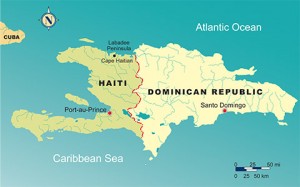
The Dominican Republic will present new legislation to Parliament on February 27 to address the Constitutional court ruling that denies citizenship to children of Haitian migrants in the Spanish-speaking country.
In a joint statement issued at the end of the latest round of talks Monday between Dominican Republic and Haitian, officials in the Dominican town of Jimani indicated that progress had been made on some of the contentious issues between the two countries.
“The Dominican Republic confirmed its commitment to submit to Congress, as of February 27, 2014, at the beginning of the new legislature, a special law to address the situation of those born in the Dominican Republic and who, currently, do not have any documentation,” the joint statement stated.
Last September, the Dominican Republic Constitutional Court ruled that the children of undocumented migrants, who have been in the Dominican Republic and registered as Dominicans as far back as 1929, cannot have Dominican nationality as their parents are considered to be “in transit”.
The decision sparked an outrage and has been strongly condemned by the Caribbean Community (CARICOM) and the United Nations. It led to the UN human rights office in Geneva calling on the Dominican Republic to take all necessary measures to ensure that citizens of Haitian origin were not deprived of their right to nationality.
CARICOM has since suspended talks on the Dominican Republic’s application to join the 15-member regional integration grouping, in which Haiti is also a member. The Haitian delegation to the meeting, which was headed by Prime Minister Laurent Lamothe, has also reaffirmed its commitment to expedite the issuance of passports and civil documentation to Haitian nationals in the Dominican Republic.
The Dominican Republic authorities advised that they would grant a one-year work visa to Haitian workers in the country, with possibility for renewal. Haitian students, in the meanwhile, will be issued a multiple one-year student visa, free of charge. The students would be also be allowed to go back and forth through the border without any additional fees.
