
Politics
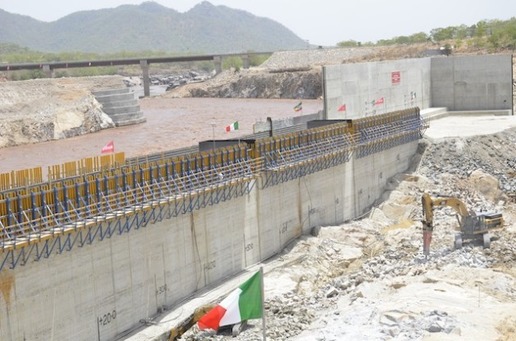
Ethiopia sidesteps Egypt by going it alone to pay for Renaissance Dam
National Security
As long as Ethiopia spurns outside funding, there seems to be little an angry Cairo can now do to stop the dam. The sparkling streams at the foot of Ethiopia’s Mount Gish spill into Lake Tana from where the Blue Nile meanders gently towards Sudan’s capital, Khartoum, where it joins the White Nile and flows north through Egypt and drains into the Mediterranean.
Among Cairo’s worries is concern that years of filling the new dam’s 74 billion cubic meter reservoir will temporarily cut the river’s flow, and that surface water evaporation from the huge new lake will then reduce it permanently. “Water problems even without this dam are sky high,” said water expert Klaus Lanz in reference to Egypt’s shortage.
Egypt leans on a 1959 treaty with Sudan which hands Cairo the lion’s share of water. Some Egyptian politicians even urged military action last year against Ethiopia, raising concerns of a “water war”. The public political bluster has died down, but Egyptian officials still refer to safeguarding their nation’s quota of the Nile’s flow as a matter of national security.
In a government white paper, Cairo calls the construction of the dam a “violation” of international legal principles, in particular the duty to prevent harm to other riparian nations. “We have no other resources,” Egyptian foreign ministry spokesman Badr Abdelatty told Reuters. “So it’s not a joke. We will not allow our national interests, our national security … to be endangered.”
Limited Options
“We are still for cooperation, negotiation, but only serious negotiations, not to waste time,” Abdellaty added. But distracted by militant violence and political turmoil at home, Cairo appears to have few levers with which to force Addis Ababa to halt the project. Ethiopian officials say the dam could be completed as early as 2016.
Ethiopia denies Egypt will suffer and complains that its northern neighbor has flexed its political muscle to deter financiers from backing other Ethiopian power projects. Fekahmed of the water ministry said Cairo had influenced a decision by China’s Electric Power Equipment and Technology Co. to pull out of a $1 billion deal to connect the dam to the grid.
“The authorities in Egypt made a noise,” Fekahmed said, adding that another Chinese group was now lined up to fund the high voltage lines. Egypt’s Abdelatty did not comment on the specific case but confirmed that Cairo was trying to use its influence to push foreigners away from backing the project. “We have contacts with everybody,” said Abdelatty. He then added, “The minister raised it with Russia, with China, you name it.”
In a diplomatic coup for Ethiopia, and a political blow to Egypt, the other major down river country, Sudan, has slowly warmed to the dam project and lifted its own earlier objections. Sudan may benefit from cheap power and irrigation water. Egyptian Foreign Minister Nabil Fahmy told Sky News Arabic this month he rejected a military solution and dismissed referring the dispute to the International Court of Justice, which would require the agreement of both sides.
Instead, Egypt continues to push hard for further studies on the dam’s design and impact on downstream countries. All the while, Ethiopia shows no sign of ordering the downing of tools. “We will finish it whether they like it or not,” said a senior Ethiopian official who requested anonymity. “But of course, we will continue negotiating in the meantime.”
Source: Al Arabiya News
