
Politics
Ethiopia sidesteps Egypt by going it alone to pay for Renaissance Dam
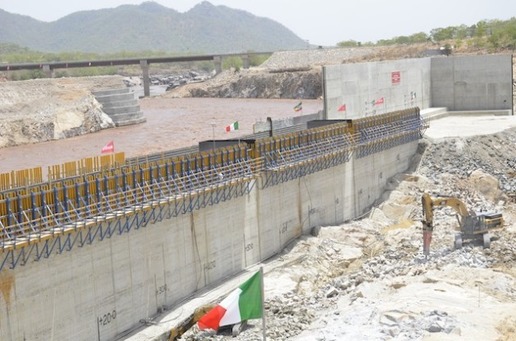
Along with other projects, the dam is draining so much financing from the economy that private investors’ access to credit and foreign exchange is being jeopardized, hurting growth, the International Monetary Fund says. The IMF forecast in November that output growth would slow to 7.5 percent this fiscal year from 8.5 percent in 2011/12, and said the economy needed restructuring to encourage private sector investment now crowded out by huge public projects.
Ethiopia needs high growth to fulfill plans to lift its population out of deep poverty. Per capita income was still just $410 in 2012, the World Bank says. The government disputes the view that lavish public spending is hurting overall economic performance, and forecasts a higher growth rate than the IMF.
Italy’s biggest construction firm, Salini Impregilo, which is building the dam, says all payments have been made on time so far and it has no worries about Addis Ababa continuing to come up with the needed billions. “We have full confidence in the government of Ethiopia,” the firm advised in an email.
And the dam is just the start for Ethiopia’s ambition of becoming a regional power hub. A government plan seen by Reuters would see Africa’s second most populous nation target installed capacity of 37,000 MW within 25 years – far more than the World Bank’s estimate of just 28,000 MW for the entire current output of sub-Saharan Africa excluding South Africa.
More dams are being built and Prime Minister Hailemariam Desalegn is fast securing deals to sell power abroad. In the Ministry of Energy, a building whose stark design is a throwback to when communists ran Ethiopia’s economy into the ground, a poster maps Ethiopia’s energy goals.
From a dot on the Nile, lines run north through Sudan and across the Sahara desert as far as Morocco while extending southwards to South Africa, linking Kenya, Rwanda, Tanzania and other power-hungry economies. Djibouti, Kenya and Sudan already take 180 MW, which, though a small amount so far, is already changing the economics of electricity in the region, Ethiopian officials say.
“Before it started getting power from Ethiopia, Djibouti’s tariff was 30 U.S. cents per kilowatt hour. We are selling to them at 6 cents,” said Mekuria Lemma, corporate planning chief at Ethiopia’s state-run power corporation, EEPCO. Kenya has signed an agreement to buy about 400 MW. Rwanda too inked a deal in March to take 400 MW by 2018 and a similar arrangement with Tanzania is expected. Beyond Africa, talks are expected over supplying 900 MW to Yemen via an undersea cable.
