
Politics
Does Female Leadership Stimulate Business Growth in Rwanda?
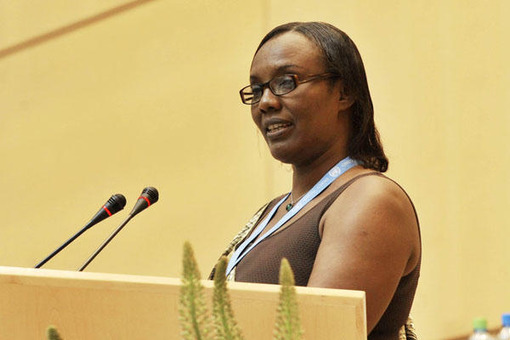
In 2013, Rwanda had the highest proportion of female members of parliament in the world with 64 percent of the seats taken by women in its lower house, known as the Chamber of Deputies. In Rwanda’s upper house of parliament, the Senate, 10 out of 26 seats must be filled by women, according to the Inter-Parliamentary Union, an international organization of parliaments.
Rwanda’s devastating 1994 genocide resulted in a disproportionate loss of males. Rwandan society in the aftermath consisted mainly of women; nearly 70 percent of the population. Scientific literature is growing on the role of women in politics, and many studies question if an increase in female leadership makes a difference.
How much does equitable female representation influence democratic governance? Does it have any effect on the economy, education (especially of girls), family planning, female empowerment, or traditional male-female relations?
Helen Hintjens is a senior lecturer at the International Institute of Social Studies of Erasmus University Rotterdam in The Netherlands. She analyzed the high percentage of females in post-genocide Rwandan politics and women’s participation in the country’s politico-economic transition.
Here’s what she said on the subject: “I see this at one and the same time as a) a manipulative tool to convince Western donors that Rwanda’s government is genuinely progressive; b) as a genuine opportunity, something good that came out of the genocide, which was something bad; c) as a policy that reflects the reality that women do most of the work in most of the region, and d) as something that makes sense as a way to focus attention on something other than ethnicity.”
There is a substantial number of women in non-governmental organizations in Rwanda. Pro-Femmes Twese Hamwe is a Rwandan umbrella organization of female non-governmental organizations. Since its formation in 1992 it has been active in securing a legal framework of equal rights for women. Its activists contributed to Rwanda’s 2003 constitution, which regulates that women must hold at least 30 percent of the seats in the parliament.
Promoting peace and development, non-violence and tolerance, Pro-Femmes has been running numerous programs to educate society at large. Activities include peace campaigns, communication training and capacity building, according to its website.
René Lemarchand is a political scientist, specialist in East-Africa and the Great Lakes region, and Professor Emeritus at the University of Florida.
