
News
COVID 19: What We’ve Learned
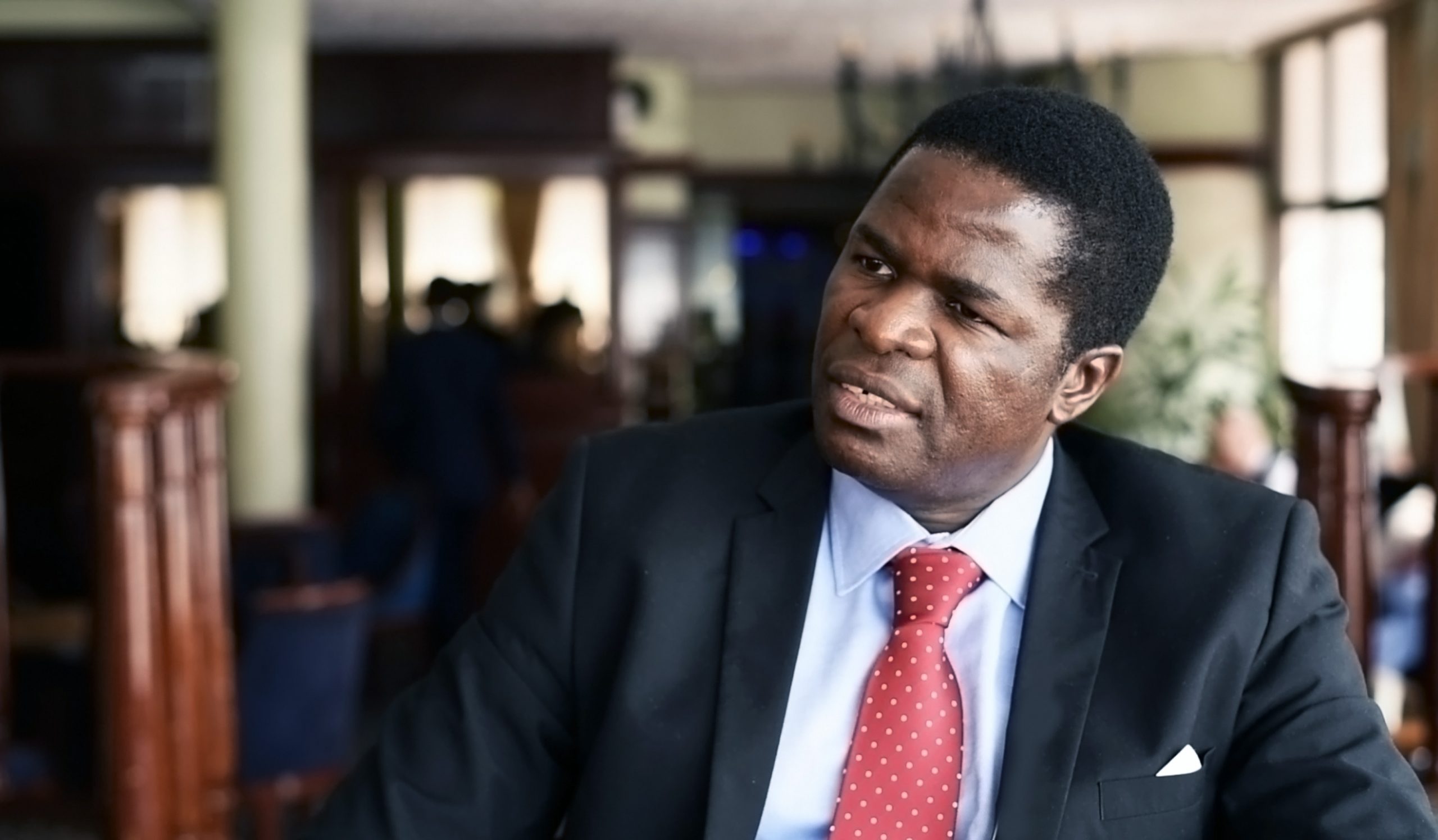
By Dr. Francis Mangeni/Lusaka – Zambia
While evident that the raison d’etre of Government – if it is acting as ideally as a government – is to ensure security and prosperity for the people, the novel Coronavirus or COVID-19 has shown statecraft to be more than just boots, bombs, or even the invisible hand. If you are so inclined, COVID-19 has brought everything to the surface, demonstrating that at its core, a government is only a government if it can protect its people from both nuanced and physical threats. In the same vein, nuanced threats are much more harmful than weapons being hurled about. Government ought to have the finesse, the exact science, and decisive wisdom to deal with nuance – the sort of insight that goes beyond sloganeering and macabre nationalism. On top of people seeing the folly of in-vading animal habitats to satiate their culinary curiosity, it may be hard to imagine a people ever trusting their cherished leadership positions to bumbling science-deniers.
Ever since December 31, 2019 – when China’s Wuhan Health Commission first reported cases of this global pandemic – over 30.2 million people worldwide have been infected, with more than a million losing their lives. The exponential spread of the disease ranks it amongst the worst pandem-ics to ever afflict humankind. But despite its virulence, the pandemic can be overcome by basic sci-ence-based measures such as physical or social distancing, wearing a mask or a face cloth, regular-ly washing hands with soap, and using sanitizers. It is conventional wisdom to avoid crowds – es-pecially indoor events – and limit unnecessary travel. Looking at the spread of the disease in Tai-wan, China, Germany, Mauritius, New Zealand, Seychelles, Singapore, and South Korea, there is ample evidence that governments that consistently employ a host of measures can reasonably con-tain the pandemic. Lessons from past pandemics like the 1918 – 1920 Spanish flu remain pertinent, mainly staying home.
In dealing with COVID-19, we have learned the TiTiTS: Test/isolate + Trace contacts/ isolate + Treat + Sanitize. The TiTiTS model must be undertaken simultaneously on a universal scale. These measures require adequate capacity in testing kits, tracing methods and technology, hospital beds and personnel, medicines, and safety and cleaning material. The TiTiTS measures are to be taken in a D-A-B-S framework, that is, Decisive Action Based on Science; without dithering. Half measures will be wasteful and life-threatening in the sum. There were resurgences or threats of second waves when the measures were prematurely relaxed in China and Singapore and later in the US. The initial delays by science-denying leadership in the US and UK, or the skepticism and lack of clarity in Italy and Spain, by decisively taking required measures, cost the world a huge death toll. One life lost is too many.
As seen in the Spanish flu, the more recent Ebola Virus Disease (EVD), foot-and-mouth disease, and mad-cow disease, their spread was only curbed through decisive, science-based action driven by transparent and collaborative government leadership. The D-A-B-S should be transparently adopted into legal and policy instruments and mapped out into strategies and costed action plans. These plans should be clearly and easily communicated, and effectively disseminated throughout the communities and to all levels of governance and leadership; stay home and be safe, sanitize, and wear a face cloth. Awareness creation should be prevalent, using all media and forms, totally bear-ing in mind the different languages and circumstances; so that each can be his/ her brother’s/sister’s keeper.
Science-based measures to contain contagious and infectious diseases have been well known for ages now. However, the initial scientific tasks include knowing the nature of the new disease, symptoms, transmission channels, containment and mitigation measures, and treatment, among others. Scientific information about COVID 19 was disseminated around the world relatively early, with its genome sequence, to inform required measures. Thus, the TiTiTS and D-A-B-S measures need current readiness to respond at once effectively.
This in turn means, it’s a fundamental responsibility of Government, in protecting lives, to have standing and emergency arrangements for dealing with outbreaks of epidemics and pandemics as well as localized surges in disease burdens. COVID 19 spread like wildfire, decimating popula-tions as many Governments fumbled helplessly; without adequate medical infrastructures such as beds and protective equipment, medical staff, stockpiles for emergency response, proper regulatory frameworks in place; and near-empty coffers in many countries that could hardly support safety nets and economic stimuli packages.
There are, therefore, national, regional and global needs for adequate Medical, Economic and Part-nership (M-E-P) facilities. These are indispensable in this regard: sound industrial capacity in the pharmaceutical sectors, a sound technological base, absorptive capacity to harness and utilize inno-vations, institutions and regulatory frameworks, and global science networks with effective local reach. There is absolute need for global partnerships and effective leadership in suppressing epi-demics and pandemics, and disease outbreaks anywhere in the world. There is also need for global and national economic responses to survive and to recover from the mayhem. COVID 19 is not the first pandemic, and by no means the last. Preparedness for future disease outbreaks is imperative. But too, as suppression measures begin to bear results, all can go to waste if lessons are not ad-hered to.
In her letter of March 22, 2020 to the heads of the World Bank, IMF and the European Central Bank, Dr. Vera Songwe, the Executive Secretary of the UN Economic Commission for Africa conveyed a request on behalf of Africa for US$ 200 billion to cope with the COVID 19 pandemic and assist economic recovery efforts. It’s feared that the pandemic will otherwise wipe out Africa’s pain-staking gains of the last three decades, grinding the continent down to a 1.8 percent annual economic growth rate from highs of 6 percent, losing over 20 million jobs and possibly US$ 65.7 billion monthly during lockdowns, and result potentially in a total cost of US$ 275 billion. The trade and transport sector are operating at a mere 27 percent of its capacity, and on average compa-nies are at only 43 percent their capacity. A strong case has been made for credit lines to the private sector to preserve and grow productive capacity. These pandemics hit some countries really hard, ransacking lives and economies. The pandemic might have set the social economic transformation of Africa back by 25 years.
Together, the global economy survived and recovered from the financial crisis that started in the US in 2008. Globalization has been forced through street and academic protest, and populist movements, to work towards equitable development and responsibility for our planet earth.
Together again, this pandemic must be turned into a solid step humankind now takes, in partner-ship, to be much better prepared going forward, and to ensure a clean, healthy, peaceful and pros-perous world. As we’ve said as a global community, no one should be left behind. This is the up-shot of over 6000 years of thinking.
About the Author
Following over a decade of service at the Common Market for Eastern & Southern Africa (COMESA), Dr. Francis Mangeni now serves as an Advisor on trade and integration. To contact the author, please email: [email protected]
