
News
CARICOM leaders not meeting enough – Prime Minister Mottley
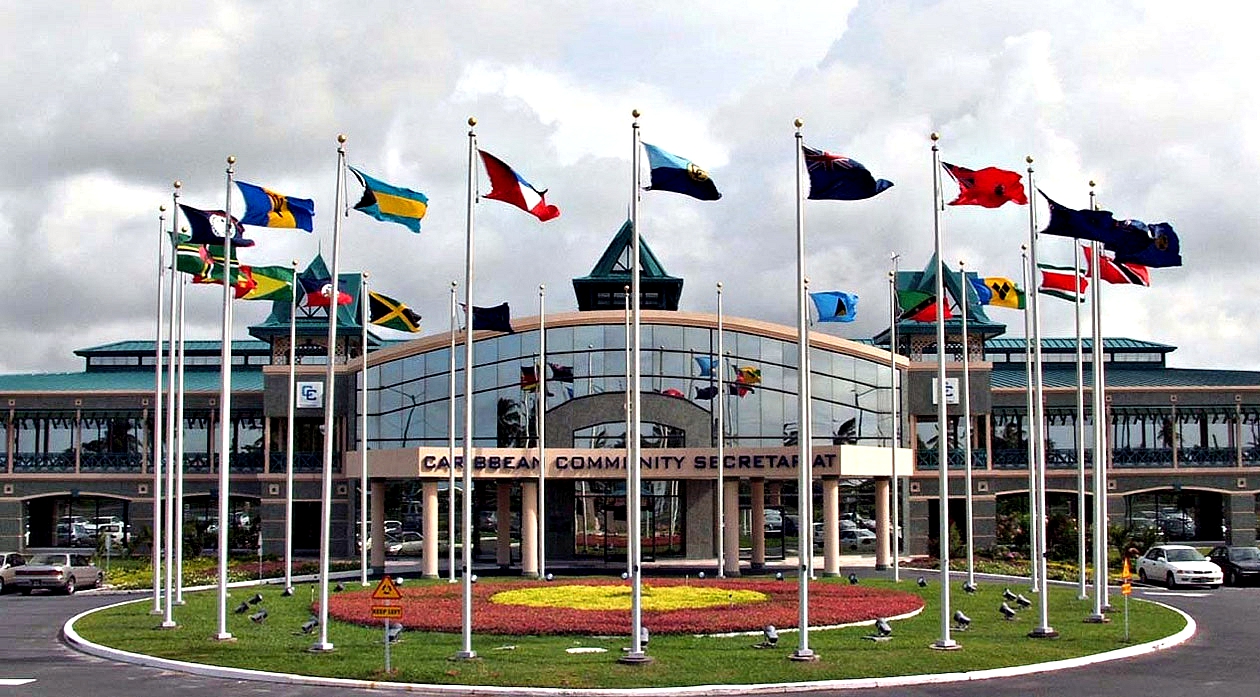
Barbados Prime Minister Mia Mottley has called on her Caribbean Community (CARICOM) counterparts to have more regular meetings to discuss issues critical to regional integration.
Addressing a town hall meeting on the topic, ‘CSME – What’s in it for me?‘, Mottley suggested that Caribbean heads of government follow the lead of those in Europe who meet regularly.
“Maybe because of Brexit we’ve seen it, but almost every 2 or 3 weeks the heads of government of the European Union are meeting. But we believe a smaller group of people (CARICOM) needs to meet only twice a year – and what happens in-between the 2 meetings then depends on what happens at the sub-committee level, or potentially if there is a crisis.
“That, in my view, has to change if we are going to bring our movement into fully the 3rd decade of the 21st century, which, in fact, starts in less than 60 days. Unless we quicken the pace of discussion and implementation, we are going to marginalise the region without even realizing it,” Mottley said.
The Barbadian leader was adamant that the CARICOM Single Market and Economy (CSME) is vital to the success of the region.
CARICOM secretary general, Ambassador Irwin LaRocque, speaking at a regional stakeholders’ consultation on the CSME earlier in the day, said the CSME remained the best platform for achieving sustainable economic growth and development for member states, as well as for international competitiveness and economic resilience for the region.
However, he admitted that although a lot of technical work was taking place, implementation was still a problem.
“We must address the operations of the CSME and what needs to be done in order to make them more effective. These consultations are expected to improve the decision-making process in the various organs of the community. The organs must meet more regularly,” he stated.
In the meantime, Barbados’ Ambassador to CARICOM David Comissiong stressed that if the CSME is to achieve socio-economic development, then more institutions in the region need to be part of the consultative process, and need to better inform the people of the Caribbean about their role.
“We have 18 institutions, and 7 associate institutions. If they all made a much bigger effort to communicate with the Caribbean people, to bring to the consciousness of the Caribbean people that they exist and that they are doing good work on behalf of the people of the Caribbean, we will develop an ideology of regionalism in our Caribbean community,” he said.
Comissiong told the stakeholders gathered at the Caribbean Examinations Council headquarters, including labor, the private sector and civil society, that they had an obligation to the people of the region to “make an effort to make the CSME work”.
“People say they want consultation, but consultation calls for work; it calls for attending meetings, not finding excuses not to be there,” he contended.
Comissiong also called for better planning at the level of the councils of CARICOM, including the Council for Trade and Economic Development, adding that the committee of ambassadors still needed to be solidified “to really make it as effective as it should be.”
“It seems to me that we need to do some winnowing down of these councils’ meetings. We need to find ways of dealing with routine matters outside of council meetings, so that the time could be reserved for really important issues and decisions that ministers need to make. Also, the councils are really part of a very important planning mechanism. We have to have planning mechanisms in CARICOM, but what seems to have been lacking in these planning mechanisms in the past is the involvement and presence of the private sector, labor, civil society and youth,” he said.
The CARICOM ambassador added that a more concerted effort was now being made to bring these entities on board, not only at the heads of government conference level but also at the levels of the councils, so that they can become part of the planning and implementation process “going forward”.
The regional stakeholders’ consultation was coordinated by the CARICOM Secretariat and the prime minister’s office, with funding from the Caribbean Development Bank. It was designed to get feedback from stakeholders about the CSME as a process that encompasses sectoral and human resource development. -(CMC)
