
Politics
Syria: Obama to decide whether to provide Assad opponents with air support later this week
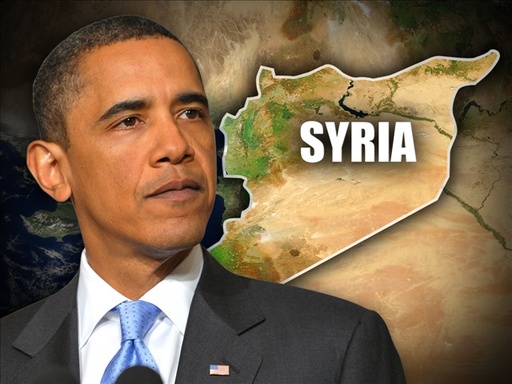
The president also has declared chemical weapons use by the Assad regime a “red line” for more forceful U.S. action. American allies including France and Britain have say they’ve determined with near certitude that Syrian forces have used low levels of sarin in several attacks, but the administration is still studying the evidence. The U.S. officials said responses that will be mulled over in this week’s meetings concern the deteriorating situation on the ground in Syria, independent of final confirmation of possible chemical weapons use.
White House spokeswoman Bernadette Meehan said Obama’s advisers were considering all options to hasten a transition in Syria.
“The United States will continue to look for ways to strengthen the capabilities of the Syrian opposition,” she said.
Any intervention could have wide-reaching ramifications for the United States and the region. It would bring the U.S. closer to a conflict that has killed almost 80,000 people since Assad cracked down on protesters inspired by the Arab Spring in March 2011 and sparked a war that has since been increasingly defined by sectarian clashes between the Sunni-led rebellion and Assad’s Alawite-dominated regime.
And it would essentially pit the United States alongside regional allies Saudi Arabia, Turkey and Qatar in a proxy war against Iran, which is providing much of the materiel to the Syrian government’s counterinsurgency and, through Hezbollah, more and more of the manpower.
Syria’s precarious position in the heart of the Middle East makes the conflict extremely unpredictable. Lebanon, across the western border, suffered its own brutal civil war in the 1970s and the 1980s and is already experiencing increased inter-ethnic tensions. Iraq, to Syria’s east, is mired in worsening violence. And Israel to the southwest has seen shots fired across the contested Golan Heights and has been forced to strike what it claimed were advanced weapons convoys heading to Hezbollah, with whom it went to war with in 2006.
Iran could wreak havoc in the region through its support of Shiite militant groups, and U.S. officials fear Iran may seek to retaliate for any stepped-up American involvement by targeting Israel or U.S. interests in the region. It’s also unclear what American action would mean for relations with Russia, which has provided Assad with military and diplomatic support even as it claims that it working with the United States to try to organize a Syrian peace conference.
At the same time, it’s unclear how Washington could fundamentally change the trajectory of a conflict that has increasingly tilted toward Assad in recent months without providing weapons to the opposition forces or getting involved itself.
