
Politics
Latest numbers indicate that African American voter turnout rate surpassed Whites in Nov 2012
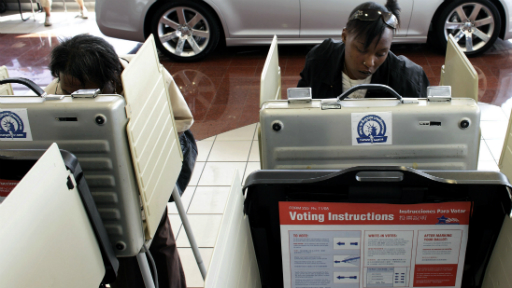
In Ohio, a battleground state where the share of eligible African American voters is more than triple that of other minorities, 27-year-old Lauren Howie of Cleveland didn’t start out thrilled with Obama in 2012. She felt he didn’t deliver on promises to help students reduce college debt, promote women’s rights and address climate change, she said. But she became determined to support Obama as she compared him with Romney.
“I got the feeling Mitt Romney couldn’t care less about me and my fellow African Americans,” said Howie, an administrative assistant at Case Western Reserve University’s medical school who is paying off college debt.
Howie said she saw some Romney comments as insensitive to the needs of the poor. “A white Mormon swimming in money with offshore accounts buying up companies and laying off their employees just doesn’t quite fit my idea of a president,” she said. “Bottom line, Romney was not someone I was willing to trust with my future.”
The numbers show how population growth will translate into changes in who votes over the coming decade:
The gap between non-Hispanic White and non-Hispanic Black turnout in 2008 was the smallest on record, with voter turnout at 66.1 percent and 65.2 percent, respectively; turnout for Latinos and non-Hispanic Asians trailed at 50 percent and 47 percent. Rough calculations suggest that in 2012, 2 million to 5 million fewer Whites voted compared with 2008, even though the pool of eligible White voters had increased.
Unlike other minority groups, the rise in voting for the slow-growing African American population is due to higher turnout. While Blacks make up 12 percent of the share of eligible voters, they represented 13 percent of total 2012 votes cast, according to exit polling. That was a repeat of 2008, when Blacks “outperformed” their eligible voter share for the first time on record.
Latinos now make up 17 percent of the population but 11 percent of eligible voters, due to a younger median age and lower rates of citizenship and voter registration. Because of lower turnout, they represented just 10 percent of total 2012 votes cast. Despite their fast growth, Latinos aren’t projected to surpass the share of eligible Black voters until 2024, when each group will be roughly 13 percent. By then, 1 in 3 eligible voters will be non-White.
