
Politics
Hage Geingob on track to becoming next president of Namibia in election landslide
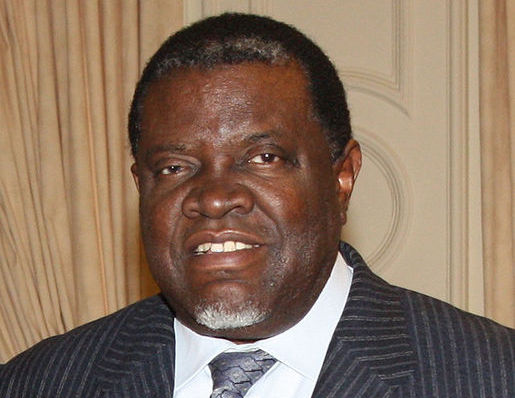
Hage Geingob, 69, is on track to becoming the next president of Namibia. His ruling South West Africa People’s Organization party, (SWAPO) has won a massive 78 percent share of the 67 percent of votes counted thus far, while Geingob has secured 86 percent of the presidential ballots.
SWAPO, which took 75.3 percent support in the last parliamentary vote five years ago, is credited with winning Namibia’s independence in 1990 from South Africa’s then white minority and often brutal government.
The opposition Democratic Turnhalle Alliance had 5.64 percent of the vote, compared with 3.17 percent in 2009, while the Rally for Democracy and Progress had 3.9 percent, down from 11.3 percent previously, according to figures released by the electoral commission.
Geingob, faced 8 rivals in the contest to succeed President Hifikepunye Pohamba, who is stepping down after serving a maximum two 5-year terms.
Electronic voting machines were used for the first time. Technical problems with the machines have resulted in a delay in releasing the results. An observer mission from the 15-nation Southern Africa Development Community (SADC) said the vote reflected the will of the people. According to South Africa’s Minister for International Relations, Maite Nkoana-Mashabane, the elections were free and fair, and there were “no shenanigans”.
Namibia, a vast country of 2.2 million people, is the biggest source of offshore diamonds. The country is also the world’s fifth-largest uranium producer, and has gold and zinc deposits. Its other main industries are agriculture, tourism and fishing.
Geingob and his SWAPO party, have pledged to implement a development plan aimed at transforming Namibia into an industrialized country by 2030 and reducing unemployment to less than 5 percent from a high of 29.6 percent last year. According to the country’s central bank, the economy must expand an average of 7 percent annually to achieve this goal. Growth has averaged 4.5 percent over the past 5 years and is set to increase at a similar pace this year and next, according to figures released by the African Development Bank (AfDB) and International Monetary Fund (IMF).
