
Politics
Former Liberia President Charles Taylor appeals war crimes conviction
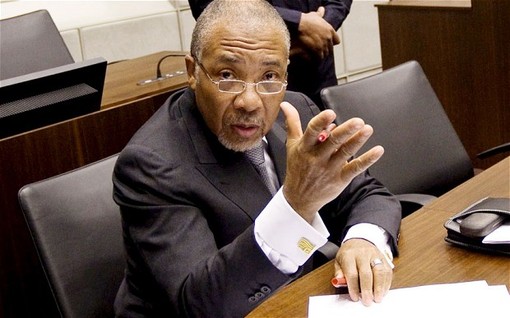
“The lives of many more innocent civilians in Sierra Leone were lost or destroyed as a direct result of his actions,” Presiding Judge Richard Lussick said when he sentenced Taylor last year. Rebel fighters in Sierra Leone gained international notoriety for hacking off the limbs of their victims and carving their groups’ initials into opponents. The rebels developed gruesome terms for the mutilations that became their chilling trademark: They would offer their victims the choice of “long sleeves” or “short sleeves” — having their hands hacked off or their arms sliced off above the elbow.
Taylor ran Liberia from 1997 to 2003. As his government fought a two-front rebellion in 2003, he stepped down and fled to Nigeria under international pressure. Three years later, Taylor was finally arrested and sent to the Netherlands.
Prosecutors want Taylor’s 50-year sentence — already effectively a life sentence for the 64-year-old former president — raised to 80 years to send a message to leaders who facilitate atrocities.
“Those are the promoters of war, the lords of war that sell arms to groups engaged in these conflicts,” prosecution lawyer Nicholas Koumjian said. He likened Taylor’s aid to rebels to the case of a Dutch businessman, Frans van Anraat, who was convicted by a Dutch court for selling chemicals to Saddam Hussein knowing the Iraqi dictator would use them to make poison gas.
Koumjian’s comments aimed to counter Taylor’s arguments that he should not have been convicted because his support for rebels was not deliberately designed to help them kill and maim.
Gosnell said that for judges to convict Taylor of aiding and abetting crimes, his help must be “connected to a specific crime and there must be a substantial contribution to that crime.” Instead, he said trial judges applied a standard “so broad that it would in fact encompass actions that are today carried out by a great many states in relation to their assistance to rebel groups or to governments that are well-known to be engaging in crimes.”
In their written appeal, Taylor’s lawyers said “the Trial Chamber’s approach extends criminal liability far beyond its proper bounds as recognized in international law.”
Taylor’s lawyers also argued that his conviction was based in part on uncorroborated hearsay evidence that should not have been admitted. They have asked judges to overturn all of Taylor’s convictions.
The appeals chamber is expected to take months to reach its judgment.
Copyright 2013 The Associated Press
