
Politics
Evaluating Uhuru Kenyatta’s first year
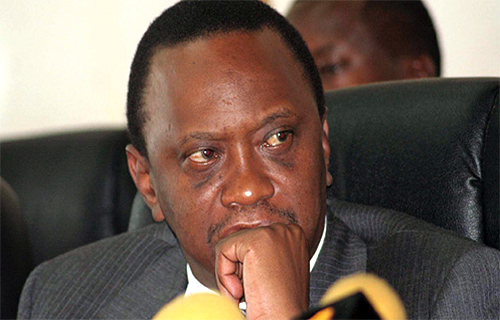
Security trumps all as the Kenyatta government enters its second year in office and the economy weakens due to concerns about terrorism and the rising costs of devolution. Just over a year ago, Kasarani Stadium just outside Nairobi hosted thousands of well-wishers cheering on Uhuru Muigai Kenyatta as he took the oath of office, having been declared winner of the fiercely contested presidential elections.
Today, it has become a detention camp for thousands of foreigners, mainly Somalis, arrested in successive police swoops for lacking valid immigration papers. At the election, the dominant issues included Kenyatta’s strong nationalist response to the International Criminal Court case against him and his deputy, William Ruto, following the post-2007 election violence, and pledges of a more peaceful political climate.
Kenyatta and his allies in the Jubilee Alliance coalition promised massive state investment in education and health, together with plans for a great economic leap forward. They said they would make Kenya the hub of a resurgent East Africa that exploits its mineral resources in partnership with Asia’s economies across the Indian Ocean.
What changed was the Westgate terror attack in September 2013. That attack killed 67 people, including relatives of Kenyatta, and the terrorists held the building for more than 72 hours. The Somalia-based Islamist Al-Shabaab militia said the Westgate takeover was retribution for Kenya’s intervention in their country.
There have been more than 90 terrorist-related attacks inside Kenya since its army went into Somalia in October 2011. Growing insecurity and threats of terrorism now dominate the political agenda. That was evident in President Kenyatta’s inaugural State of the Nation address on 27 March, 2014: “As we learned last year, insecurity anywhere in our region is a promise of insecurity everywhere. If we do not help our neighbours to achieve the peace, freedom and prosperity they deserve, then our own freedom and prosperity are threatened.”
A week earlier, gunmen raided the Joy of Jesus Church in Mombasa’s Likoni area. An 11-month old baby was among the victims, surviving a bullet that had ripped through his mother as she shielded him. Six people died in that church attack. And as doctors operated on baby Satrin Osinya at Nairobi’s Kenyatta National Hospital, gunmen on a motorbike shot and killed an Islamist cleric, Ahmed Shariff Abubakar, also known as Makaburi, outside a courthouse on the outskirts of Mombasa.
Makaburi was under sanctions from The United Nations Security Council after a probe said he recruited young Kenyans to fight for Al-Shabaab. In the same week, in the predominantly Somali neighbourhood of Eastleigh in Nairobi, a grenade attack killed five people in a restaurant.
