
Politics
Africa must tap into global markets more effectively
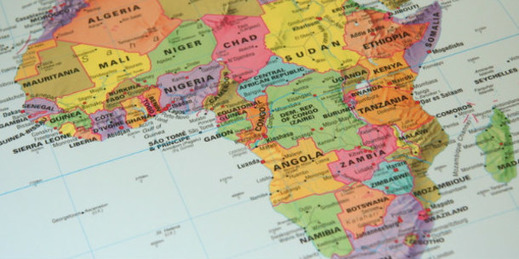
By participating more effectively in the global production of goods and services, Africa can transform its economy and achieve a development breakthrough, according to the latest African Economic Outlook, released at the African Development Bank Group’s Annual Meetings.
Produced annually by the African Development Bank (AfDB), the OECD Development Center and the United Nations Development Program (UNDP), this year’s report shows that Africa has weathered internal and external shocks and is poised to achieve healthy economic growth rates.
The continent’s growth is projected to accelerate to 4.8 percent in 2014 and 5 to 6 percent in 2015, levels which have not been seen since the global economic crisis of 2009. Africa’s economic growth is more broad-based, argues the report, driven by domestic demand, infrastructure and increased continental trade in manufactured goods.
“In order to sustain the economic growth and ensure that it creates opportunities for all, African countries should continue to rebuild shock absorbers and exercise prudent macro management. Any slackening on macro management will undermine future economic growth,” said Mthuli Ncube, Chief Economist and Vice-President of the African Development Bank. He added, “In the medium- to long-term, the opportunity for participating in global value chains, should be viewed as part as part of the strategy for achieving strong, sustained and inclusive growth.”
The report argues that more effective participation in regional and global value chains, the range of activities in different countries that bring a product from conception to delivery to the consumer, could serve as a springboard for Africa in economic diversification, domestic resource mobilization and investments in critical infrastructure. In order to do so, however, the continent needs to avoid getting stuck in low value-added activities.
For instance, Africa’s exports to the rest of the world grew faster than those of any other region in 2012, but they remain dominated by primary commodities and accounted for only 3.5 percent of world merchandise exports in 2012. Avoiding that trap involves investing in new and more productive sectors, building skills, creating jobs and acquiring new technology, knowledge and market information. These interventions require sound public policies, as well as entrepreneurs that are willing and capable of helping achieve these gains.
The report uses the example of South Africa, which achieved a remarkable turnaround in its automotive industry by removing obstacles and providing incentives for component producers and assembly lines. It also shows that the development of agribusiness value chains in countries such as Ghana, Kenya and Ethiopia has contributed to economic growth and job creation.
