
Politics
Obama leaving office with soaring public approval ratings
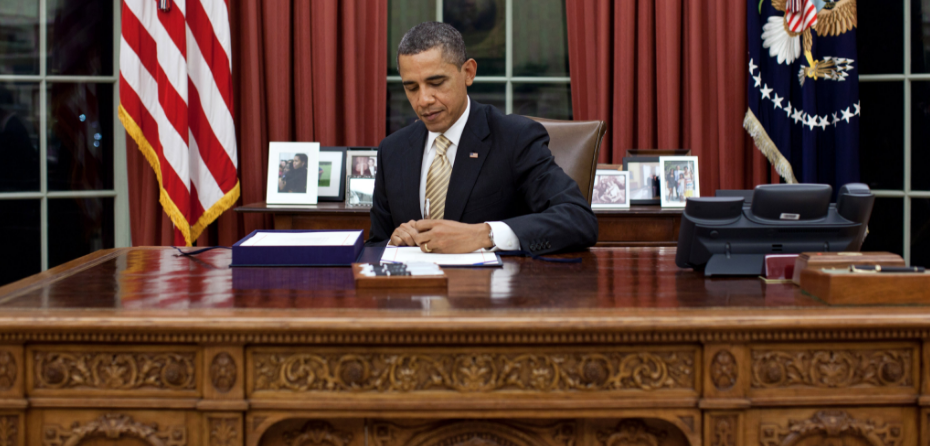
The Obama years have shaken up America’s role in the world
History will remember Barack Obama as America’s first black president. But his years in office have shaken up America’s role in the world and the political spectrum at home.
“How’s that hopey-changey stuff working out for ya?” sneered Sarah Palin, the defeated 2008 Republican vice-presidential nominee.
It was February 2010, scarcely a year after Obama swept into the White House. He had promised halcyon days of hope and change – an end to partisan gridlock and bloody wars – but he was struggling to live up to his own hype.
Obama’s first year in office saw 4 million Americans lose jobs. Hundreds more lost their lives in Iraq and Afghanistan.
Democrats and Republicans seemed as dislocated as ever. Senate Republican leader Mitch McConnell set the tone: “The single most thing we want to achieve is for Obama to be a one-term president.”
Obama tried to temper expectations. “We are living through difficult and uncertain times,” he said during an inaugural congressional address. But his rhetoric – at times on par with Winston Churchill or John F. Kennedy – had set the bar too high.
He wasn’t helped by the Nobel Committee, which made him a peace laureate months after he took office.
“I would be remiss if I did not acknowledge the considerable controversy that your generous decision has generated,” he said while accepting the prize.
After the damage of the Bush years, economy under Obama recovering
Fast forward to the end of Obama’s labors and the economy is in a slow but steady convalescence.
Massive fiscal stimulus and historically unparalleled monetary easing ameliorated the crisis, but the recovery was uneven.
The threat of jihadist attacks continues and wars in Iraq and Afghanistan rage, but with a much lighter U.S. footprint.
If George W Bush’s unilateralism made him an global pariah, Obama’s pledge to cooperate and restore America’s reputation helped make him a rock star.
His credo that “no one nation, no matter how large or how powerful, can defeat such challenges alone” was met with adulation by 200,000 fans in Berlin.
At times, Obama seemed to positively embrace the end of post-war U.S. hegemony. He defined the national interest more narrowly and eschewed intervention, even when his red lines were breached and America’s reputation was damaged.
The cost in blood and treasure of being the world’s policeman had been too great. The Great Recession had shown that commitment was probably unsustainable too. Instead, he looked to allies to carry their weight in their neighborhoods. In Libya and elsewhere, the U.S. would “lead from behind.”
But his timing could scarcely have been more problematic.
The retrenchment of U.S. power came as rivals became more bellicose and allies in Europe were at their weakest.
In Xi Jinping and Vladimir Putin, China and Russia had more powerful leaders than at any time since Mao Zedong or Leonid Brezhnev. In Turkey, the century-long pro-western legacy of Mustafa Kemal Ataturk was unravelling.
Meanwhile Obama’s “pivot to Asia” came as Arab citizens were finding their voice and looking for support against despots.
Nowhere have the shortcomings of Obama’s doctrine been more relentlessly investigated than in Syria, where hundreds of thousands have died as Obama has refused to intervene.
At home, Obama’s presidency has seen similar seismic shifts.
U.S. politics move from partisan to tribal
In the wake of the Great Recession, the fault lines in post-Obama politics look economic: Globalist versus nativist, populist versus liberal.
But America’s politics have also moved from partisan to tribal, with Democrats and Republicans flocking to support their own deeply flawed candidates.
Meanwhile even Obama’s fiercest critics acknowledge his White House has been bereft of ethics and sex scandals.
“Professor Obama” – once criticised as too cold and out of touch – leaves office with soaring public approval ratings that are approaching levels enjoyed by former presidents Bill Clinton and Ronald Reagan.
His legacy is not yet fully formed, but as he leaves office some 55 percent of Americans believe the hopey-changey stuff worked out.
Copyright 2016 AFP
