
Featured
Part Four of A Universal Africa
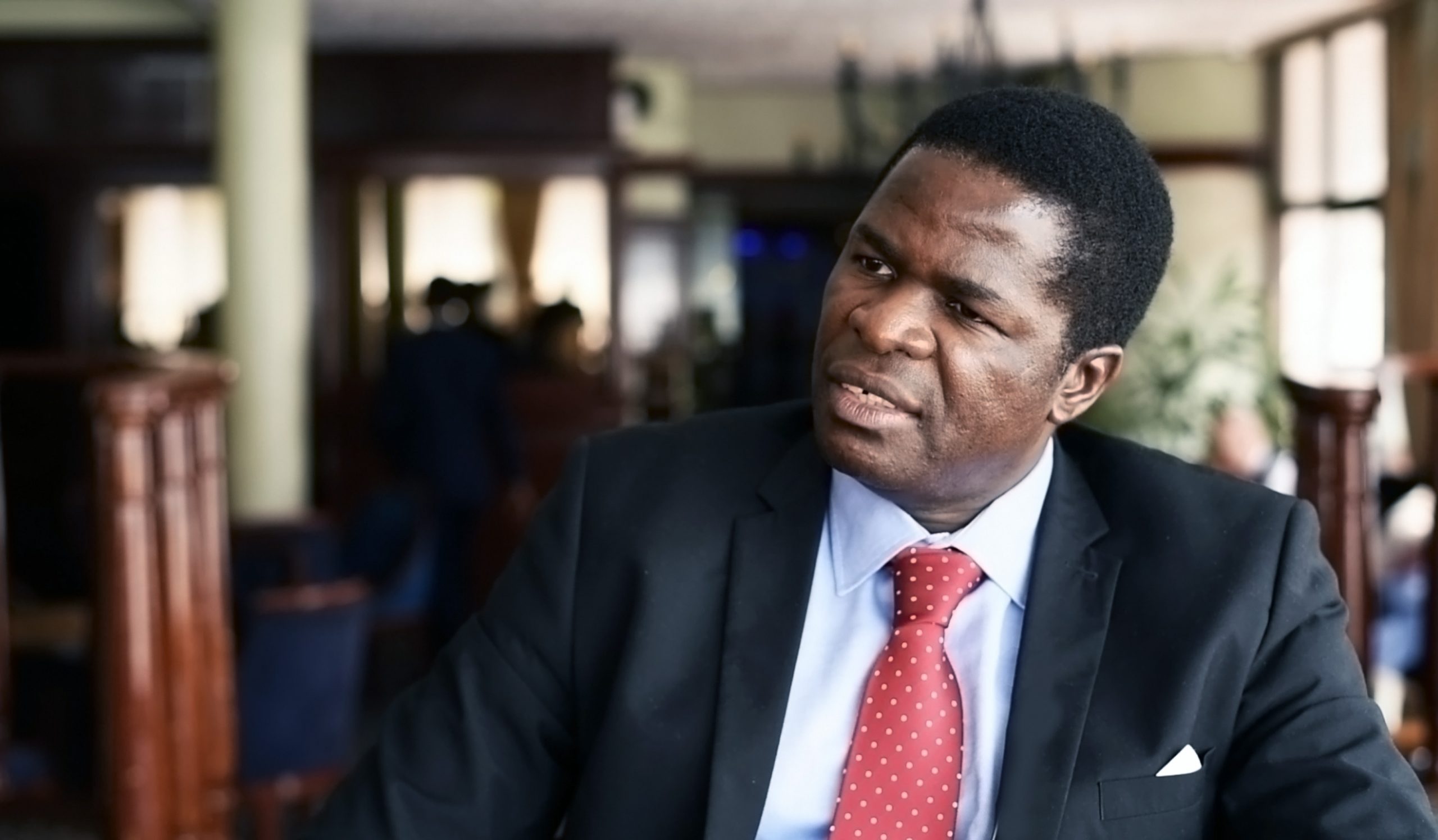
By Francis Mangeni
In this fourth and final part, we provide a series of responses, starting with the bane of regional integration in Africa.
The Bane of Regional Integration in Africa
Regional integration in Africa has faced grave challenges, with an overall assessment of brave but sub-optimal performance. Intra-African trade has been obstinately low, at 18 percent in 2020 having risen from 10 percent in 2010.
The bane of regional integration in Africa is that, in daily activities and short to medium term programming in Government and industry, it’s on the whole not owned by key actors. It seems to be neither visible nor of practical worth.
Regional integration will have relevance and presence when stakeholders who would be users and beneficiaries find practical value in it. Otherwise, all the instruments and meetings will literally be to no avail as a stupendous irrelevance lacking ownership. Sadly, this has been the state of much of regional integration in Africa.
It seems to be a default position for Government and Industry to prefer global markets and partners as containing more value, to the regional. Africa trades far more, at about 82 percent, with the rest of the world than with itself. It should be too late in the day to hack back to century-old colonial infrastructure and policy structures that oriented the periphery to the metropoles. Other former colonies have not been held back by this legacy, and above all, choices now exist in light of the demonstrable potential of regional value chains and markets.
The African Continental Free Trade Area as a bloc constitutes the 11th largest economy in the world. Business/consumer spending in Africa already stand at US$ 5 trillion annually. In COMESA, unutilised available potential for formal trade in goods amounts to US$ 82 billion annually.
A devastating challenge has been the lack of a critical mass of leadership for regional integration, in Government, industry and civil organisations, and academia. Champions of regional integration have been in the minority; a rarity that has characterized African integration since the heyday of political Pan-Africanism in the 1950s and 1960s.
On the contrary, the scheme of priorities has remained national, rather than regional or continental. The Westphalian model of the international political system has been as alive in regional integration as in any multilateral or global organisation. The shift in mind-set to a collegiality appropriate for regional integration has not been visible.
In episodes and on issues where clear and strong leadership has been available, impressive progress has been made. A remarkable example is of the African Continental Free Trade Area which was ratified and entered force in a record period of under one year and two months. Another impressive example is the East African Community, which moved from establishing a customs union in 2005 to a functional common market in 2010.
As a political process requiring government-led vision, objectives and programs, inadequate leadership has been manifested in fits and starts. This lack of consistency and sustainability has undermined impact. Without effective, consistent long-term visions that include regional integration, fire-fighting Governments have been spread thinly across spot crises driven by political expediency. A critical mass of statesmen for regional integration has been lacking.
A related challenge has been institutional disconnects especially among Government ministries and departments, in many cases isolating regional integration away from the mainstream into a marginal issue. Coherence across ministries and departments would mean that regional integration is mainstreamed into public policy and institutions in all-Government approaches.
While there has been no shortage of regional integration legal, policy and program instruments, their inadequate implementation has been legendary. Inadequate Implementation can be attributed to bad managers who have been responsible. Results-based management has not been adequately infused continent-wide into regional integration. Rather, regional integration has been more of an annual or bi-annual festival for mirth and speeches.
On the other hand, institutions and programs with good management have performed with results. A challenge has been that such well-managed institutions and programs have not been the general picture but more of isolated incidents. A dire shortage of human resource capabilities, both in numbers and skill-sets, has compounded the condition of regional integration in Africa.
Human resource planning for adequate staffing levels and for required competencies should be prioritized into an all-government fever. It’s when Government, Industry and Academia teem with relevant frontline expertise that regional integration can vibrantly come alive, in the public and private spaces, and in ideation and public opinion. Given that structured formal education in regional integration is quite rare, with a shouting absence of relevant courses, this hiatus of human resource capabilities shouldn’t be surprising.
Regional integration poverty seems to be a particular species of poverty. The inadequate and in some cases lack of funding for regional integration has been a startling mismatch with pronouncements that suggest urgent political will. In national budgeting, cases of total absence or minuscule allocations to regional integration are widely spread.
Gruelling discussion of budgets for regional integration organisations, arise not only from mismanagement, distrust, top-heavy structures, and bad program performance, but equally from scarcity of funds that national treasures can allocate to regional integration activities. Development partners have often come in to foot the bills, and of course demanding and deserving a say in the programming of African regional integration. Autonomous financing of regional integration has therefore been a priority of priorities.
The human element should never be ignored as a pervasive life-giving ingredient of regional integration. Personalities matter. Brutal personalities, loud bosses who don’t listen and sheer incompetents, will destroy regional organisations and sap efforts and enthusiasm for program implementation, as has indeed happened in several organisations. And so does communication within the organisation and with all stakeholders. Clarity of messaging is a critical success factor. The quality of the mind, body and spirit of secretariat staff and government officials hugely matters, which underlines the often-forgotten importance of mental health and support teams. Bad manners, laziness, intrigues and unprofessionalism also come into play as destructive forces. African regional integration institutions have had a large share of these woes. The psychology of regional integration in Africa can no longer be a neglected disease.
These challenges are compounded by weak secretariats. It should indeed be amazing that, as the technical bastion for regional integration, secretariats should lack the powers and resources for implementation and enforcement, a luxury the enormously successful European Commission doesn’t have.
The profile of senior secretariat staff should match the higher levels of government, and the expertise of experts should rank with the best in the world. Rather than dumping grounds, secretariats should be assured problem-solving ports of call staffed with the best there is of expertise, character, motivation, good cheer and trustworthiness.
It’s arguable that shortcomings at the national get amalgamated at the regional and continental level. Dysfunctional governments will produce dysfunctional regional organisations. National apathy and laziness, poverty and corruption, disorder and misrule, are carried into regional institutions; sabotaging the implementation of regional programs.
However, in line with the sublimity principle, regional integration organisations should gather and reflect the best there is in the member countries and among stakeholders. With such a component, secretariats can enjoy the respect of Governments and stakeholders from the region and around the world, which can facilitate regional integration.
The Response
As would be expected, these challenges have attracted a lot of attention and a learning process, at regional, continental and national levels. Boosting intra-African trade has been a palpable theme and priority at the highest political level. The appeal of regional integration has been to tap into larger regional markets and into the economies of scale. Trade as an engine of economic growth and transformation has been appreciated. The foremost continental intervention has been to conclude and implement the African Continental Free Trade Area, which is expected to increase intra-African trade to at least 20 percent of total trade by the year 2022.
To improve ownership, outreach programs for stakeholder engagement, awareness creation and capacity building have been included in regional strategic plans. More importantly, dialogue between the private and public sectors has been encouraged, and private sector institutions given a say in decision-making. This feedback and input mechanism assist to focus regional integration on real issues of concern to users and beneficiaries and improves relevance. Rapid systems for addressing trade disputes, particularly non-tariff barriers, have been put in place for functioning free trade areas. The COMESA, EAC and SADC developed an online system freely available to the public at www.tradebarriers.org, which can be used in real time to report and address non-tariff barriers, and performs at a success rate of 80 to 90 percent.
Various initiatives for leadership training and entrepreneurship now span Africa. Innovation competitions and awards generate crops of young entrants into industry and grow economies. Governance programs seek to improve democracy and the rule of law. Regional organisations, academia and philanthropists actively support these interventions. To improve management of regional organisations, long and medium-term strategic plans are adopted, internal and external audit systems put in place, and results-based management adopted. Merit-based recruitment and performance assessment is used. The absolute importance of strengthening regional integration organisations has been recognised. For example, the African Union adopted sweeping reforms in 2017 aiming for better definition of and focus on priorities, efficient management, autonomous financing through a 0.2 percent levy on customs duties, quality control of meetings through de-congesting the agenda and focusing on a few critical issues, rationalisation of the blotted bureaucracy the commission was, and creating better coordination with regional economic communities and other institutions supporting continental integration.
In a never-ending search for efficiency, reviews are undertaken through independent bodies and organs and Committees of regional organisations and the African Union. Annually, through statutory meetings, regional integration organisations review programs, performance, and capabilities, and plan ahead. They take decisions. These events provide opportunities for introspection and improvement, as well as nostalgia and reinvigoration. African regional integration took off in earnest as military mobilisation and battles and as diplomatic activity throughout the world for decolonisation. The impetus for economic development was the other flank, waged at the United Nations, the metropoles and throughout the continent at national and regional levels. This was the face of African regional integration for most of the 1960s and 70s. Africa devised a long-term continental vision. A vision points into a direction and to goals and objectives to be achieved and is indispensable for planning and clear progress.
The political component of the decolonisation vision established institutional frameworks, notably the Organisation for African Unity on May 25, 1963. At the UN, Africa sought the establishment and implementation of the New International Economic Order, discussion on which began to fizzle out in the 1980s with the triumph of economic liberalism and the Washington Consensus, which led Africa to put more focus on internal economic initiatives for collective self-reliance and transformation. Under the economic component, the Treaty establishing the African Economic Community, also called the Abuja Treaty, was adopted on June 3, 1991 and entered force in 1994. The Abuja Treaty set out a 34-year program for forming the African Economic and Monetary Union, that is, by the year 2028, through a gradual and progressive process that built upon regional economic communities to be formed.
These frameworks were further updated through the formation of the African Union over a transition period of 2000 to 2002, and the adoption of the 50-year blue print in 2013 famously called Agenda 2063 for the Africa We Want. At the regional level, integration took off in earnest through cognisance of and interventions to address specific existential crises. In West Africa in the 1970s to 80s for instance, peace and security had to be addressed, leading to adoption of elaborate peace keeping institutional arrangements, the face of which was and remains the Economic Community of West African Monitoring Group (ECOMOG). In Southern Africa in the 1980s, frontline states around South Africa formed the Southern African Development Coordination Conference (SADCC), later the Southern African Development community (SADC), to industrialise and build infrastructure as an integral part of the anti-apartheid struggle. In the horn of Africa, the Intergovernmental Authority on Drought and Desertification (IGADD), later the Intergovernmental Authority on Development (IGAD), was formed to address drought and desertification.
At the continental and regional levels, institutional engineering took place to keep the organisations relevant to the times and challenges. As indicated, the OAU was transformed to the African Union, SADCC to SADC and IGADD to IGAD. This wasn’t just a renaming exercise, but a sharpening of the organisations to meet contemporary challenges. In some cases, names were not changed but constitutive instruments were overhauled, as was the case in ECOWAS where the 1975 treaty was amended in 1993. At the continental and regional levels, complexity grew out of simplicity, with a raft of issue-specific instruments, programs and specialised agencies to cope with multifaceted challenges. Similarly, a web of organs and committees emerged as hierarchical decision making and as specialised locus. Much remains to be done even if this much has been done.
Africa in the world
The doomsday clock is now reading 20 seconds to midnight; the closest humankind has been to annihilation since 1945. The threat of nuclear conflicts, environment deterioration and disruptive technology-enabled cyber warfare pose grave dangers to humanity and the planet. Underlying these three dangers is the breakdown in cooperation-, science- and law-based approaches in international relations and problem solving, orchestrated by some political leaders.
Several extinction level threats face humankind, requiring national, regional and global solutions. These include pandemics, destruction of animal habitats, rising sea levels, unpredictable violent weather, threats of wars and tensions amidst weakening international organisations that have provided the bedrock for universal peace, and nationalistic and right-wing leaders striking at the fabric of social cohesion and international cooperation under multilateralism.
Global action, while the optimal response, has been wanting in some critical cases. For instance, eradication of poverty, hunger and illiteracy have been within the reach of humankind’s technological and financial resources; yet the critical amount of action has been lacking.
This points to the need for additional action at other levels. Regions have often stepped in where global responses were inadequate. The formation of NATO for instance, supplemented the UN mandate for keeping global peace. The African Peace and Security Architecture too has played a significant peace keeping role in Africa.
A main reason of economic integration in Africa has been that the national level actors domestically transpose and implement the commonly agreed vision, objectives, policies, programs, and targets. This is how it’s supposed to work, and this is why there is a possibility of review of domestic measures such as non-tariff barriers through online transparency mechanisms and mediation, democracy and governance under the African Peer Review Mechanism and generally breach of obligations under instruments of the African Union and regional economic communities.
In regional integration and cooperation, sovereignty, while not ceded, is shared; which should make the Governments stronger than if they acted in isolation. Rationality of decisions and maximization of benefits and outcomes require cooperation among African Governments and stakeholders, when dealing with each other and with third countries. Game theory can be taken to assume that a Government must always pit itself individually against other African and non-African countries, in the absence of AU and REC level governments; and is perhaps best suited for companies or entities acting in competition against each other. The EC/EU vested the European Commission with an exclusive negotiating mandate in trade matters, which shows the existence of this possibility. CARICOM has mimicked this through its negotiating machinery. The approach in Africa has rather been for the Governments, not the Secretariats, to negotiate and act, but from common agreed positions; the Common African Positions.
A point of weakness for Africa though has been when strength in numbers and solidarity in priorities have not been used. The ancient united-we-stand and divided-we-fall adage is still true. And the economics of the weakness of diminutive, balkanised economies is still true. Unfortunately, it’s weak countries which tend to more fervently insist on exclusive sovereignty, while the strong ones concert and multilateralise their interests into global orders.
The Westphalia model of the international system has greatly been diminished over the years, not just due to the globalisation underway especially since the 1900s, but also by the emergence of rule-making and norm-setting inter-governmental organisations and non-state actors including large industry and cross-border self-regulating associations.
The need is pertinent for a Global Africa, one that is concerted and effective in international relations, shapes global orders at least by effectively factoring in its interests, even in emerging orders like China’s Belt-Road-Initiative. The need for cross-border interconnectivity and economies of scale in the infrastructure sector argue best the case for Africa to work together ever more closely and move in the same direction on the basis of shared priorities when national governments act. Old and emerging powers have been out courting Africa at summits to take decisions and make policy at the highest political level. Frameworks wedding Africa to some countries have stabilised into periodic jamborees or are being cultivated. This polygamy might be considered appropriately African. The response of Africa must secure its place in and the good of the world, naturally, in its enlightened self-interest.
Beyond the developing bilateral transactionalism by some individual African countries, there is an existential need for an efficient holism that maps out all interactions with the rest of the world from the African stance. Queuing up to compete in a race to the bottom against other African countries, or getting crumbs in exchange for long term strategic losses, for instance getting a 10-year stadium or road or railway in exchange for a 100-year concession to an entire belt of minerals or harbour, or management contract, can hardly pass muster. A geo-strategy is the organising logic required for beneficial international relations. The imperative cannot be over emphasized of a Global Africa Policy Framework, with a Global Strategy and Action Plan; setting out clear objectives, activities and actors responsible for them, targets and indicators, timelines, and periodicity of reviews and implementation of any corrective measures.
Dr. Francis Mangeni serves as Head of Trade Programs at the AfCFTA Secretariat in Accra, Ghana
