
Politics
Are new voter ID laws Jim Crow by another name?
OPINION – As a civil rights lawyer who works in the trenches, I am well aware of the barriers that black voters face and particularly sensitive to the burdens that these new laws present…
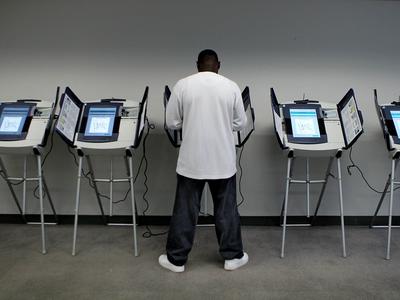
In few instances are legislators able to present any empirical evidence showing that the burdens imposed by the laws are justifiable or reasonable. The party line presented by those proposing the laws are that they are necessary to preserve the integrity of the electoral process and to prevent fraud and voter impersonation at the polls. However, there is no statistical evidence or real data that supports these thin claims. A recent study by the Justice Department revealed that few people have been convicted of voter fraud and that most of those cases, in any event, could not have been prevented by voter ID laws.
Instead, what the evidence shows is a clear and undeniable racial impact. For instance, we know that there are many individuals who do not possess government-issued photo id such as driver’s licenses and passports and that the burden associated with obtaining such an id may ultimately deter many from registering. To illustrate, the state of Indiana adopted a photo id law in the face of evidence that 13 percent of registered voters lacked the requisite id. And the impact was demonstrated in subsequent elections where long-time voters were denied the right to cast a ballot because they did not have acceptable identification.
In many of the states where these laws have emerged, there has been strong and almost unanimous opposition presented from black legislators concerned about the impact that these laws will have on minority constituencies. For example, while many Americans have photo id, studies confirm that as many as 12 percent of eligible voters nationwide do not. A recent Pew Trusts survey conducted after the November 2008 election found that 16 percent of respondents lacked a driver’s license that was both current and valid.
In the last several months, voter ID and/or proof of citizenship bills have been adopted or cleared in Alabama, South Carolina, Georgia, Tennessee, Texas, Kansas, Wisconsin and Rhode Island — many of these being states with substantially large minority populations. In a number of other states, gubernatorial veto powers were evoked to prevent these restrictive laws from going into place including in North Carolina, Minnesota and Missouri.
In Florida, the legislature has adopted a package of voting reforms that reduces early voting hours and will make it more difficult for ex-felons to have their voting rights restored. Vigilance will be demanded in those places where these laws are still being considered to ensure that the supposed benefits of the laws are outweighed by the substantial burdens that these laws impose.
While hopefully we are not witnessing the re-emergence of Jim Crow, the effort to frustrate the exercise of our nation’s most cherished civil right — the right to vote — should have us all concerned. As a civil rights lawyer who works in the trenches, I am well aware of the barriers that black voters face and particularly sensitive to the burdens that these new laws present.
The goal should be to adopt progressive election reforms that tear down existing barriers while steering clear from Jim Crow-era kinds of voting laws that turn the clock back and bring us closer to the past than we need to be.
Kristen Clarke: TheGrio
