
Politics
The Clarence Thomas pick 20 years later: Disorder in the court
OPINION – He actually believes that race is a crutch, an impediment and even an archaic relic of the past in American life…
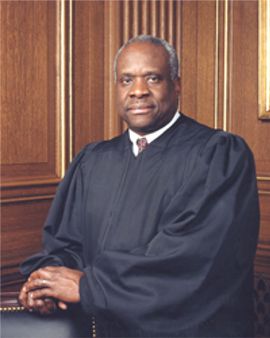
But it’s the issue of race that has kept Thomas in the spotlight and the center of controversy for two decades and made him the Supreme Court justice most loved by ultra-conservatives and loathed by liberals and a majority of African-Americans during the last two decades.
In speeches before conservative groups and in his autobiography Thomas made no effort to hide why he’s more than willing even giddily happy to wage relentless public and private war against civil rights leaders and liberal Democrats. He actually believes that race is a crutch, an impediment and even an archaic relic of the past in American life.
He beat the odds and withering opposition to climb to the judicial top, and his tenure on the court is supposedly personal proof of that. He actually believes even more deeply that there is no contradiction for an African-American to be a conservative and to espouse conservative principles.
For many that types him as a contrarian, if not out an out political odd ball, since it’s long been an article of faith of many blacks and liberals that racism and conservatism are two sides of the same coin. But Thomas is by no mean an anomaly. Many blacks oppose abortion and gay rights and affirmative action and are just as hard line on crime and punishment, and pro-business as Thomas.
Despite the ritual Thomas bashing during the past two decades, the hard reality is that Thomas is one of the nine most prestigious and implicitly powerful judges in the nation. This forces a grudging acknowledgment even deference among interest groups and that even includes some blacks. He has been invited and courteously received on occasion at some predominantly black schools and events. They sparked the inevitable protests and demands that Thomas be disinvited. But Thomas came and spoke anyway.
That was the case in June when Thomas was invited to give a keynote speech at the dedication of a courthouse in Augusta, Georgia to black judge and civil rights advocate John Ruffin. The two men were at diametric ends of pole legally and politically but despite the grumbles about dishonoring Ruffin’s name and principles by inviting Thomas, he came and spoke anyway. He is after all a sitting Supreme Court Judge.
Thomas claimed at his confirmation hearings that he would bring “no agenda or ideology to the court.” That was at best the requisite confirmation ingratiating talk and at worst, well, a lie. Thomas’s conservative, unorthodox, views and legal opinions on the death penalty, age and gender bias, first amendment, prisoner rights and affirmative action cases were well known by the time he hit the court in 1991.
He certainly tipped his hand enough on them as an appeals court judge and as Reagan’s picked chair of the EEOC. Thomas didn’t stiffen his stance on judicial conservatism to curry any favor with white conservatives or as revenge against civil rights, women’s and civil liberties groups for hounding and hectoring him, and making life holy hell for him before, during and after his the confirmation hearings and narrow Senate vote to confirm him on the court.
Thomas is in the twenty years after those raucous confirmation war and will remain what he’s always been, a judge that if the issue doesn’t square with myopic conservative dogma can take the vote against is in the bank even if his is the only vote.
Source: Earl Ofari Hutchinson
