Business
Ethiopia: A Miracle Economy in Africa – A focus on the country’s success story
Starting from dire poverty, as the second-poorest nation in the world in 2000, Ethiopia has been the miracle economy of the past decade.
Data from the World Bank reveals that the country has averaged 10.9 percent real annual growth since 2004 and is expected to grow by 8.3 percent in 2017.
Ethiopia’s real per capita income has increased from US$200 per year in 2000 to above US$500 today, and the percentage of the population living in poverty has declined from 55 percent in 2000 to less than 30 percent today.
The country’s income distribution is still one of the most equal in the world.
In many ways, Ethiopia”s economy resembles China’s in the mid-1980s.
In both cases, initial agricultural reforms, infrastructure investments and special industrial zones allowed the initial high-growth escape from poverty. If Ethiopia can continue at this rate, it will be a middle-income country by 2025. But, of course, the question is what kind of development model will allow this astounding growth to continue.
Looking to replicate China’s model
Ethiopia sent 6 senior officials earlier this year to study economic development at the Institute for South-South Cooperation and Development in Beijing – showing the importance the country attaches to understanding and analyzing China’s development model.
The officials stress the importance of agricultural reforms, noting that 80 percent of the population is still rural.
Ethiopia has fundamentally changed because its federal and regional governments work on the productivity of the farmers. By introducing them to technological inputs, like using fertilizers; letting them sell their own products to the market; and supporting the farmer in general, the yield in agriculture has been going up rapidly. That is one turning point for the economy.
The country now has 65,000 agricultural extension workers – on average, 1 for every 500 farmers. This very closely supports and gives agricultural extension services to those farmers, promoting agricultural productivity on their parcels of land, the officials say.
The nation retains ownership of the land but each farmer has usage rights, including the right to lease out the land.
Ethiopia is a very densely populated nation, thus making it quite challenging to mechanize agriculture. The system has to ensure land productivity at the household.
World Bank data confirms that agricultural productivity has increased by 7 percent per year since 2004.
Attracting investment
A major focus now is on creating and growing links between the industrial sector and the agricultural sector.
Agricultural products should be processed through the industrial system.
The country has commissioned and is also in the process of building several special industrial parks (special economic zones) throughout the country, thus attracting investment in the manufacturing sector – which will result in thousands of new jobs.
Another key government initiative is the creation of small and micro enterprises at the grassroots level. Wherever you go in Ethiopia, you can find this, the officials say. In rural areas, these enterprises supplement farming incomes. They produce construction materials such as bricks, clothing and many kinds of services.
All levels of government provide training in technical and vocational skills, market integration, legal support and loans.
The officials see this as somewhat similar to the town and village enterprises that helped boost the Chinese economy in the 1980s.
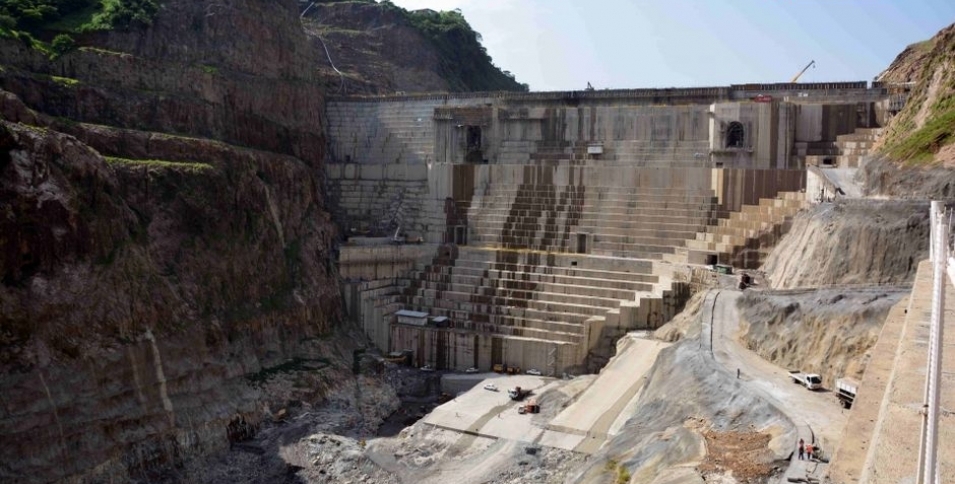
Ethiopia’s highlands are the water tower of East Africa. The country is now 7th in the world and first in Africa in terms of hydropower capacity.
This will allow the building of a green economy in Ethiopia and will also be the “East Africa Power Port”, helping to integrate the region, the officials say. Power is now exported to Sudan and Djibouti, and power lines to Kenya are under construction. Self-generated power will also significantly reduce Ethiopia’s dependence on oil imports – which currently use up 70 percent of its hard currency receipts.
Internal mobilization of finance
Ethiopian officials say that internal mobilization of financial resources is a priority. Currently the country saves 23 percent of income and invests 20 to 23 percent. The country stretched to self-finance the US$4.5 billion Grand Ethiopian Renaissance Dam on the Blue Nile River.
In addition, the country has invested heavily in the development of new infrastructure. The recently commissioned subway in the capital Addis Ababa and the new high speed train to the port of Djibouti in addition to the massive hydroelectric infrastructure expansion are evidence on the country’s aggressive path to economic greatness.
The new high speed train has sped the rate at which business is done, and will be replicated in many parts of the country. Ethiopia is on track to surpassing Kenya as east Africa’s largest economy by 2019.