Opinion
Ethiopia: Industrial parks transforming the country
By Abiy Hailu
Special economic zones are an effective instrument to promote industrialization and structural transformation. They have already brought about significance economic success stories particularly in east Asia in advancing industrialization, economic efficiency, foreign direct investment inflows and urbanization. There have also been cases where such initiatives have failed to bring about the desired outcomes in a few African countries for various factors.
Special economic zones (SEZs) are also termed as free economic zones, export processing zones, trade zones, industrial parks in different countries’ contexts.
The experiences over the last 50 years in economic zones around the world portrays mixed images.
Export processing zones (EPZs) – the integral part of an export-oriented industrialization policy package in newly industrialized Asian countries such as Taiwan and Korea, and China’s SEZs – are prominent success stories in giving rise to rapid industrialization, economic growth and hence structural change.
While EPZs were initially an Irish invention, Tatsuyuki Ota, in his study – Industrial Policy in Transitional Economy: The Role of China’s Special Economic Zone in Economic Development – stated that they were introduced as one tool of the policy packages of the outward-oriented development strategy in Taiwan and Korea and they have been highly responsible for these countries rapid economic development.
The first Asian EPZ installed at Kaoshiung, Taiwan as an essential part of outward industrialization strategy was a key element in Taiwan’s economic achievement.
The success of the EPZs in these countries had set lessons for the Chinese, SEZs model. Though there are several factors for China’s remarkable rapid economic growth following its major economic reforms, the role of the numerous SEZs, industrial clusters and technology parks has been highly indispensable in bringing new technologies, facilitating the adoption of modern management system and spurring fast economic growth in urban areas.
The first zones have served as models for the country’s industrial development by successfully testing the free market system and of rapid economic growth by using tax and business incentives to attract foreign investment and technology.
The Chinese government gives special economic policies and flexible governmental measures that allow SEZs to utilize an economic management system that is more attractive for foreign and domestic firms to do business in than the rest of mainland China.
The economic zones have transformed small towns into boomtowns, with rapidly expanding light and consumer-goods industries and growing populations. For instance, the establishment of special economic zone led to massive population growth in Shenzhen. Its population grew from some 30,000 in 1979 to more than 1,000,000 by the beginning of the 21st century.
Challenges
While the success of these Asian countries has stood the test of time, some countries have failed to make similar progress. One important reason for the failure of some African countries could be the weak business environment. In general, evidence shows that thus far, very few African zones appear to have made significant progress toward taking advantage of the dynamic potential of economic zones as an instrument of sustainable structural transformation.
Some of the key challenges, according to Douglas Zhihua Zeng, honorary Professor of Tianjin Normal University (China), include problematic legal, regulatory and institutional frameworks, poor business environment, lack of strategic planning and failure to adopt demand-driven approach, inadequate infrastructure, lack of operational know-how for zone management and lack of policy consistency, and failure of host governments to maintain commitments to zones, among others.
However, China’s economic zones model, can be adopted by taking local contexts into consideration, its experiences, lessons and success stories could be used as template for other developing countries that are in the stage of economic take-off.
Ethiopia
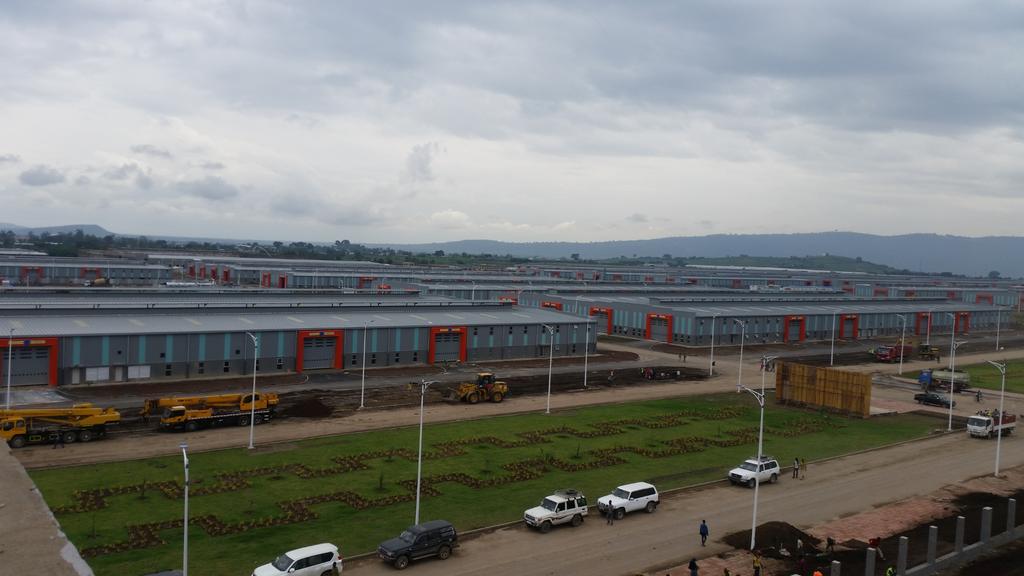
Ethiopia seems to be a country committed to emulate these success stories through its newly built state-of-the-art industrial parks. It seems that industrial parks development is the order of the day in Ethiopia.
In the past month alone, 2 newly built industrial parks have been inaugurated, while an additional industrial park is now fully operational.
The Hawassa, Kombolcha and Makalle industrial parks, constructed at a total cost of more than US$400 million, specialize in the production of textiles and apparel. The federal and state administrations believe that the sector would help stimulate industrialization and hence structural change.
In fact, industrial parks appear to be timely as the country is becoming a major foreign direct investment destination in Africa and has surpassed it’s southern neighbor, Kenya, as east Africa’s largest economy.
Prior to the inauguration and commissioning of the above listed industrial parks, Ethiopia had 4 special economic zones including:
– the Bole Lemi Industrial Zone,
– the Eastern Industrial Zone,
– the Lebu Industrial Zone and
– the Modjo Industrial Zone.
Positive economic impact
Ethiopia is now emerging as a textile and apparel manufacturing hub. In addition, the country attracted more foreign direct investment (FDI) inflows in 2016 than ever before – an increase of 46 percent to US$3.2 billion. The country become the largest FDI destination second to Vietnam – according to the 2017 World Investment Report released by the United Nations Conference on Trade and Development (UNCTAD).
Job creation
The 3 new industrial parks are expected to generate 100,000 direct jobs, while the garment sector alone is estimated to create approximately 350,000 jobs over the next few years.
Additionally, domestic industrialists can easily benefit from the opportunity to seamlessly integrate into the global supply chain.
The infrastructure development underway in the country, particularly the extensive railway projects will positively impact towards the success of the industrial parks.
Ethiopia’s federal and state governments have commissioned the construction of an additional 15 industrial parks across the country. According to Prime Minister Hailemariam Desalegn, the industrial parks will enable the country begin its industrialization process in addition to attracting investment, job creation and eventually transforming and modernizing the economy.