Opinion
Eritrea: A country on the path to self-reliance after rejecting foreign aid
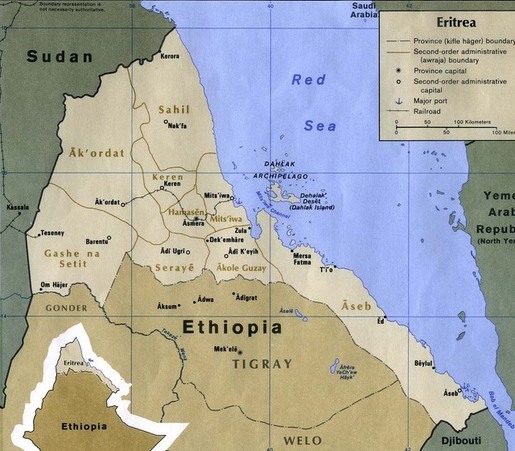
Eritrea – a small east African country implemented its self-reliance initiative – it did something that at the time, was virtually unheard of in sub-Saharan Africa. It turned down foreign aid.
With a president who vows not to lead another “spoon-fed” African country “enslaved” by international donors, Eritrea, a small, nation on the Horn of Africa, walked away from more than US$200 million in aid in 2006, including food aid from the United Nations, development loans from the World Bank and grants from international charities to build roads and deliver healthcare.
The country’s president Isaias Afwerki, a former Marxist rebel who has led Eritrea since its independence from Ethiopia, defends the nation’s exercise in self-reliance, even if it results in short-term hardships. He says it is crucial not only to the long-term survival of his country, but also to that of his continent.
“We need this country to stand on its 2 feet,” Isaias said in an interview. Fifty years and billions of dollars in post-colonial international aid have done little to lift Africa from chronic poverty, he said.
“These are crippled societies,” Isaias said of countries whom he described as relying on donors rather than developing their economies. “You cannot keep these people living on handouts because that does not change their lives. Anyone who takes aid is crippled. Aid is meant to cripple people. Governments in Africa and elsewhere are not allowed to write their own programs. And when it comes to implementing programs, it deprives you of building institutions and the capacity to implement your programs.
We need to write our own programs in the first place. We need to articulate on the projects we write. We need to have a comprehensive strategy, plans on how to implement those programs. Unless we do that on our own, we cannot possibly imagine that we are achieving any of the goals – millennium or non millennium.”
But can Eritrea’s government fill the void?
The self-reliance program began over a decade ago but accelerated sharply in 2005. Relying on its meager budget and the conscription of about 800,000 of the country’s citizens, the program so far has shown promising results. Measured on a variety of U.N. health indicators, including life expectancy, immunizations and malaria prevention, Eritrea scores as high, and often higher, than its neighbors, including Ethiopia and Kenya.
It might be one of the most ambitious social and economic experiments underway in Africa. But unfortunately, Eritrea is not getting much credit. Instead, the government increasingly finds itself in the international doghouse.
The Eritrean government asked all U.S. based non-governmental organizations (NGOs) to leave the country – a move that was not taken to well by Washington. The United States responded by labeling Eritrea a pariah state and included it to its’ list of state sponsors of terrorism.
According to president Afwerki, African mineral resources are not sustainable for economic development in the immediacy. Developing infrastructure for this will take generations to come. Comparative advantages are of greater immediate importance. “Your location could be a comparative advantage. If you have a long coastline, then you develop fisheries, develop your services industry – shipping, transportation – air, land. Provide industry and manufacturing.”
“Africa can produce its own food and grow more. Why are we not able to do that?” You have to produce something. Emphasize sustainable sectors. Agriculture is a sustainable sector. You need to put in place agriculture infrastructure. It is a strategy commodity for communities.
Afwerki categorically blames the recent problems on the African continent on the aid trap many countries in Africa find themselves in: “Number one, it is dependency; dependency on aid. If say a community is addicted to food aid coming from outside – and we have gone through this experience for quite a long time – the whole community is paralyzed, year in, year out. The year comes and the year goes, and communities develop a culture of depending on outside help.
“I think it is irresponsible governments, corrupt governments, who misuse local resources, who misuse external aid and support and do not have even an idea on how to tackle this problem on their own.
“And that is where I believe Africa will have to design its own philosophy of development, because we cannot copy the experience of others. We cannot depend on someone else’s experience on this, we know our own realities, we have to really be articulate in designing programmes that suit our own reality.”
The Eritrean leader insists that he has not isolated his country – but was attempting to protect it from foreign influences that he said hurt developing countries. He said Eritrea would rejoin regional and global markets once it developed a manufacturing and production capacity and could compete on an equal footing. Until then, he added, “we say, leave us alone. Let us do our work.”
As part of the self-reliance campaign, Eritrea has also rejected development loads from the World Bank and International Monetary Fund (IMF).
Has the move towards self-reliance in Eritrea paid off?
Here are some statistics:
For a country that is quite poor, Eritrea now provided free education and healthcare to its citizens. Measles and polio have been nearly eradicated, and the childhood mortality rate has dropped by nearly two-thirds since 1995. Evaluating food production has been more difficult. Eritrea, with its hostile climate and rugged terrain, has a history of famine. But Afwerki said his cold-turkey approach to halting food aid was making farmers work harder, without increasing hunger or malnutrition.
“It has provoked people to do more to feed themselves,” he said, predicting Eritrea would produce an agricultural surplus in 3 years. “We are fed better than anyone.”
However, critics accuse Afwerki of autocratic rule. He rejects criticisms, calling the constitution “only a paper,” dismissing those in jail as “crooks,” and bristling at the suggestion that he’s worried about holding a free vote.
“Do you think I’m scared of elections in this country?” he said. “What have I done wrong to be scared of elections? I’m moving in the right direction.”
With little production and few exports, the government and citizens rely heavily on remittances from Eritreans abroad, including a tax on expatriates collected through the nation’s consulates. Although the tax is voluntary, not paying jeopardizes rights and property in Eritrea, so compliance is fairly good.
Asmara, the capital, is one of Africa’s cleanest and safest cities, with Art Deco architecture, palm-lined avenues and bustling street cafes. The country’s economy is set to grow quite rapidly with the added bonus of new mining ventures which should make Eritrea one of the fastest developing economies on the African continent.
Isaias offered no apologies. He said this generation’s sacrifices would pave the way for Eritrea’s future. “People will either learn the easy way or the hard way,” he said. “If you aspire to become someone in this society with a good quality of life, you work for it. You do not get it for free. It is as simple as that.”