Business
Africa’s Urban Shift: Why Most Firms Are Missing Its Biggest Cities
New UN data redraws the map of the world’s cities. For anyone selling in Africa, the lesson is to look past the capital.


By John Kourkoutas
In 1975, the world had 67 urban areas of more than two million people. Africa had three: Cairo, Alexandria and Lagos. That was the entire list. Today the world has 246, and 43 of them are African.
The figure circulates widely, usually stripped of its source. The source is the United Nations’ World Urbanization Prospects, 2025 revision, published in November. It deserves more care than most versions of the story give it.
A New Definition Changes the Count
The 2025 revision replaced the 2018 edition and quietly changed what counts as a city. The old method relied on agglomerations of 300,000 or more, with each country drawing its own boundaries. That flattered countries with sprawling municipal limits and penalized those with tight ones.
The new method applies the Degree of Urbanization, a single standard measured identically everywhere: a contiguous area with at least 1,500 people per square kilometer and a total population of at least 50,000. Any city count published before last November is therefore not comparable with this one. By the current definition, China has 39 such urban areas, not the 43 still going around.
China leads, followed by India with 37. Brazil, Indonesia and the United States have ten each, Pakistan eight and Nigeria six.
Africa Accounts For Nearly Half Of the Growth
The trajectory is the story. The world had 67 cities of two million or more in 1975 and 246 in 2025, and the UN projects 296 by 2050. Africa went from three to 43 and is projected to reach 66.
Read the last two figures together. The world will add 50 such cities by 2050, and Africa will add 23 of them. Just under half of the planet’s net growth in cities of this size will occur on a single continent.
In Most Markets, the Country is the City
The next figure should change how companies sell. Of Africa’s 54 countries, 26 have no urban area above two million. Twenty-one have exactly one. Only seven have more than one: Nigeria (six), Egypt (four), South Africa and the Democratic Republic of Congo (three each), and Morocco, Ghana and Cameroon (two each).
In those 21 single-city markets, the country is the city. A distributor either covers that one place or does not cover the country. There is no second cluster to argue over, which makes these markets simpler to price than most executives assume.
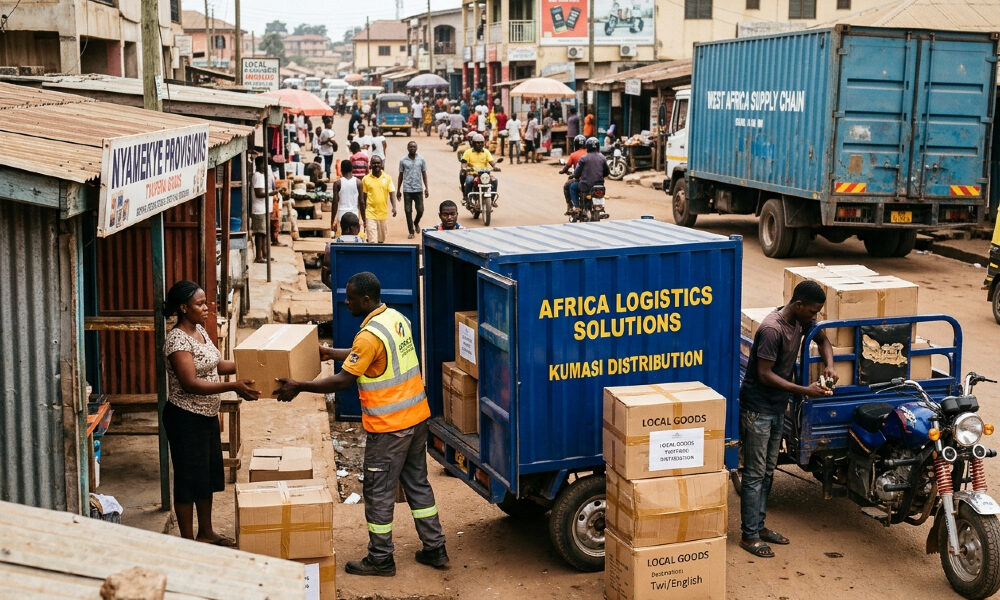
In the seven multi-city markets, the second city is where most companies stop looking. Lagos is obvious. Onitsha (5.6 million), Kano (4.8 million), Kumasi (4.3 million), Douala (4.1 million) and Lubumbashi (2.8 million) are not.
The Capital-Only Trap
Worldwide, 169 of the 246 large urban areas are not national capitals. In Africa, the figure is 17 of 43. The continent is far more capital-concentrated than the rest of the world, which explains why a capital-only strategy feels like it is working right up until it stops.
A Caveat About the Method
The new definition merges whatever is contiguous and dense, and that sometimes produces entries nobody would call a city of that size. Luxor appears at 4.2 million and Banha at 2.1 million, but both are really stretches of the Nile valley and delta read as one built-up area. The totals are sound, but individual names need local knowledge before they go into a plan.
That is the real job. The data shows where the people are. It does not show who sells to them.
John Kourkoutas is business development expert that specializes in helping companies, export teams, and business leaders succeed in Africa’s dynamic and emerging markets.