Opinion
Africa’s Empty Fields: The Continent’s Next Great Economic Opportunity
Hundreds of millions of hectares of fertile land sit idle. Closing that gap could reshape Africa’s economy – and the world’s food supply.


By Dishant Shah
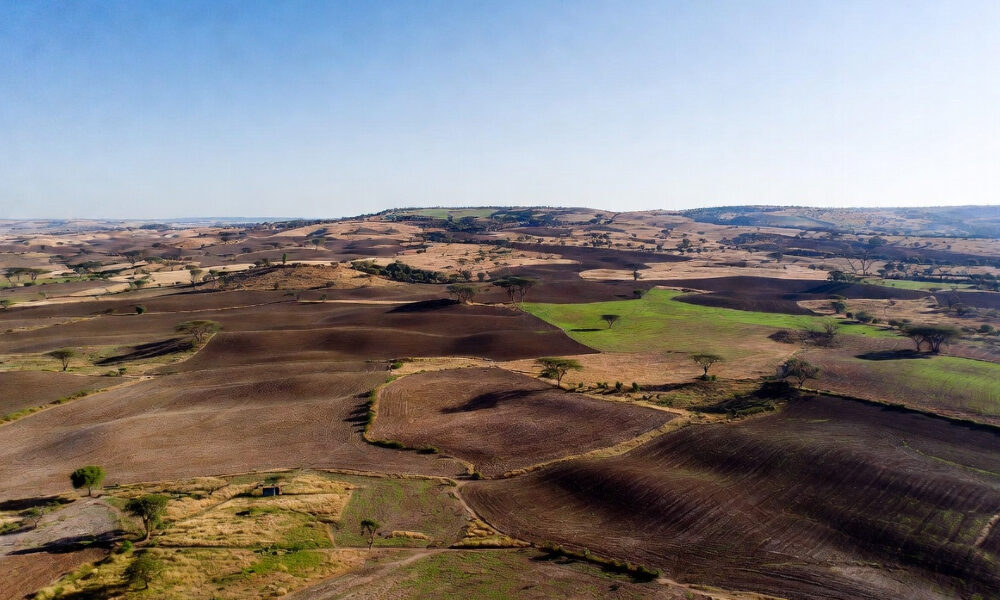
Africa has a land problem, but not the kind most people assume. The continent is not short of fertile ground. It is short of farmers working it.
Of Africa’s roughly 874 million hectares of agricultural land, somewhere between 280 million and 300 million hectares are considered arable – suitable, in other words, for growing crops. Yet only 220 million to 250 million hectares are actually under cultivation in any given year. That leaves tens of millions of hectares of usable farmland sitting fallow, unclaimed, or simply out of reach. For a continent that imports billions of dollars in food annually while a large share of the world’s remaining uncultivated arable land lies within its borders, that gap is not a footnote. It is the story.
What Africa Actually Grows
Look past the aggregate numbers and a clearer picture emerges of what fills the continent’s fields today. Five staple crops dominate:
- Maize: 58–62 million hectares
- Wheat: 34–37 million hectares
- Rice: 33–36 million hectares
- Sorghum: 23–25 million hectares
- Cassava: 15–17 million hectares
Together, these five crops cover more than 150 million hectares – the agricultural backbone of a continent home to over a billion people.
Geography shapes the mix. Maize reigns across Southern and Eastern Africa, where it anchors both diets and rural economies. Wheat is on the march in North Africa and Ethiopia, driven by rising urban demand and government ambitions to cut costly import bills. Rice cultivation is expanding steadily through West Africa, part of a deliberate push by governments to wean the region off imported grain. Cassava, tough and forgiving, remains the crop of last resort and first choice across Central and West Africa, where poor soils and erratic rainfall punish less resilient plants. And sorghum continues to anchor food security across the semi-arid belt running from Sudan to the Sahel, where little else survives the dry seasons.
The Policy Push
Governments are not standing still. The Comprehensive Africa Agriculture Development Programme (CAADP), the African Union’s flagship framework, keeps pressure on member states to lift agricultural investment and productivity targets. Nigeria, Ethiopia, Tanzania, Kenya, Ghana, and Rwanda have all launched initiatives to expand irrigation, modernize seed distribution, promote mechanization, and improve fertilizer access and rural infrastructure.
Meanwhile, the African Continental Free Trade Area (AfCFTA) promises to reshape the economics of farming itself. By lowering barriers to cross-border trade, it could let farmers in surplus regions sell more easily into deficit markets elsewhere on the continent – turning what has often been a patchwork of disconnected national markets into something closer to a single, coherent trading zone for food.
The Obstacles That Remain
None of this is straightforward. Irrigation reaches only a small fraction of Africa’s cultivated land; the rest depends on rainfall that is growing less predictable by the year. Landholdings remain fragmented, limiting the economies of scale that drive productivity elsewhere in the world. Mechanization is still the exception rather than the rule. Post-harvest losses – crops that spoil or spill before ever reaching a market – continue to erode gains made in the field. Fertilizer remains too expensive for many smallholders, and the roads, storage facilities, and logistics networks needed to move food efficiently are, in many regions, still being built.
The Real Question
Here is the number worth sitting with: tens of millions of hectares of arable African land are not being farmed at all. If governments succeed in expanding irrigation, improving infrastructure, and easing trade barriers over the next decade, how much larger could Africa’s agricultural economy become – and what would that mean for global food security in an era when climate change is straining harvests everywhere else?
The answer will not be settled by policy documents or investment pledges alone. It will be settled field by field, hectare by hectare, as Africa decides whether its greatest agricultural asset is the land it already farms – or the vast stretches it has not yet touched.
Dishant Shah is a partner at Legion Exim, a company specializing in facilitating the export of high-quality engineering products directly sourced from manufacturers in India to Africa. His areas of expertise include new business development and business management.