Opinion
Africa Can Escape Its Debt Trap and Reclaim Economic Sovereignty


By Kingsley Moghalu
In a recent commentary, I argued that foreign debt is strangling Africa’s development in fundamental ways. Some economists contend that African nations should borrow more – just more wisely. I remain unconvinced. The reality is stark: at this stage of development, most African countries lack the institutional capacity to borrow smartly. Asking them to borrow more, albeit “wisely,” ignores the structural constraints detailed in my earlier piece. Before reading further, I encourage you to review that analysis for the full context of this argument.
The question, then, is not whether Africa has a debt problem – it manifestly does – but how to escape this suffocating cycle.
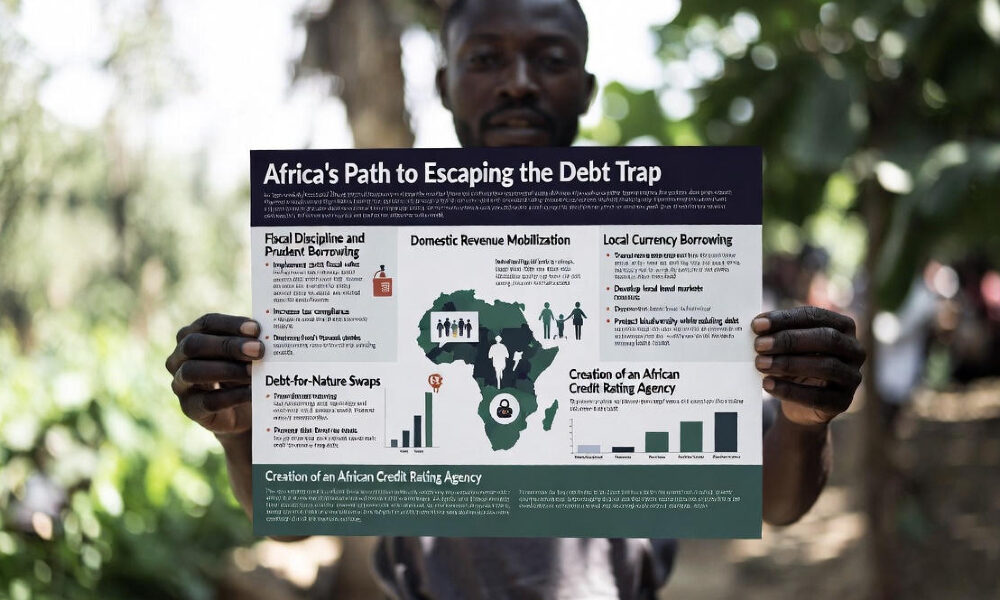
A Roadmap to Fiscal Freedom
The solution requires both immediate discipline and long-term structural reform. Here’s how African nations can reclaim their fiscal sovereignty:
First, impose a moratorium on new foreign borrowing. This may sound draconian, but it would force governments to confront the fundamental issues I outlined previously.
Sometimes constraint breeds creativity, and fiscal discipline begins with saying no.
Second, plug the hemorrhaging revenue leaks. Many African countries borrow funds they wouldn’t need if corruption and illicit financial outflows weren’t draining public coffers.
Greater transparency and accountability aren’t just ethical imperatives – they are economic necessities. When billions disappear through opaque transactions, borrowing becomes a costly band-aid for self-inflicted wounds.
Third, pivot toward equity rather than debt. Asset-backed resource mobilization through foreign direct investment offers capital without the debt burden.
Why mortgage the future when you can share in prosperity?
Fourth, look inward for capital. Increasing domestic borrowing in local currency – rather than external hard-currency debt – would deepen financial markets while eliminating crippling currency risks.
When your debt is denominated in dollars but your revenues are in kwachas or nairas, exchange rate volatility becomes an existential threat.
Fifth, if foreign borrowing proves unavoidable, be selective. Prioritize concessional loans from international organizations at interest rates not exceeding 3 percent, with extended repayment timelines.
African nations must avoid the siren song of private international capital markets offering unfavorable terms: high interest rates and short maturities that create repayment crises almost by design.
Sixth, establish hard fiscal rules. Adopt a debt ceiling anchored at 60 percent of GDP.
Constitutional constraints matter when political will falters.
Seventh, create genuinely independent debt management offices. Some African countries have established such institutions, but political expediency too often overrides technical judgment.
These offices need teeth, not just organizational charts.
Eighth, measure what matters. Focus on debt service-to-revenue ratios rather than debt-to-GDP.
The latter obscures the real question: Can you actually pay what you owe with the money you collect?
Ninth, spend smarter. Prioritize productive investments in infrastructure and human capital while capping non-essential outlays.
Every borrowed dollar should generate future returns, not fund recurrent consumption.
Tenth, embrace public-private partnerships for infrastructure financing. This frees fiscal resources for investments in education, health, and social security – sectors where government leadership remains indispensable.
Eleventh, modernize tax collection. Broaden the tax base by digitizing collection via mobile platforms.
Africa’s mobile money revolution offers a ready-made solution to tax evasion.
International Solutions for a Global Problem
These homegrown approaches must be complemented by international reforms:
The proposed African credit rating agency could reprice lending risk more fairly and accurately, reducing the notorious “Africa risk premium” that makes borrowing artificially expensive. Why should African nations pay higher rates than their actual risk profiles warrant, simply because Western rating agencies lack nuanced understanding of African markets?
Comprehensive debt restructuring under the G20 Common Framework offers a multilateral path forward, though progress has been disappointingly slow.
Debt-for-climate and debt-for-nature swaps present creative solutions, as do credit enhancements for Africa’s annual climate finance needs – estimated at US$143 billion. When African nations protect rainforests that benefit the entire planet, why shouldn’t debt relief be part of the equation?
The Path Forward
These proposals aren’t radical economic theory – they are common-sense reforms grounded in fiscal reality. The debt trap constraining African development isn’t inevitable; it’s the result of specific policy choices that can be reversed.
What’s required now is political courage to choose fiscal independence over the easy money of foreign loans.
Africa’s development cannot be mortgaged indefinitely. The time to break free is now.
Kingsley Moghalu is a Nigerian political economist, lawyer, and academic with broad expertise in international affairs, finance, and governance. A former Deputy Governor of the Central Bank of Nigeria and founding President of the African School of Governance, he is recognized globally for his leadership in economic policy, international development, and public sector reform. Moghalu has advised governments, corporations, and international organizations on strategy, finance, and global competitiveness. A respected thought leader, speaker, and author, he brings intellectual rigor and executive experience to debates shaping Africa’s economic transformation and global governance.