Opinion
Zambia Is Africa’s Crossroads. Will It Collect the Toll?
Two oceans, one railway, and a country in the middle that must decide whether it is a destination or merely a place trains pass through.


By Martin Mpukani
Railways have a way of making fools of those who merely own the land beneath them. For more than a century, the great African lines were built to carry things out: copper to the coast, grain to the ship, wealth to somewhere else. Zambia, which sits at the crossroads of Southern and Central Africa, has watched this pattern before. Now it has a chance to break it.
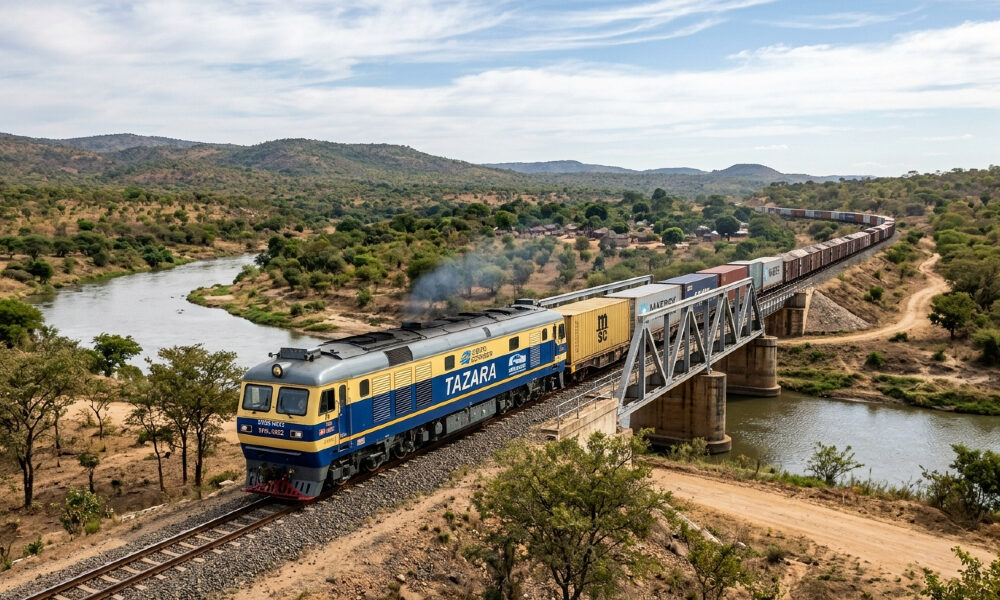
Tanzania and Angola have agreed to explore a rail connection linking the Indian and Atlantic oceans through Zambia and the Democratic Republic of Congo. The plan would join Angola’s Benguela railway to the Tanzania-Zambia Railway Authority (TAZARA) line, tying the Lobito Corridor on the Atlantic to the port of Dar es Salaam on the Indian Ocean. If realized, it would be far more than an engineering feat. It could rewire how minerals, fuel, manufactured goods and farm produce move across a landmass the size of Western Europe, much of it still badly served by trade routes that run, inefficiently, in the wrong directions.
A Closer Corridor Than It Appears
The grand vision rests on a more immediate project. The 830-kilometer (516-mile) Zambia-Lobito railway is edging toward implementation. The Africa Finance Corporation (AFC) has selected preferred bidders for the Zambian and Angolan sections, and contract negotiations are expected to begin this month.
Edging is the operative word. Construction has not started. Engineering, procurement and construction (EPC) agreements remain to be signed, and the financing must still be finalized. Anyone who has watched African infrastructure announcements knows the distance between a preferred bidder and a working railway can be long, and littered with abandoned plans.
Two Powers, One Opportunity
The geopolitical backdrop sharpens the stakes. China is backing the modernization of TAZARA, the line it originally built in the 1970s. The United States and the European Union are behind the Lobito Corridor. Outside capitals tend to read these as rival projects, pieces in a contest for influence over the continent’s critical minerals.
Zambia need not accept that framing. A country that sits between two competing corridors, and between two competing sources of capital, holds a rare bargaining position. The sensible strategy is not to choose a side but to make itself indispensable to both: the junction where Atlantic-bound and Indian Ocean-bound trade meet. Neutrality, properly exploited, is leverage.
Geography Is Not Strategy
Here the argument turns uncomfortable. Location alone creates no prosperity. Plenty of countries have sat astride valuable routes and collected little but dust and diesel fumes. The toll-takers, warehouse owners, engineers and processors who capture the value are rarely the ones who happened to own the territory.
For Zambia, the checklist is mundane, which is exactly why it is easy to neglect:
- Competitive border posts that clear cargo in hours rather than days.
- Harmonized customs systems that work with those of neighboring states, not against them.
- Reliable rail infrastructure, maintained after the ribbon-cutting rather than only before it.
- Efficient logistics and predictable cross-border regulations, so investors can price risk.
None of this is glamorous. All of it determines whether a train that crosses Zambia stops long enough to leave money behind.
Who Supplies the Corridor?
A railway is also a procurement event. Someone will supply aggregates, haulage, catering, security and construction support. Someone will finance the fleets and heavy machinery that contractors and subcontractors need. And someone will build the processing plants, warehouses and light industry that cluster around rail nodes, in places such as Chingola and across the Copperbelt, turning transit cargo into value-added products.
Whether that someone is Zambian depends on timing. Procurement decisions are made before the first sleeper is laid. Firms that are not organized, financed and prequalified by the time contracts are awarded will find themselves subcontracting at the margins, or not at all. The window for local content is not when the trains start running. It is now, while contract negotiations are still ahead.
Credibility Isn’t Transformation
The macroeconomic picture is improving. Moody’s recently upgraded Zambia’s sovereign rating from Caa2 to Caa1 with a positive outlook, a sign of progress on debt sustainability. Significant risks remain, and Caa1 is still deep in speculative territory. But better credibility lowers the cost of capital and strengthens the investment case for the corridor.
It is a mistake, however, to treat improved ratings and improved connectivity as a guarantee of local transformation. Both can coexist with an economy that merely hosts other people’s profits. Credibility opens doors; domestic capability determines who walks through them.
Connecting Markets, Not Oceans
The deeper prize is regional economic integration. A railway links two coasts, but only policy and enterprise can link the markets, investors and opportunities between them. That means a government willing to harmonize rules with its neighbors, a financial sector willing to back local contractors, and a business community willing to organize before the bids close.
The trains will come, or they will not. Zambia’s task is to decide in advance what it wants them to leave behind. A country that prepares can become the logistics, manufacturing and trade hub of the region. A country that does not will merely supply the geography.
The real measure of this project will not be tonnage or kilometers of track. It will be the value Zambia keeps.
Martin Mpukani is a serial entrepreneur and the Founder & CEO of The Business Place Network, as well as the founder of AfriLeap Capital, a hybrid early-stage venture pipeline builder and impact finance partner focused on informal and climate ventures across Africa. He is dedicated to supporting entrepreneurs in low-income communities, empowering young people with limited opportunities, and driving scalable ventures that foster economic growth and social impact.