A Diaspora View of Africa
Will Africans Help Choose the Next Reserve Currency


By Gregory Simpkins
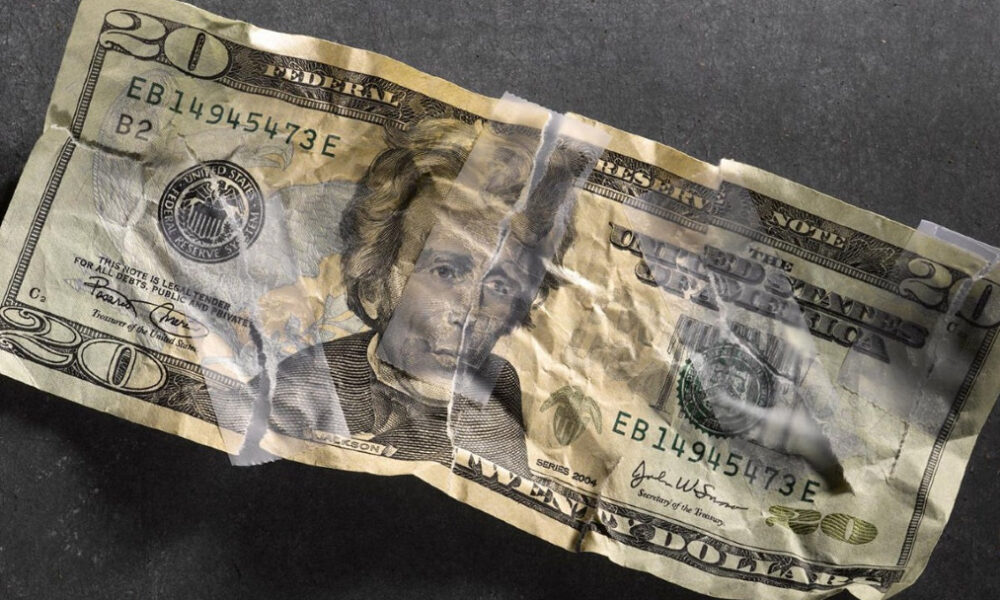
There has been significant discussion over the past year about replacing the U.S. dollar as the world’s reserve currency. The dollar has held that distinction since the Bretton Woods conference following World War II that established the current global financial system. As the accepted main victor of that conflict and the world’s strongest economy, the United States was able to overcome the initial effort to create a reserve currency not tied to any one government.
Early on, the gross domestic product (GDP) of the United States was 50 percent of global GDP. That is no longer the case, even though the U.S. economy is still dominant. All five initial member states of the BRICS coalition (Brazil, Russia, India, China and South Africa) are members of the G20, with a combined nominal GDP of US$28 trillion (about 27 percent of the gross world product), a total GDP PPP (gross domestic product based on purchasing power parity) of about US$57 trillion (33 percent of global GDP PPP).
As of January 1 2024, BRICS is joined by Egypt, Ethiopia, Iran, Saudi Arabia and the United Arab Emirates. Many other countries have requested admittance to the BRICS coalition as well, which of course will increase the group’s GDP.
According to the financial website Investopedia, there are four key points to achieve understanding what a reserve currency is and what it does:
- A reserve currency is a large amount of currency held by central banks and major financial institutions to use for international transactions.
- A reserve currency reduces exchange rate risk since there’s no need for a country to exchange its currency for the reserve currency to do trade.
- A reserve currency helps facilitate global transactions, including investments and international debt obligations.
- A large percentage of commodities are priced in the reserve currency, causing countries to hold this currency to pay for these goods.
- Most countries try to maintain currency reserves to import goods, manage exchange rates, pay international debts, or make international transactions or investments.
This last point is where African nations factor in.
African nations, the largest regional bloc in the United Nations and other international institutions, will likely play a critical role in either making this happen or preventing it from taking place.
Reasons for the De-dollarization effort
A dollar shortage occurs when a country spends more U.S. dollars on imports or other international dollar obligations than it receives on exports or dollars from other international financial transactions. Since the dollar is used to price many goods globally and is used in many international trade transactions, a dollar shortage can limit a country’s ability to grow or trade effectively.
Although most countries try to maintain currency reserves to import goods, manage exchange rates, pay international debts, or make international transactions or investments, that hasn’t happened for some African nations.
For example, experts in Nigeria blamed a national dollar shortage for certain economic problems. In September 2022, the value of the Nigerian naira declined against the U.S. dollar. According to reports, demand for the dollar increased, pushing the national currency’s value down.
This is seen as being caused by a shortfall in dollar reserves. Nigerian drugmaker Fidson Healthcare Plc., blamed the dollar shortage for the high cost of raw materials needed to manufacture by the country’s pharmaceutical industry. Bloomberg reported that companies like Fidson import virtually all of their raw materials. But because of the dollar shortage, the company could only access roughly “30 percent of its foreign currency requirements from the central bank” to fulfill its orders.
In another situation, a shortage of dollars in Sudan caused that nation’s currency to weaken between late 2017 and early 2018. The situation resulted in rapidly climbing prices. Bread prices doubled in a week, causing protests and riots in a country whose economy was already subject to disruption caused in part by new economic reform measures.
At the start of 2019, the situation had not improved, with the Sudanese pound falling to record lows as people were willing to spend more and more Sudanese pounds in order to buy the more stable dollar. This certainly contributed to the discontent in Sudan that led to the two coups in a two-year period.
Read: De-dollarization and Africa
This dollar shortage crisis has affected even stable African countries. Kenya’s crippling dollar shortage has driven away investors, turning a once-booming stock market into one of the worst in the world. Nairobi’s All-Share Index plunged 19 percent in 2023, the steepest drop among the almost 100 global indexes tracked by Bloomberg. The nation faced a foreign-exchange crunch, with major companies and investment firms facing weeks of delay to repatriate dividends and capital gains.
Kenya, the second-biggest economy in East Africa, has struggled with soaring food and energy prices that have strained government finances and caused the currency to crater. Central bank reserves dwindled to the lowest in 11 years, forcing importers to scramble for dollars.
Dollar shortages also can occur when one or more countries imposes economic sanctions on another. In an August 24 2023 article on OilPrice.com, the Biden administration was predicted to yield possible long-term consequences for using the dollar as a tool for punishment and could accelerate de-dollarization globally and even threaten the dollar’s role as the world’s reserve currency.
“The US really depends on the dollar as the reserve currency. But what we did with those sanctions – we gave the world a powerful reason not to want to be a part of that system anymore because we demonstrated the downside, the risk that you take in holding dollars and being part of this dollar payment system. We gave everybody another reason, as if they needed more, to de-dollarize.”
“So, that whole process has been sped up. The last thing we should have done was punish Russia for doing exactly what we wanted them to do. We wanted Russia to hold dollars because that benefits us. That keeps our prices down. That keeps our interest rates down. And then we punished Russia for doing exactly what we wanted them to do. Now, what kind of message are we sending to the rest of the world?”
Indeed, the sanctions imposed on Russia for its invasion of Ukraine stimulated the current effort to replace the dollar as the world’s reserve currency. Numerous African nations that depended on Russia for certain commodities were hurt by the primary and secondary sanctions involved, especially since there appeared to be no plan to mitigate its impact on developing countries.
Moreover, seven African countries have been suspended from the African Growth and Opportunity Act (AGOA) in the past two years, limiting their access to the American market and negatively affecting those countries’ ability to achieve sustainable economic growth. The suspended countries are: Central African Republic, Ethiopia, Gabon, Guinea, Mali, Niger and Uganda.
They are joined as countries currently ineligible for AGOA benefits by Burundi, Cameroon, Equatorial Guinea, Eritrea, Mauritania, Seychelles (graduated from the Generalized System of Preferences), Somalia, South Sudan, Sudan and Zimbabwe.
The Gold Standard
In August 1971, the United States unilaterally terminated convertibility of the US dollar to gold, effectively ending the Bretton Woods system, except for institutions such as the World Bank and International Monetary Fund. Many nations nonetheless hold substantial gold reserves.
In an August 29 2023 interview in Kitco News, Patrick Barron on behalf of The Mises Institute – an institution promoting teaching and research in the Austrian school of economics and in the tradition of noted economist, historian, logician and sociologist Ludwig von Mises, argues that even with the end of Bretton Woods in 1971, gold has never actually been proven inferior to fiat.
According to von Mises:
The gold standard was not replaced by a better monetary system. It was suppressed in stages to satisfy the state’s insatiable need for money – first to make war and then to corrupt the people via welfare. The result, of course, has been never-ending wars, a creeping expansion of the welfare state, unsustainable public deficits, and the accelerating debasement of the currency.
Globally, central banks, led by China, Russia and Turkey among others, reported net purchases of 55 tons in July 2023, according to the latest data compiled by the World Gold Council. In March, April and May of 2023, central banks reported net gold sales, primarily due to Turkey selling 160 tons of gold over that three-month period. According to the World Gold Council, this was a specific response to local market dynamics and didn’t likely reflect a change in the Turkish central bank’s long-term gold strategy.
Will the BRICS coalition be able to create a gold-backed money instrument to surpass the dollar as the world’s new reserve currency? That will be a tall task, but U.S. economic and political policymakers must be cognizant of the impact of their words and actions on the international community.
African nations, the largest regional bloc in the United Nations and other international institutions, will likely play a critical role in either making this happen or preventing it from taking place. They are not bystanders and must decide what is in their best interest, using the incredible leverage they possess.
Gregory Simpkins, a longtime specialist in African policy development, is the Principal of 21st Century Solutions. He consults with organizations on African policy issues generally, especially in relating to the U.S. Government. He further acts as a consultant to the African Merchants Association, where he advises the Association in its efforts to stimulate an increase in trade between several hundred African Diaspora small and medium enterprises and their African partners.