Owusu on Africa
Why Southern Africa Must Act Before Instability Spreads


By Fidel Amakye Owusu
Southern Africa stands apart. While military coups have swept across West and Central Africa with alarming regularity, the Southern African Development Community (SADC) has maintained a remarkable record of civilian governance.
This achievement – forged in a region once synonymous with minority rule and Cold War proxy wars – now faces its sternest test in decades.
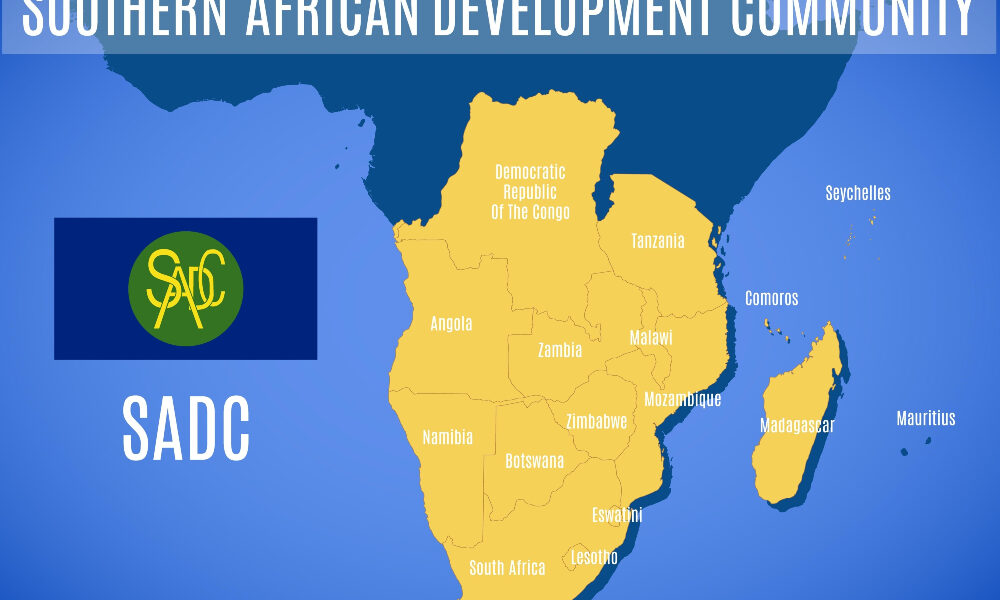
The numbers tell a compelling story. The SADC boasts the highest concentration of coup-free states on the continent since the Cold War’s end: South Africa, Namibia, Botswana, Eswatini, Mauritius, Tanzania, Malawi, Angola, and Mozambique have all resisted the military takeovers that have plagued other African regions.
This stability has enabled infrastructure development that, while incomplete, outpaces much of the continent. Yet regional leaders understand that stability, once lost, proves devilishly difficult to reclaim.
Early Warnings from a Fragile Periphery
Madagascar’s current political turbulence serves as a clarion call. SADC leaders recognize they cannot afford to wait for coup plotters to consolidate regional support before responding – a lesson painfully learned by West Africa’s Economic Community of West African States.
The region’s experience with the HIV epidemic in the 1980s and 1990s, which became the dominant security threat of that era, demonstrated that early intervention matters.
Once a diagnosis is made, treatment must begin immediately.
The vulnerabilities are real and multiplying. Socioeconomic challenges – inequality, unemployment, corruption – create openings that power-hungry military factions can exploit.
Recent political dynamics in Comoros, Tanzania, and Mozambique raise troubling questions about the durability of civilian rule. While Zambia, Malawi, Botswana, and Namibia have demonstrated that peaceful democratic transitions remain possible, these positive examples cannot obscure emerging threats.
The Burden of Regional Leadership
What Southern Africa needs now is leadership – not merely rhetorical commitment to democratic norms, but active stewardship from the region’s economic powerhouses. South Africa, Angola, and other influential states must create a gravitational pull strong enough to keep wavering nations in democratic orbit while checking those tempted to backslide.
This demands uncomfortable peer accountability, collective responsibility, and the willingness to confront allies when they stray from agreed principles.
The Democratic Republic of Congo (DR Congo) presents SADC’s most acute dilemma. Since joining in 1998, the DR Congo – sharing borders with three SADC members and representing the bloc’s largest state by both territory and population – has lurched from crisis to crisis. Previous intervention efforts have stumbled badly, yet the security catastrophe unfolding there cannot be ignored.
Instability in the DR Congo radiates outward, threatening regional cohesion and economic integration.
A Narrow Window for Collective Action
SADC faces a choice. It can act decisively to shore up democratic institutions, address the legitimate grievances that fuel instability, and demonstrate that regional solidarity means more than summit declarations.
Or it can watch passively as the coup contagion that has infected West Africa spreads southward, unraveling decades of hard-won progress.
The region’s track record suggests it understands what’s at stake. Whether it possesses the political will to defend its achievements remains the open question – one that will define Southern Africa’s trajectory for generations to come.
Fidel Amakye Owusu is an International Relations and Security Analyst. He is an Associate at the Conflict Research Consortium for Africa and has previously hosted an International Affairs program with the Ghana Broadcasting Corporation (GBC). He is passionate about Diplomacy and realizing Africa’s global potential and how the continent should be viewed as part of the global collective.