Owusu on Africa
Why Somalia Should Be Africa’s Responsibility


By Fidel Amakye Owusu
In an undergraduate political science seminar years ago, we studied a hierarchy that divided nations into categories: superpowers, great powers, strong states, weak states, and failed states. This framework, developed during the height of the global war on terror, proved essential for understanding Washington’s counterterrorism doctrine in the Middle East and beyond.
American security planners fixated particularly on “weak states” – many concentrated across Africa – which they perceived as incubators for terrorist organizations that might eventually threaten Western interests. Afghanistan before 2001 served as the canonical warning.
Yet one classification proved especially contentious: the “failed state,” representing the absolute nadir of governmental collapse. Somalia invariably emerged as the textbook example.
This designation sparked fierce academic debate. My research revealed substantial disagreement about whether the Horn of Africa nation truly belonged at the bottom of this taxonomy, though one fact remained indisputable: no other African country faced circumstances quite as dire.
From Exile to Fragile Governance
Years have passed since those classroom discussions, and Somalia’s trajectory has shifted markedly.
An exiled government has returned to establish control over Mogadishu and several major urban centers. While conditions remain precarious, they represent a significant improvement over the chaos of previous decades.
Yet Somalia remains far from stable, and the continent ignores this reality at its peril. Three compelling factors demand Africa’s sustained attention and proactive engagement.
The Geography of Instability
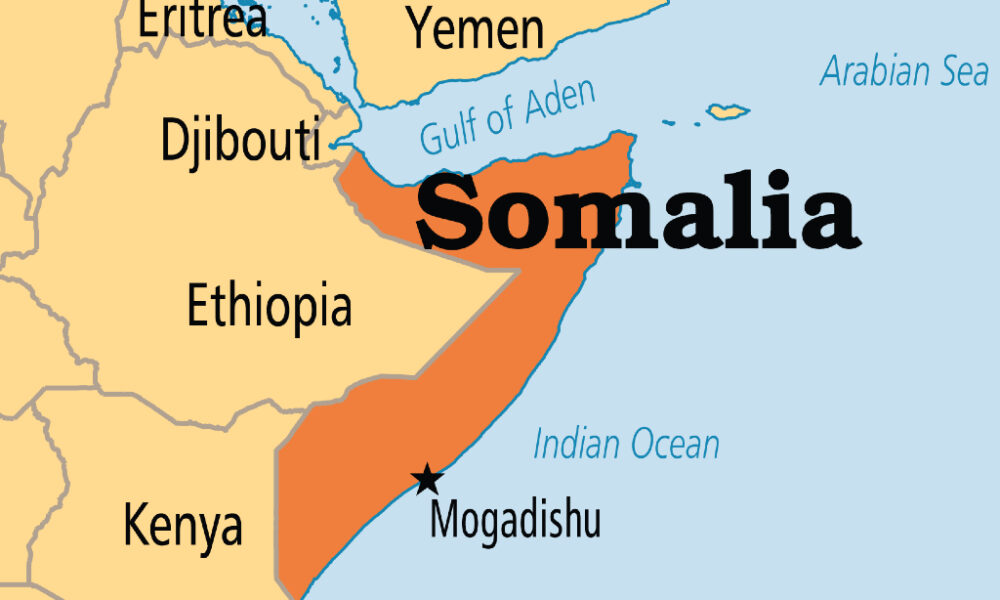
Somalia occupies strategically sensitive territory, sharing borders with Kenya, Ethiopia, and Djibouti – three nations of considerable regional importance. Unlike Africa’s six island states, Somalia’s instability cannot be naturally contained by geography.
Terrorist activities have spilled across borders, affecting Kenya, Ethiopia, and even Uganda. Kenya and Ethiopia rank among Africa’s seven largest economies, making Somalia’s insecurity an immediate threat to regional economic stability and growth prospects.
The Contagion of Extremism
Al-Shabaab’s operational model has metastasized across the continent despite – or perhaps because of – its al-Qaeda affiliation. The group’s historical control over vast Somali territory demonstrated to other extremist organizations that territorial dominance remained achievable in the 21st century.
Mozambique’s insurgency reportedly received direct inspiration and tactical training from Somali militants, illustrating how instability in the Horn of Africa radiates outward with devastating consequences.
The Danger of External Interference
Security vacuums attract opportunistic external actors, and Somalia proves no exception. The country’s protracted crisis, compounded by secessionist movements, has invited uncomfortable foreign entanglement with potentially severe ramifications for regional sovereignty and continental unity.
Israel’s recent recognition of Somaliland and escalating tensions between Ethiopia and Somalia over maritime access exemplify how external powers exploit Somalia’s weakness to advance their own strategic interests, often at Africa’s expense.
Africa Must Lead
These interconnected challenges transcend Somalia’s borders, touching multiple regions and ultimately the entire continent. They demand that the African Union and regional economic communities assume leadership rather than ceding initiative to external interests pursuing agendas misaligned with African priorities.
The moment for action has arrived. Somalia’s stability – or continued instability – will shape Africa’s security architecture, economic prospects, and geopolitical independence for decades to come.
African institutions possess both the proximity and the stakes to address this crisis effectively, but only if they act with urgency and unity. The question is no longer whether Africa should take responsibility for Somalia’s future, but whether it can afford not to.
Fidel Amakye Owusu is an International Relations and Security Analyst. He is an Associate at the Conflict Research Consortium for Africa and has previously hosted an International Affairs program with the Ghana Broadcasting Corporation (GBC). He is passionate about Diplomacy and realizing Africa’s global potential and how the continent should be viewed as part of the global collective.