Business
Why Sending Money to Africa Remains Surprisingly Expensive


By Mark-Anthony Johnson
Did you know that seven out of the 15 most expensive countries for sending remittances are in Africa? For millions of workers sending money home to support their families, every dollar matters.
Yet, the total cost of cross-border payments – commonly known as remittances – can be surprisingly high.
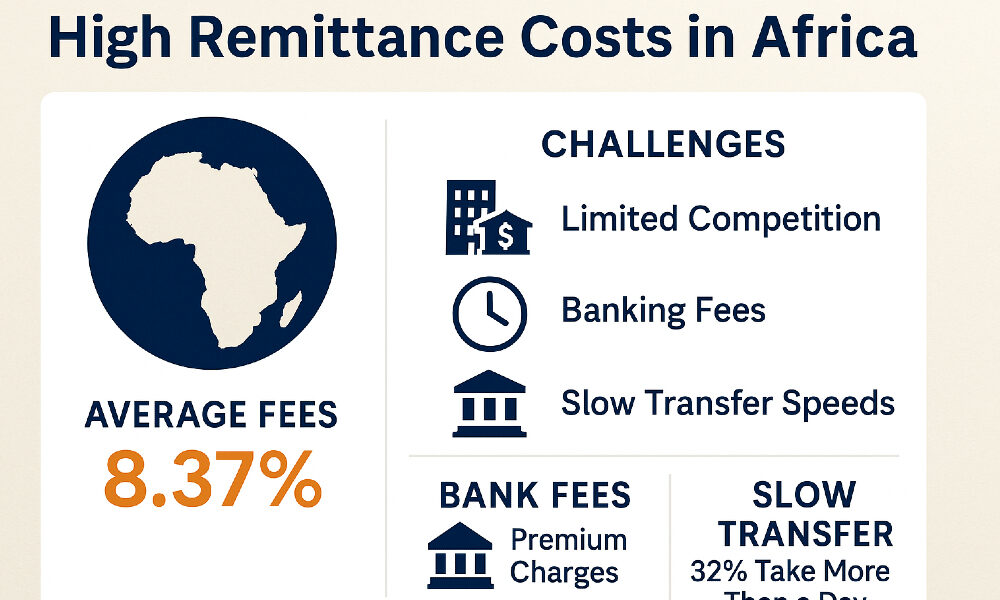
Remittance fees to sub-Saharan Africa remain significantly above the global average. According to the World Bank, in 2024, the average cost of sending money to the region was 8.37 percent – well above the global average of 6.62 percent.
It also outpaces other regions like South Asia, where average costs stood at just 5.53 percent during the same period.
In Tanzania, the situation is even more striking. The country has the highest average total cost – at US$115 – sometimes consuming over half of the transferred amount.
This exorbitant fee is partly due to a market dominated by a small number of large banks, which limits competition and drives up prices.
High remittance costs across various countries often stem from a combination of factors: limited service provider competition, outdated payment systems, low access to formal banking, and the difficulty of comparing pricing between providers.
Even in highly developed financial markets such as Switzerland or Japan, sending money abroad can cost more than 7 percent of the transfer value.
Beyond cost, speed is another issue. Globally, 32 percent of remittances take more than a day to reach their intended recipients – delaying critical financial support for families in need.
Key Insights on Remittance Costs in Africa
- Persistent High Costs:
Sub-Saharan Africa continues to bear some of the highest remittance fees in the world. - Underlying Challenges:
Factors such as limited market competition, regulatory hurdles, weak financial infrastructure, and volatile exchange rates all contribute to inflated costs. - Global Goal – 3 percent by 2030:
As part of the United Nations’ Sustainable Development Goals, the international community has committed to reducing remittance costs to 3 percent by 2030. - Banks Aren’t Always Best:
Traditional banks often charge premium fees, making them one of the more expensive channels for sending money across borders. - Digital Innovation Offers Hope:
Fintechs and digital platforms are increasingly helping to lower fees and improve efficiency—but much work remains to fully unlock their potential. - Real-World Impact:
Excessive fees don’t just affect individual families – they also limit the broader economic benefits that remittances could bring to local communities and national economies.
Mark-Anthony Johnson is the founder and CEO of JIC Holdings, a global asset and investment management firm founded in 2009. With over 30 years of experience and strong ties to Africa, his investments span mining, infrastructure, power, shipping, commodities, agriculture, and fisheries. He is currently focused on developing farms across Africa, aiming to position the continent as the world’s breadbasket.