Opinion
Why Retail Capital in East Africa May Be Collapsing
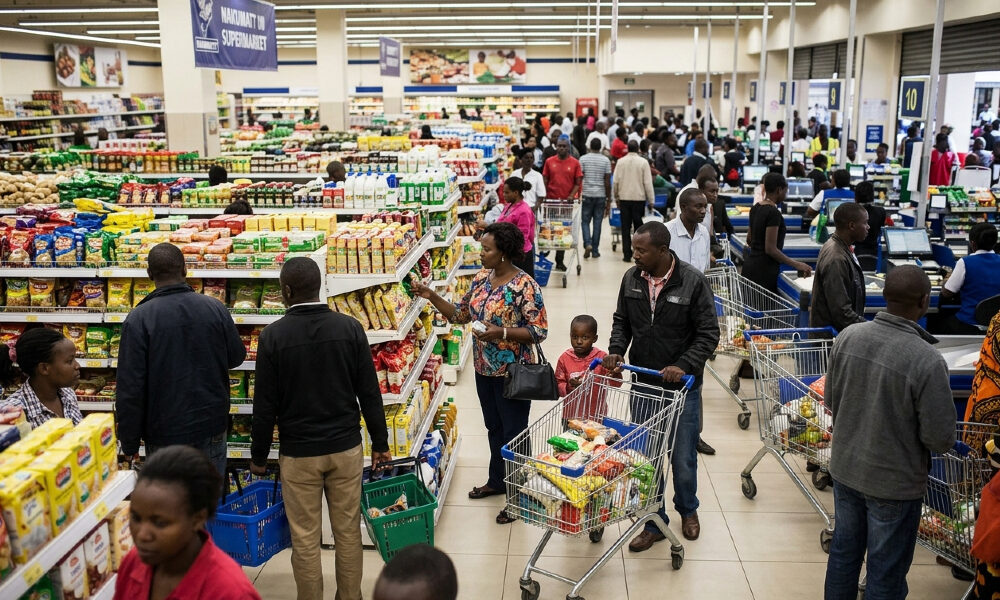
In Uganda and Kenya, the shops are full and the tills are busy. The merchants behind them are quietly running out of road.


By Farouk Mark Mukiibi
Retail in East Africa, particularly in Uganda and Kenya, is passing through what might be called a false retail prosperity. There are more malls, more supermarkets, more brands and more choice. Beneath the glossy surface, the economics are weakening. Retail activity is expanding while retail capital concentrates, and the merchant middle is eroding.
Motion Is Not Capital
Retail capital is not shops, footfall or turnover. It is trade’s ability to reproduce itself: to sell today and have enough left over to restock tomorrow, to turn margin into working capital, working capital into scale, and scale into distribution networks, brands and institutions.
Turnover measures motion. Capital measures what survives the motion. A shop can sell more and accumulate less. A chain can expand and destroy capital. A mall can be full while the balance sheets behind its lights grow weaker.
The Merchant Middle Is Being Squeezed
The trouble runs deeper than inflation, soft demand or one difficult year. The old economics of the merchant are being rewritten. The mid-sized trader is losing the advantages that once justified his place in the supply chain, while rent, inventory costs and financing obligations stay stubbornly fixed.
Nor is this simply a story of foreign retailers against local ones. Retail capital is not disappearing; it is concentrating. From a distance, concentration looks exactly like prosperity: gleaming flagship stores, expanding chains, rising sales. Up close, fewer firms are capturing the surplus, and fewer still are building anything with it.
The Winner’s Paradox
Even the big players should be nervous. A large retailer operating inside a weakening commercial ecosystem has not necessarily inherited a stronger market. If suppliers falter, merchants stop accumulating and household incomes thin out, the winner may end up with more market share but less market.
That is the paradox. Retail capital does not collapse only when people stop buying. It collapses when trade stops producing enough surplus to reproduce itself.
When Profit Stops Funding Growth
What follows is strange. The shop stays open, the shelves stay full and the tills stay busy. But the merchant has begun consuming capital rather than accumulating it. Yesterday’s profit once financed tomorrow’s growth. Now tomorrow’s revenue merely patches yesterday’s hole.
From Retail Problem to Capital-Formation Problem
Once trade stops creating tomorrow’s wholesalers, distributors, chains, manufacturers and owners, the problem is no longer retail. It is capital formation. An economy can grow richer in transactions while growing poorer in owners, with more commerce, more consumption and more modern retail, but fewer places where commerce turns into capital.
That is perhaps what a false retail prosperity looks like: the marketplace gets busier while the ladder up quietly disappears.
Farouk Mark Mukiibi is the author of The African Startups Playbook and creator of the Minimum Viable Relationships (MVR) business framework. He is also a marketing consultant based in Uganda, East Africa, where he helps international brands and ventures navigate the realities of East Africa’s evolving middle class and consumer economies.