A Diaspora View of Africa
Why Move Palestinians to East Africa?


By Gregory Simpkins
The United States and Israel have floated the idea of moving Palestinians from Gaza to East Africa so that peace will allow for rebuilding in that war-torn area. This involves the legally dubious movement of a problematic population to a difficult region of Africa – a situation fraught with potentially catastrophic circumstances.
Palestinian Arabs and Jews have had a troubled relationship since the first Jewish settlers returned to Palestine in 1898. Remember, Palestine was never a self-governing region run by Palestinians; it was an area where Arabs and Jews lived together, although not necessarily harmoniously.
In 1948, at the dawn of the State of Israel, thousands of Palestinian Arabs became refugees in neighboring countries such as Jordan. However, the creation of the Palestine Liberation Organization (PLO) initiated a campaign of terror operations to oppose Israel and establish a separate Palestinian entity.
Increasing dedication to this campaign has made Palestinians a problem for Jordan and other countries.
Luisa Gandolfo – senior lecturer at the University of Aberdeen and author of Palestinians in Jordan: the Politics of Identity – recalls that after the West Bank was lost in a conflict with Israel in 1967, another 300,000 displaced Palestinians entered Jordan, most of whom were already refugees. Palestinians flocked to the guerrilla fedayeen movement.
In 1970, fearing the collapse of his authority, Jordan’s King Hussein sent his troops against strongholds of the Syrian-backed guerrilla movement, principally in Amman and Irbid. Palestinians were ruthlessly suppressed and suspected militants expelled.
It has left a permanent scar on relations. An estimated 60 per cent of Jordanians are of Palestinian origin, but their relations with the Jordanian government remains difficult to say the least.
In 1974, the PLO was recognized as sole legitimate representative of the Palestinian people, and King Hussein immediately reduced Palestinian participation in the administration of the state. Pressure on Palestinians to choose between two identities has always been a problem, but it intensified during the first intifada (the rebellion to end the Israeli takeover of the West Bank) when Jordan relinquished its formal ties with the area in 1988.
Gandolfo argues that society in the Jordan divides along lines of ethnic and nationalist loyalty, between Jordanians and Palestinians, while domestic politics become increasingly fractious with the growth of Islamist groups that have gained grassroots appeal, especially in the refugee camps. Palestinians in Jordan look through the kaleidoscope of Palestinian-Jordanian identities that accommodate a complex and overlapping web of different religious affiliations, mixed socio-economic conditions and the experience of exile reconciled with daily life in Jordan.
At the same time, identities of these communities continue to be rooted in an attachment to the concept of an Arab Palestine, and the unifying force of the struggle against Zionism.
Palestinian Refugees in Syria and Egypt
Most of the Palestinians who have been residing in Syria came there after they were displaced from their homeland during the 1948 Palestinian expulsion and flight. Palestinians hold most of the same rights as the Syrian population, but cannot become Syrian nationals except in rare cases.
In 2011, there were 526,744 registered Palestinian refugees in Syria. Due to the Syrian Civil War, the number of registered refugees has since dropped to about 450,000 due to many Palestinians fleeing to Lebanon, Jordan or elsewhere in the region to escaping to Europe as refugees, especially to Germany and Sweden.
Syria already has its hands full with the terrorist group Hezbollah.
As for Egypt, more than 100,000 Palestinians have fled there to escape the horrors of the Gaza war since October 7, 2023. Displaced Palestinians in Egypt are in a precarious situation, unable to return to Gaza or legally integrate into Egyptian society. They face legal limbo without refugee or residency status, making access to education, healthcare, banking, and employment extremely difficult
The Gaza Conflict and Regional Instability
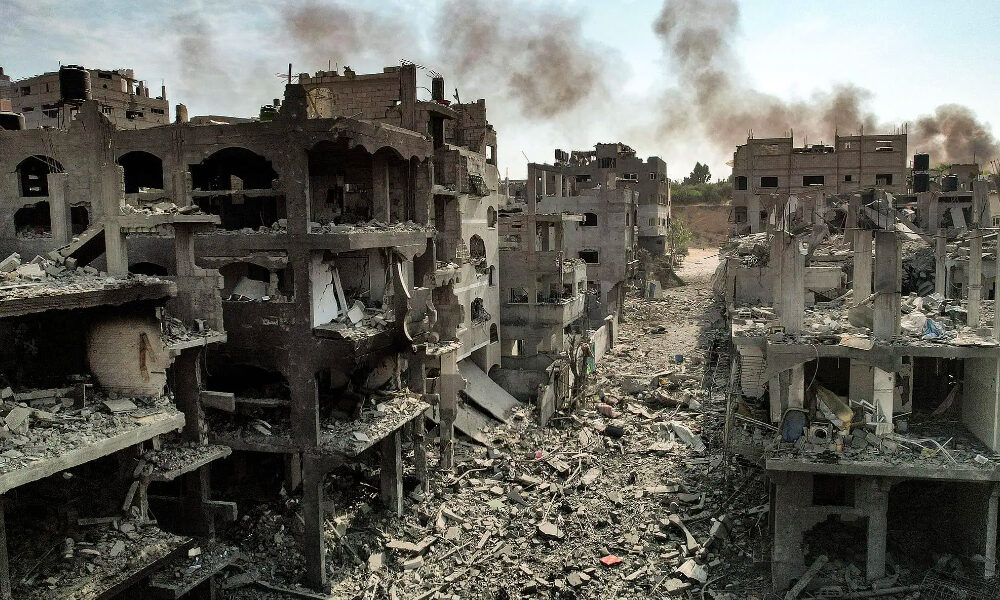
Hamas, a Palestinian armed group and political movement in the Gaza Strip, on October 7 2023 attacked Israel, killing about 1,200 people and taking more than 250 hostages. This triggered a massive Israeli military offensive in Gaza, which has killed tens of thousands of Palestinians, which many consider a decidedly disproportionate response, but Israel’s intent is to end the Hamas threat once and for all.
Hamas, which the US, UK, Israel and many other nations have designated as a terrorist organization despite being in nominal control of the Gaza government, continued to fire rockets into Israel long after the October 7 attack. In January 2025, Israel and Hamas agreed a deal to halt the war and release Israeli hostages and Palestinian prisoners, but the slow release of Israeli and international hostages has provoked Israel to resume its assault on Gaza despite that ceasefire.
It would be an understatement to say that Palestinian enmity toward Israel has hardened since its brutal response to the 2023 attack. Needless to say, none of these neighboring countries would be interested in taking on more Palestinians from conflict-ridden Gaza given the potential of their territories being used as a staging ground for attacks on Israel.
One can see how that has worked out for Syria and Lebanon.
Thus, the proposal to relocate Gazan Palestinians, however legally and logistically problematic, is rooted in the interest of not further burdening these neighbors with a radicalized population remaining in the region. Nevertheless, moving a population with increased resentments to a faraway area already plagued by Islamist extremist groups such as al-Shabaab and al Qaeda in the Arabian Peninsula, as well as existing ethnic antipathies seems like a poorly thought-out policy.
The reported ceasefire between Rwanda and the Democratic Republic of the Congo notwithstanding, the Great Lakes region remains volatile. At one point, there were dozens of militias fighting against both countries.
One hopes that any peace accord between the two East African neighbors could succeed, but past efforts have not endured, and the longstanding ethnic discord is highly unlikely to be ended definitively anytime soon. Furthermore, the government of Burundi previously has accused Rwanda of supporting anti-government rebels in their country.
The conflict in Sudan has spilled over into its neighbors, and has created one of the major humanitarian crises globally. Efforts to end the fighting have been frustrated by conflicting international support for the warring parties, and no end currently is in sight.
South Sudan continues to experience conflict as the ostensible leaders of the two main political and military elements – led by President Salva Kiir and Vice President Riek Machar – cannot resolve their issues or control militia that constitute their supposed military forces. It has been demonstrated repeatedly that neither leader has full control of these elements so fighting can and has been triggered even when the two leaders are in the same location discussing governance.
Ethiopian Prime Minister Abiy Ahmed won the Nobel Peace Prize in 2019 for his stunning rapprochement with neighboring Eritrea, but now the two nations, allies during the 2020-2022 Ethiopian conflict in the Tigray region, are at odds again. The peace deal signed in November 2022 drove a wedge between Ethiopia and Eritrea, which was not party to the negotiations.
The Tigray People’s Liberation Front (TPLF) which runs Tigray’s post-war interim administration with the blessing of the federal government, has since split.
A dissident TPLF faction seized the town of Adigrat recently, accusing those in power of selling out Tigrayan interests, while the interim administration accuses the dissidents of collaborating with Eritrea.
Somalia seems to be gaining respect as a nation working with the international community, but concern over Ethiopia’s attempt to conclude a port deal in return for recognition for a Somaliland region desiring independence has led to a Somali effort to gather allies to confront Ethiopia unless it completely abandoned its port effort.
So, what drove the Trump administration to support moving an increasingly resentful Palestinian population to a volatile region of Africa? This has all the earmarks of a disaster in waiting. It will be daunting enough to tie up all the political fires in East Africa without this added element.
This proposed plan may not work anyway as it is unlikely that the Middle Eastern countries would support it, but at least three East African countries have been approached about agreeing to the plan. The very idea of pushing such a solution to the Gaza conflict bespeaks either an ignorance of the situation in East Africa or a willful intent to address one problem without taking into account other crises that already have shown themselves.
Either way, one hopes this proposal will be dropped before any further attempt at implementation.
Gregory Simpkins, a longtime specialist in African policy development, is the Principal of 21st Century Solutions. He consults with organizations on African policy issues generally, especially in relating to the U.S. Government. He further acts as a consultant to the African Merchants Association, where he advises the Association in its efforts to stimulate an increase in trade between several hundred African Diaspora small and medium enterprises and their African partners.