A Diaspora View of Africa
Why Has the African Diaspora Abandoned Troubled Haiti?


By Gregory Simpkins
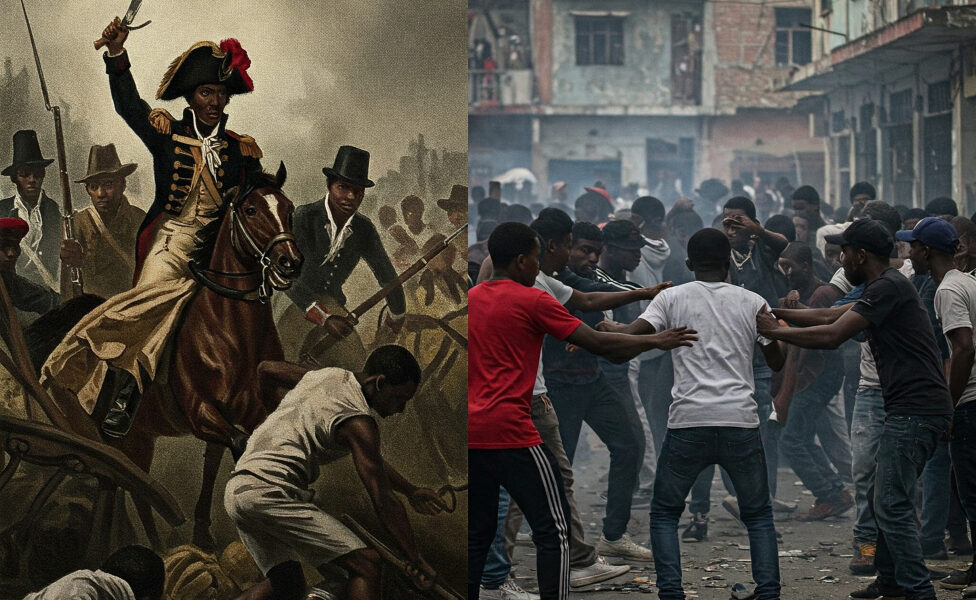
When the French colony of St. Domingue achieved its independence as Haiti on January 1 1804, following a 13-year revolution to topple French colonization, it sent a shocking message to colonizing countries worldwide. It became clear that African people could and would fight for their freedom from foreign rule.
The world’s first black republic was only the second country in the Western Hemisphere to achieve independence after the United States.
For blacks in the United States, it offered a light at the end of a very long tunnel that freedom was possible, although it came so early on that such a national revolt in America was not possible. It did demonstrate that white supremacy was not invincible, but slave owners made too much money to allow a violent overthrow of their economic establishment.
There had been several slave revolts under colonial America before independence – from the Gloucester County Conspiracy in 1663 to the Pointe Coupée Conspiracy in 1795. During the Haitian rebellion, there were the Gabriel’s conspiracy in 1800) and the Igbo Landing slave escape and mass suicide in 1803.
Slave Resistance and Limitations in the United States
Following Haitian independence, in the Chatham Manor revolt in January 1805, the estate’s slaves overpowered and whipped their overseer and assistants in a minor slave rebellion. An armed posse of white men quickly gathered, killed one slave in the attack, and two more died trying to escape capture.
Two other slaves were deported, likely to the Caribbean or Louisiana. However, the 13 colonies were not favorable to a mass revolt as the total area was much larger than Haiti, and the states operated somewhat independently and each handled slavery differently.
In his book The Black Republic: African Americans and the Fate of Haiti (2019), author Brandon Byrd provided alternative perspectives of Haiti through the eyes of African Americans who saw Haiti as a symbol of Black freedom and equality. Byrd focused on the decades after the U.S. Civil War when race relations in the United States shifted drastically.
Will black American and other Diaspora leaders take up the mission of saving Haiti before its possible collapse becomes reality?
By centering this time period, his book offered two primary contributions to historical scholarship. First, it shed further light on what he considered the “nadir” of African American history (particularly the decade of 1880s) and filled a gap in the literature on African American-Haitian relations.
Second, Byrd’s book demonstrated how African Americans linked domestic and global issues through their visions of Haiti and social activism.
Early Haitian Refugees and U.S. Reactions
By advocating for Haiti, African Americans defended their own belonging to the United States while participating in what Byrd described as radical Black internationalism. He argued that African Americans’ radical internationalism developed during this earlier period before the twentieth century interwar years when Haiti remained at the center of African Americans’ intellectual production and activism.
We are familiar with issues involved in Haitian refugees in recent decades, but refugees from Haiti are a phenomenon more than 200 years old. In 1793, as competing factions battled for control of the then-capital of St. Domingue, Cap-Français (now Cap-Haïtien.), the fighting and ensuing fire destroyed much of the capital, and refugees piled into ships anchored in the harbor.
The French navy deposited the refugees in Norfolk, Virginia. Many refugees also settled in Baltimore, Maryland; Philadelphia, Pennsylvania, and New York.
Unlike the recent refugees, these early refugees from what was then St. Domingue were predominantly white, though many had brought their slaves with them. The refugees reportedly became involved in émigré politics, hoping to influence U.S. foreign policy.
Anxieties about their actions, along with those of European radicals also residing in the United States, led to the passage of the Alien and Sedition Acts. The growing xenophobia, along with temporarily improved political stability in France and St. Domingue, convinced many of the refugees to return home.
Thus, Haiti has been a US issue from the early days of the republic – before and after Haitian independence.
Haiti’s Modern Crisis and the Role of the Diaspora
World magazine reported on April 24 that Haiti is coming perilously close to collapse as a nation after unrest that began in 2018. Haiti’s government is completely unable to counter gang rule, United Nations Haiti chief María Isabel Salvador told the UN Security Council on April 21.
Gangs in the last three months reportedly overran several areas of the capital city, Port-au-Prince, that were previously untouched – including the city’s downtown and the wealthy Petion-Ville suburb. Gangs also increased violent attacks in other areas of the country, most recently seizing the central Haiti town of Mirebalais and releasing over 500 inmates from its prison, Salvador said.
Additionally, gangs recently increased assaults on the Kenscoff settlement, the only route out of Port-au-Prince that’s not fully under gang control, Salvador said. Armed assailants ambushed and killed three Haitian soldiers on the route and wounded six more, the newspaper reported on April 21.
Haiti’s National Police and armed forces were unable to stop the escalating violence, despite support from the Multinational Security Support Mission, Salvador said. The mission is an international security force that includes Kenyan, Jamaican, Belizean, and Bahamian troops, according to the U.S. Mission to the United Nations.
Approximately 60,000 Haitians were forcibly displaced in the past two months, adding to one million already displaced by the end of last year, she said.
Salvador urged UN member states to increase funding to UN agencies in Haiti and especially to the Multinational Security Support Mission. The force was meant to have 2,500 troops in Haiti, but hadn’t reached that goal in February due to funding gaps, The Haitian Times reported on February 28.
The United States as of January had flown civilian personnel and non-lethal equipment including vehicles into Haiti 180 times to support the mission, according to the U.S. Southern Command. The flights and equipment are part of the roughly US$300 million the United States pledged to the mission, though President Donald Trump temporarily froze more than US$13 million as part of a pause on foreign aid, according to The Haitian Times.
It remains unclear at this point whether the frozen funds have been restored.
The United States has had a tumultuous history with Haiti over the life of its independence – maintaining trade relations, refusing to recognize the government for more than 60 years, providing humanitarian and development assistance, sending the first black US ambassador (Frederick Douglass) but engaging in military occupation from 1915-1934. Because of this mixed legacy, the US government chose to encourage Kenya and other international actors to send police and peacekeepers to deal with the growing chaos.
Hundreds of years after the Haitian revolution, its leader, Toussaint L’Ouverture, remains a hero in this country. However, Haiti’s fortunes don’t seem to rise to the level of the crisis it is in Haiti.
Will black American and other Diaspora leaders take up the mission of saving Haiti before its possible collapse becomes reality?
Haiti demonstrated the light of freedom to enslaved black people in the United States. Will we or won’t we provide the much-needed lifeline to this historic country in its hour of desperate need?
Gregory Simpkins, a longtime specialist in African policy development, is the Principal of 21st Century Solutions. He consults with organizations on African policy issues generally, especially in relating to the U.S. Government. He further acts as a consultant to the African Merchants Association, where he advises the Association in its efforts to stimulate an increase in trade between several hundred African Diaspora small and medium enterprises and their African partners.