Owusu on Africa
Why ECOWAS functions go beyond its name
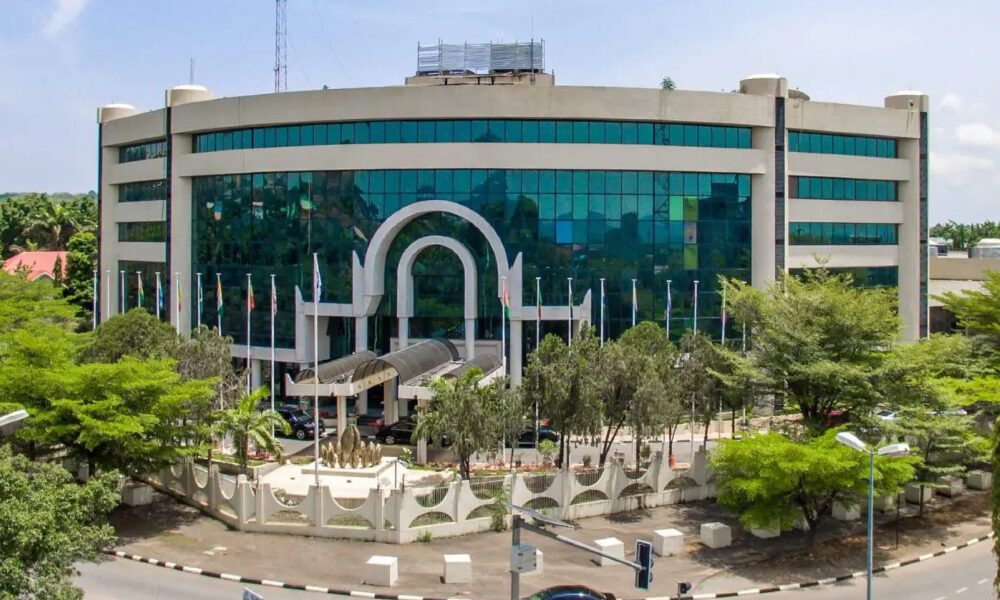


By Fidel Amakye Owusu
During the last United Nations General Assembly session, the Guinean leader emphasized that the Economic Community of West African States (ECOWAS) should focus on economic integration. He argued that the bloc’s primary purpose is to facilitate trade and economic integration among its members, suggesting that the regional organization should refrain from interfering in the political matters of member states.
Given that Colonel Mamady Doumbouya led a successful coup and is facing both internal and external pressure to return the country to civilian rule, his comments were anticipated.
But what does this mean?
While Doumbouya’s remarks aimed to justify his rule, they also highlighted how the recent spate of coups undermines the progress ECOWAS has made over the years.
Why is this significant?
When ECOWAS was formed in the mid-1970s, nearly all regional leaders were either military rulers or authoritarian figures resistant to relinquishing power. Leaders like General Yakubu Gowon of Nigeria, General Ignatius Acheampong of Ghana, and Félix Houphouët-Boigny of Côte d’Ivoire (Ivory Coast) exemplify this era.
At that time, non-interference was a core principle of ECOWAS. While non-interference is a common tenet in international relations, West African leaders particularly valued it to safeguard their authority, aligning with the bloc’s economic integration mission.
However, the situation evolved with the Liberian Civil War in the late 1980s, prompting ECOWAS to reassess its stance on non-interference. The regional bloc recognized that strict adherence to this principle could lead to widespread chaos.
Consequently, ECOWAS decided to intervene militarily in Liberia, despite objections from some Francophone states with vested interests in the conflict. Led by Nigeria and Ghana, this intervention helped stabilize the crisis until peace was achieved in the early 2000s. ECOWAS played a similar role in Sierra Leone and intervened in The Gambia in 2017 to prevent post-election turmoil.
The end of the Cold War also influenced ECOWAS’s political orientation. The dissolution of global ideological rivalry, which had previously empowered authoritarian rulers, spurred a shift towards democratic governance in the region. Many military rulers enacted new constitutions, and democratic principles became enshrined in ECOWAS protocols.
Colonel Doumbouya’s call for ECOWAS to return to its 1975 focus on economic integration, ignoring political interference, is therefore seen as a step backward rather than progress.
Fidel Amakye Owusu is an International Relations and Security Analyst. He is an Associate at the Conflict Research Consortium for Africa and has previously hosted an International Affairs program with the Ghana Broadcasting Corporation (GBC). He is passionate about Diplomacy and realizing Africa’s global potential and how the continent should be viewed as part of the global collective.