Opinion
Why China Is Deeply Invested in Africa – And What It Means for the Global Order


By Davida Ademuyiwa
Africa is no longer on the periphery of global geopolitics. Over the past two decades, it has emerged as a pivotal arena for strategic competition – and few actors have capitalized on this shift more effectively than China.
China’s engagement with Africa is neither impulsive nor charitable. It is a deliberate, long-term strategy rooted in economic necessity, geopolitical ambition, and technological expansion.
From the bustling ports of Mombasa to the copper mines of the Democratic Republic of Congo (DR Congo), Chinese influence is visible, tangible, and growing.
So why does Africa matter so deeply to China? The answer lies in six interconnected pillars:
1. Securing Critical Natural Resources
Africa is a treasure trove of raw materials essential to China’s industrial and technological dominance. The continent holds vast reserves of cobalt, lithium, copper, rare earth elements, gold, bauxite, and oil – all indispensable for manufacturing, electric vehicles, renewable energy systems, and advanced electronics.
With over 70 percent of the world’s cobalt coming from the DR Congo and Africa accounting for a significant share of global manganese and platinum supplies, China’s resource diplomacy ensures supply chain security in an era of intensifying U.S.-China rivalry.
2. Infrastructure as a Tool of Influence
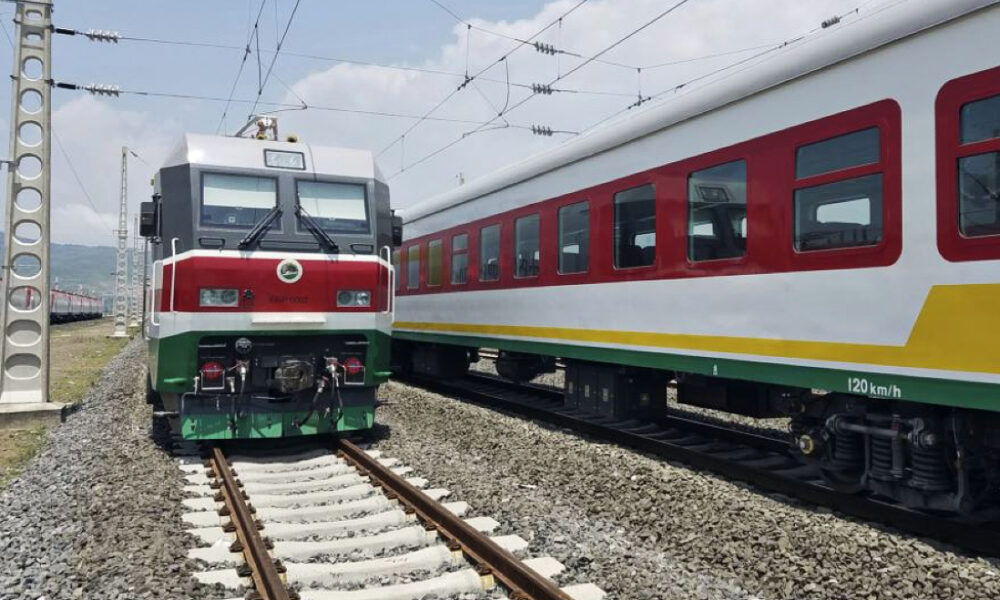
Through the Belt and Road Initiative (BRI), launched in 2013, China has become Africa’s largest infrastructure financier and builder. From the Addis Ababa-Djibouti Railway to the Lagos-Calabar Coastal Highway, Chinese state-backed firms have constructed roads, railways, ports, and power plants across more than 30 African countries.
This “infrastructure diplomacy” does more than boost connectivity – it embeds Chinese companies in Africa’s development trajectory, secures long-term contracts, and establishes Beijing as a preferred partner for large-scale projects often bypassed by Western investors.
3. Expanding Markets for Chinese Exports
Africa’s population is projected to double by 2050, reaching 2.5 billion – with a rising urban middle class hungry for affordable goods. This demographic shift presents a golden opportunity for Chinese exporters.
From smartphones and home appliances to electric vehicles and construction machinery, African consumers are increasingly buying Chinese-made products. In 2023, China-Africa trade reached nearly US$282 billion, making China Africa’s largest bilateral trading partner – a position it has held for 14 consecutive years.
4. Building Political Alliances on the Global Stage
Africa commands 54 votes at the United Nations – a bloc too significant to ignore. China has skillfully leveraged economic partnerships to cultivate diplomatic loyalty, consistently securing African support on sensitive issues such as Taiwan, Hong Kong, and Xinjiang.
By offering development aid without political conditionalities – in contrast to traditional Western donors – Beijing has positioned itself as a respectful alternative, reinforcing a narrative of “South-South cooperation” and multipolar global governance.
5. Profitable Investments and Business Expansion
Beyond aid and loans, Chinese state-owned enterprises (SOEs), banks, and private firms are making substantial equity investments across Africa. Sectors like mining, agriculture, construction, telecommunications, and now renewable energy are seeing a surge in Chinese capital.
Companies like Huawei, ZTE, Transsion, and Sinohydro are not just temporary contractors – they are establishing long-term operations, local supply chains, and employment networks, embedding themselves in African economies.
6. Exporting the Digital Silk Road
China’s ambitions extend beyond bricks and mortar. Through its “Digital Silk Road,” Beijing is exporting surveillance technology, 5G networks, smart city platforms, and digital governance systems to African nations.
While these technologies enhance connectivity and public services, they also raise concerns about data privacy, digital authoritarianism, and dependency on Chinese tech ecosystems. Countries adopting Chinese-built facial recognition systems or AI-driven policing tools may find themselves increasingly aligned with Beijing’s digital governance model.
The Bigger Picture: Reshaping Global Trade and Power
China’s strategy in Africa is not merely about bilateral ties – it’s about reconfiguring the global economic architecture. By integrating African economies into its supply chains, trade networks, and technological standards, China is building a parallel system of influence that challenges Western-dominated institutions.
This isn’t neocolonialism in the traditional sense – there’s no formal empire. But it is economic statecraft at scale: patient, pragmatic, and profoundly strategic.
For African nations, the influx of Chinese investment brings undeniable benefits – jobs, infrastructure, and access to capital. But it also demands careful stewardship.
Over-reliance on Chinese financing risks debt vulnerabilities, while unchecked technology transfers could compromise sovereignty and civil liberties.
The path forward requires African governments to negotiate from strength – demanding transparency, local value addition, environmental sustainability, and technology transfer. Regional bodies like the African Union and initiatives like the African Continental Free Trade Area (AfCFTA) must be leveraged to ensure that engagement with China serves African interests, not just Beijing’s.
A Partnership of Mutual Benefit – If Managed Wisely
China’s deepening involvement in Africa reflects a new era of global power dynamics. It underscores Africa’s rising strategic value – not as a passive recipient of aid, but as a key player in the 21st-century economic order.
The question is no longer why China is invested in Africa, but how Africa will leverage this attention to drive inclusive, sovereign-led development. The continent stands at a crossroads – and the choices made today will shape its trajectory for generations.
Davida Ademuyiwa is a UK politician and founder of DaviGlobal International Trade & Investment. She facilitates cross-border investment and connects capital with scalable ventures across the UK, Europe, the Middle East, and Africa. She also serves as Regional Ambassador for the Conservative Policy Forum in the East of England, contributing to grassroots policy dialogue alongside her work in global trade and investment.