Opinion
Why African Agribusiness Must Trade Hustle for Hard Systems in 2026


By Juwon Akin-Olotu
The year 2025 tested agribusiness leaders across Africa with relentless volatility: devastating floods in northern regions, stubborn inflation eroding margins, and supply chains fracturing under geopolitical pressure.
As the calendar turns, a troubling pattern has emerged in boardrooms and field offices alike. When asked about their strategic priorities, most agricultural executives offer the same weary refrain: “I just want to survive another year.”
This is understandable. It is also insufficient.
Survival represents the lowest possible strategic threshold. When an organization’s entire ambition reduces to “don’t die,” it has already conceded the future to competitors with bolder visions.
Survival strategies rely on luck—and luck, by definition, eventually runs out.
The agribusiness sector stands at an inflection point. Those who merely survive 2026 will find themselves further behind.
Those who recalibrate their strategic vocabulary and operational metrics will position themselves to capture disproportionate value in an increasingly consolidated market.
A New Lexicon for Agricultural Strategy
The language we use shapes the strategies we pursue. Three critical shifts in terminology reflect the deeper transformation required for 2026:
From Resilience to Anti-Fragility. Resilience implies absorbing shocks and recovering to baseline – a defensive posture.
Anti-fragility, by contrast, describes systems that strengthen under stress. An anti-fragile agribusiness doesn’t simply weather a drought; it emerges with enhanced water management capabilities, diversified crop portfolios, and strengthened relationships with input suppliers who proved reliable under pressure.
The distinction matters: resilient organizations aim to return to normal, while anti-fragile ones use disruption as a catalyst for permanent improvement.
From Production to Value Capture. For decades, agricultural success was measured in tonnage – how many metric tons harvested, how much yield per hectare.
Yet this production-centric mindset obscures the fundamental question: What percentage of the final consumer price remains within the agricultural enterprise? A farmer who doubles production but captures only 8 percent of the retail price has merely doubled their exposure to input cost inflation.
Strategic value capture requires integration along the value chain, direct market access, and the bargaining power that comes from scale or differentiation.
From Potential to Bankability. “Africa has enormous agricultural potential” has become the continent’s most repeated – and least useful – economic observation.
Potential means nothing to lenders, investors, or export partners. Bankability does.
A bankable agribusiness demonstrates predictable cash flows, manageable risk profiles, and credible governance structures. It possesses not merely arable land, but clear title to that land, water rights, and environmental compliance documentation.
The gap between potential and bankability represents the difference between a PowerPoint presentation and a funded project.
Why Hard Work Isn’t Enough
The most damaging misconception in 2025 was the belief that sheer effort could overcome structural challenges. Agricultural leaders attempted to “outwork” macroeconomic forces – a fundamentally unwinnable contest.
No amount of personal dedication compensates for 30 percent inflation eroding working capital. No individual’s work ethic reverses shifting precipitation patterns. No management team, however talented, can manually hedge currency risk without proper financial infrastructure.
This is not a counsel of despair. Rather, it is a recognition that competitive advantage in modern agribusiness derives not from effort intensity but from structural capability. The question is not “How hard are you working?” but “What systems have you built?”
The Infrastructure Imperative
Structure – boring, unglamorous infrastructure – separates sustainable enterprises from those dependent on favorable conditions. Structural capability means:
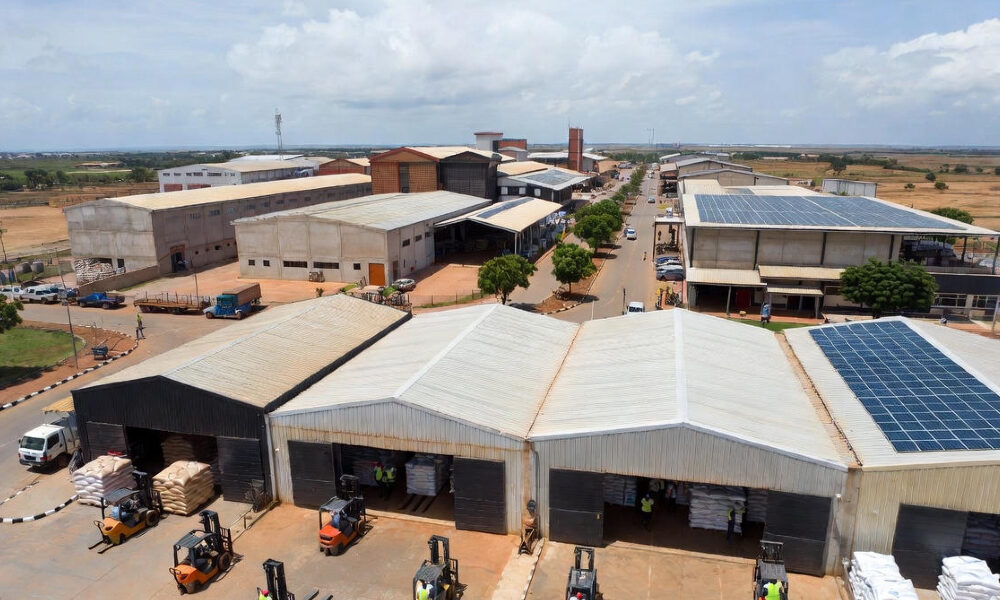
Storage capacity that allows producers to hold grain when prices collapse and sell when markets recover. Without warehousing infrastructure, farmers become price-takers forced to liquidate at harvest when supply peaks and prices crater.
Irrigation systems that decouple production from rainfall variability. Climate change has rendered historical precipitation patterns unreliable; agricultural businesses without water management infrastructure are essentially gambling on weather.
Financial hedging mechanisms that protect against currency volatility. When local currencies depreciate against major trading currencies, exporters with proper hedging structures capture windfalls while unhedged competitors watch their margins evaporate.
Market access infrastructure including logistics capabilities, quality certification, and buyer relationships that allow rapid channel switching when opportunities emerge or markets deteriorate.
These systems require capital investment, technical expertise, and patient implementation. They are decidedly unsexy. They are also non-negotiable for enterprises seeking to thrive rather than merely survive.
The 2026 Strategic Imperative
Agricultural markets reward predictability. Buyers, lenders, and investors allocate capital toward enterprises that deliver consistent performance across variable conditions.
This predictability stems not from fortunate circumstances but from deliberate infrastructure investment.
The agribusiness leaders who flourish in 2026 will be those who reject the survival mindset and embrace a different question: What structural capabilities must we build to make our performance predictable regardless of external volatility?
Africa’s agricultural potential remains vast. Yet potential alone guarantees nothing.
The continent will feed itself – and potentially the world – not through good intentions or heroic individual effort, but through systematic investment in the unglamorous infrastructure that transforms possibility into predictable reality.
The choice is clear: optimize for survival and remain perpetually vulnerable, or optimize for predictability and build enterprises that strengthen with every challenge. The latter path is harder. It is also the only one that leads somewhere worth going.
Juwon Akin-Olotu is the founder and CEO of Forthwith Global Limited, an agribusiness and consultancy advancing sustainable farming and modern agricultural solutions across Africa. A recognized voice in the continent’s agricultural sector, he champions technology adoption, human-capital development, and leadership grounded in service. Akin-Olotu is also a frequent speaker and moderator at international forums, where he addresses sustainable agriculture, agri-technology, and entrepreneurial education.