Opinion
Why Africa Gets Left Behind While Germany Profits from Its Coffee


By Jean Claude Niyomugabo
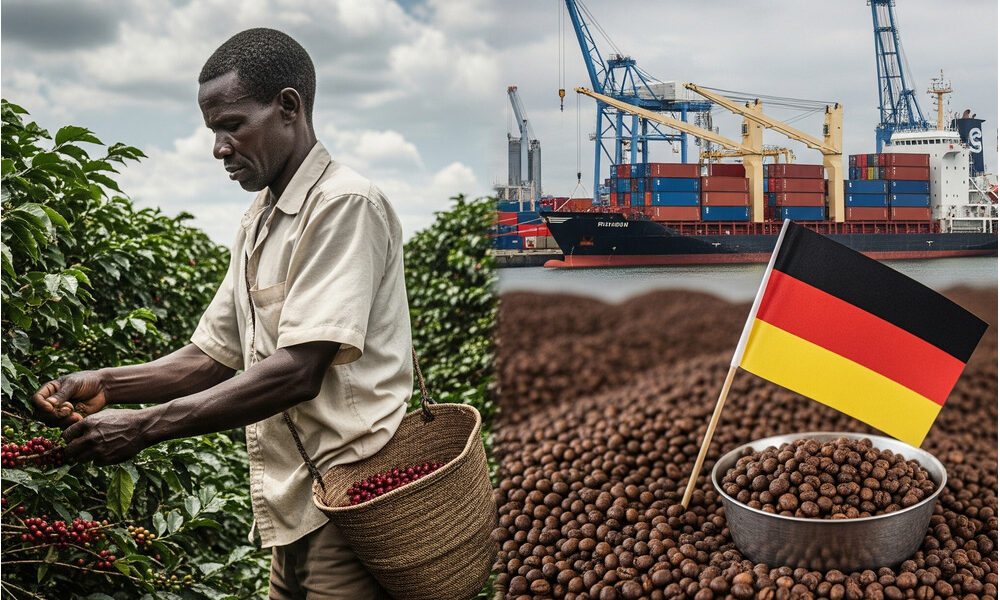
In 2023, Germany earned a staggering US$5.9 billion from coffee exports – a figure that becomes even more striking when compared to Africa’s earnings. The continent widely regarded as the birthplace of coffee brought in just US$3.6 billion from its coffee exports in 2022 – despite being home to some of the world’s top coffee-producing nations.
Countries like Ethiopia and Uganda rank among the top ten global coffee producers. Both have deep-rooted coffee traditions, favorable climates, and the natural resources needed to grow high-quality beans.
Yet, their export revenues pale in comparison to those of a country that doesn’t even grow coffee domestically.
So, how does Germany manage to out-earn the very regions that supply the raw product?
The answer lies in value addition.
Germany imports green (raw) coffee beans from African countries and other producing regions, then processes them through roasting, packaging, branding, and distribution to global markets. This transformation adds significant economic value – and with it, profit margins soar.
Meanwhile, many African nations remain stuck at the beginning of the value chain, exporting largely unprocessed coffee beans. Raw beans command far lower prices than their roasted and packaged counterparts, leaving African producers with only a fraction of the potential revenue.
The Economic Power of Processing and Branding
This imbalance underscores a critical opportunity: Africa must invest in its own coffee processing industries.
Building local roasting and packaging facilities could dramatically increase export earnings while creating jobs and stimulating rural economies. Moreover, developing downstream capabilities would allow African countries to capture more of the global coffee market’s lucrative premium segments.
To make this vision a reality, governments must implement policies that support industrialization within the agricultural sector – particularly in coffee-growing regions. Strategic partnerships between public institutions, private investors, and farming cooperatives can help bridge infrastructure and financing gaps.
Empowering Farmers and Building a Sustainable Future
Equally important is empowering smallholder farmers – who form the backbone of Africa’s coffee production – with access to technology, training, and financial tools. These steps are essential for building a modern, competitive, and sustainable coffee industry.
By focusing on the entire coffee value chain – from cultivation to branding – Africa can finally claim its rightful share of the global coffee economy.
Ethiopia and Uganda, as leading producers, are uniquely positioned to lead this transformation. With bold leadership, strategic investment, and regional cooperation, they can set a powerful example for the rest of the continent.
The time has come for Africa to stop exporting raw beans and start exporting value.
Because when it comes to coffee, the future belongs not just to those who grow it – but to those who know how to add value to it.
Jean Claude Niyomugabo is an entrepreneur and digital communication specialist with a strong passion for Africa’s development. He is dedicated to harnessing the power of social media to drive positive change and enhance livelihoods. With diverse interests and a strategic approach to digital engagement, he strives to create meaningful impact through innovation and connectivity.