Opinion
Why Africa Cannot Ban Its Way to Industrialization
Restricting raw commodity exports will not build factories. Only industrial capacity will.


By John Dale
A quiet consensus has taken hold across African capitals: the continent exports too much value in raw form, and it is time to stop. From cocoa to cashews, governments are drafting export restrictions and local-content mandates meant to force processing onshore. The instinct is understandable. The policy is misguided.
The diagnosis is correct. Africa has spent decades exporting cocoa, cashews, sesame, ginger, and soybeans at the very bottom of the value chain, only to watch other economies process them, brand them, manufacture them, and pocket the difference. Nigeria alone earned more than US$6.1 billion in non-oil export revenue in 2025 – US$1.99 billion from cocoa, US$456.9 million from raw cashew, US$300.3 million from sesame seed. These are not just trade statistics. They are a map of the industries Africa has never built.
But a ban is a blunt instrument aimed at the wrong target. It assumes the problem is that raw commodities are allowed to leave. The real problem is that Africa lacks the capacity to keep them home in any useful form.
The Real Bottleneck Isn’t Trade Policy
Stop a container of raw cashew at the port and ask a simple question: where, exactly, will it go instead? In most cases, the honest answer is nowhere. The processing plants don’t exist. The packaging infrastructure doesn’t exist. The industrial hubs, cold chains, and manufacturing ecosystems that turn raw produce into export-ready goods are, in most African markets, still theoretical.
This is the uncomfortable truth policymakers tend to skip past: production is not the constraint, and global demand is not the constraint. The constraint is industrial capacity – the physical, financed, and technically capable systems required to transform what Africa grows into what the world actually buys. Legislate against raw exports without that capacity in place, and the likely outcome isn’t a factory boom. It’s a pile of unsold commodities and a furious farming sector.
Industrialization does not begin the moment raw exports stop. It begins the moment the capacity to transform them exists. Confusing the two is how well-intentioned policy quietly becomes economic self-harm.
Build the Builders First
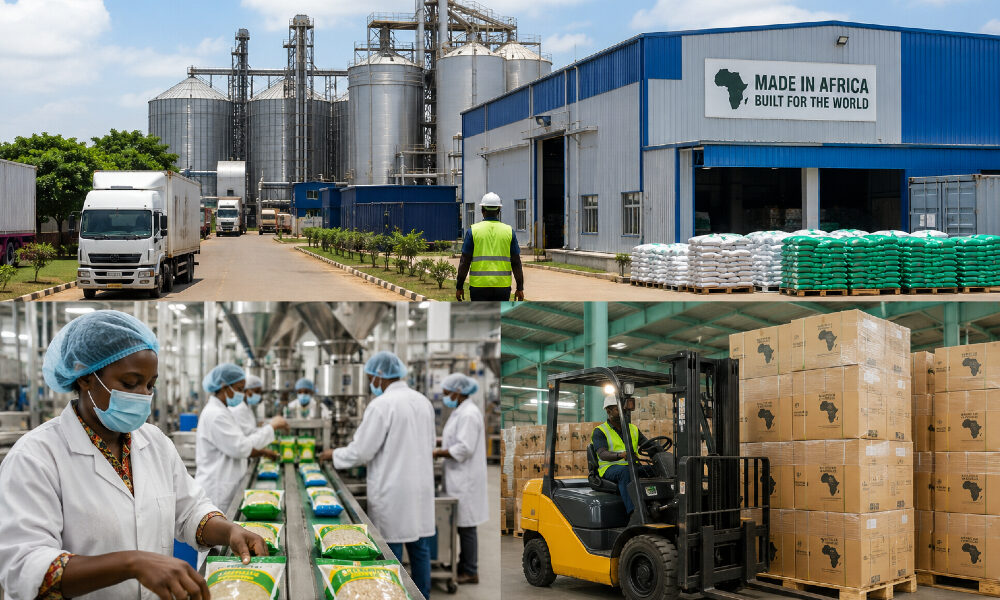
If restriction is the wrong lever, what is the right one? The answer is unglamorous but achievable: Africa needs a generation of intentional builders inside the physical economy – medium-scale enterprises focused on processing, manufacturing, packaging, storage, logistics, and the industrial hubs and incubation centers that support them.
This requires all three actors in the system to actually show up. Governments need to build the enabling environment – power, logistics, trade facilitation, and predictable regulation – rather than legislate outcomes they haven’t equipped anyone to deliver. Investors need to underwrite the builders, treating industrial infrastructure with the same appetite they have shown for software. And entrepreneurs need to build, full stop, because no amount of policy can substitute for a functioning factory.
There is a useful precedent here, and it’s not agricultural. It’s digital. Africa’s tech hubs – from Lagos to Nairobi to Cairo – created a generation of entrepreneurs who built companies around real problems and, in doing so, built an entire ecosystem around themselves. The continent now needs the industrial equivalent: physical economy hubs that incubate the people building processing plants and packaging lines with the same intensity that Silicon Savannah once poured into apps.
Where the Smart Money Is Already Moving
This shift is not merely aspirational; it is already visible to anyone paying attention to capital flows. Investors who once chased purely digital plays are beginning to look toward founders solving physical-economy problems – the processors, the manufacturers, the industrial-systems builders who will actually power Africa’s next growth phase. That is where durable value creation now sits, and it is a signal worth taking seriously.
The pathway to industrialization was never going to run through export bans. It runs through building: building processors, building manufacturers, building industrial ecosystems, building the unglamorous businesses that turn Africa’s raw potential into globally competitive value.
Africa doesn’t need to close its ports to commodities. It needs to open the factories that make closing them unnecessary.
John Dale is an agricultural expert, procurement specialist, and export entrepreneur with 20+ years of experience in Nigeria’s agro-commodity value chain. He has deep expertise in farming, sourcing, storage, and international trade of commodities such as cashew, palm oil, ginger, and cocoa. As Co-Founder of Storgit Ltd., an agro-fintech company, he develops innovative solutions for commodity storage, trading, export, and livestock investment. Passionate about reducing post-harvest losses, strengthening procurement systems, and improving export infrastructure, John is dedicated to building a digital, efficient, and inclusive future for African agriculture.