Opinion
Who Wins, Who Loses? The Iran War’s Hidden Toll on the Caribbean
The conflict in the Gulf is not a distant abstraction. Its economic shockwaves are already lapping at Caribbean shores.


By Ronald Sanders
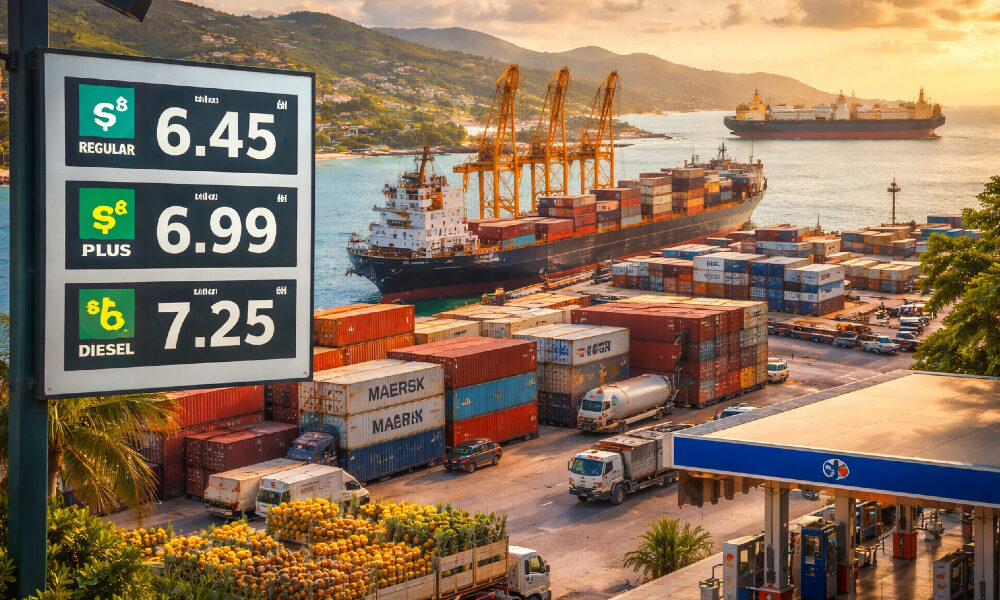
It would be a mistake to dismiss the war in Iran and the retaliatory strikes across the Gulf as too remote to matter to the Caribbean. The fallout is already reaching the region – driving up the cost of fuel, freight, and everyday goods across island economies that can ill afford the strain.
For nations that depend overwhelmingly on imports, this instability translates directly into higher prices, widening fiscal deficits, and deepening vulnerability for those least equipped to absorb external shocks.
The Strait of Hormuz: A Pressure Point for the World Economy
At the center of the crisis sits the Strait of Hormuz, the narrow corridor through which roughly one-fifth of the world’s oil and liquefied natural gas flows. It has become the global economy’s most sensitive pressure point.
War-risk insurance premiums for vessels transiting the strait have surged to as much as 1 percent of a ship’s insured value, up from approximately 0.2 percent just weeks earlier. In some cases, underwriters are declining to provide coverage for Hormuz transits altogether.
The consequences ripple outward immediately. Energy prices respond faster than almost any other market.
On March 3, the global oil benchmark climbed roughly 8 percent, reaching approximately US$84 per barrel. Several analysts now project that Brent crude – the principal international price reference – could reach or exceed US$100 per barrel if hostilities continue.
Higher fuel costs feed directly into electricity generation, public transportation, aviation, and the movement of food and consumer goods. When energy prices rise, the cost of living rises with them – and most sharply for those with the least financial cushion to absorb the blow.
Why the Caribbean Is Especially Exposed
That structural vulnerability is precisely why the Caribbean deserves particular attention in any serious accounting of this conflict’s global costs. The region’s twin dependence on imported energy and imported food transforms a distant military confrontation into a domestic inflation crisis.
The Caribbean imports approximately US$8.5 billion in food annually. Higher freight and fuel costs, compounded by disruption to global fertilizer supplies, translate quickly into higher prices at the checkout.
Oil prices account for roughly 60 percent of regional energy inflation, meaning that households can watch electricity and transportation costs climb in near real time. The war’s effects are not theoretical – they are already being priced into the region’s most basic necessities.
Tourism, the primary source of foreign exchange and employment across many Caribbean states, faces its own mounting risks. Jet fuel surcharges weigh on airlines at the best of times; sustained oil-price spikes work their way through into ticket prices, compressing demand.
The conflict has already triggered the cancellation of at least 11,000 flights to and from Middle Eastern countries, affecting more than one million travelers. Carriers unconnected to the region are not immune: fuel typically constitutes between 15 and 25 percent of a flight’s operating costs.
The chain of effects is not difficult to trace – fewer visitors, higher fares, and tighter margins for hotels, restaurants, taxi operators, and the small businesses that depend on visitor spending.
Acknowledging the Iranian Regime Without Endorsing the War
Regretting the consequences of war does not require silence about the nature of the Iranian government. Ayatollah Ali Khamenei’s rule has long been characterized by systematic repression: the denial of fundamental rights, arbitrary arrest and imprisonment, and the violent suppression of dissent.
Women, in particular, have been subjected to enforced control and state brutality. These realities matter and must be named, because many observers will feel a legitimate and understandable ambivalence – condemning a regime’s cruelty while fearing the wider consequences of escalating military action.
Both positions can, and should, be held simultaneously.
The limits of multilateral institutions are also on stark display. United Nations Secretary-General António Guterres condemned the military escalation, called for an immediate cessation of hostilities, and urged all parties back to the table for diplomatic engagement.
Yet the Security Council remains fractured, incapable of producing a unified response. The institutional architecture designed to prevent exactly this kind of escalation has, once again, proved unequal to the moment.
Counting the Winners and the Losers
So who benefits, and who pays?
Israeli Prime Minister Benjamin Netanyahu has framed the war in explicitly strategic terms. For his government, Iran has long been Israel’s most dangerous adversary and the principal sponsor of regional hostility directed at the Jewish state.
Whether this conflict ultimately diminishes anti-Israeli sentiment or intensifies it remains genuinely uncertain. The United States administration has similarly characterized the operation as a strategic success, pointing in particular to concerns about Iran’s nuclear development program.
Yet even for governments that believe their strategic objectives have been served, the imperative now must be to prevent further escalation, protect civilian life, and pursue diplomacy capable of bringing the confrontation to a durable end.
The losers are considerably more numerous. Global equity markets have faltered, reflecting investor anxiety about inflation, trade disruption, and recession risk.
The most devastating losses, of course, are human – the lives ended on all sides, and among them, inevitably, the innocent. Consumers absorb higher prices for food, shipping, and essentials as elevated oil costs bleed through nearly every sector of economic activity. Governments lose fiscal headroom at precisely the worst moment, pressured to shield households through subsidies or tax relief even as import bills and borrowing costs threaten to widen deficits further.
The winners are a far narrower group. Energy producers and commodity traders often benefit from volatility and price spikes, at least over the short term.
Defense contractors and munitions suppliers rarely suffer in wartime markets. Shipping companies and insurers can extract premium revenues from elevated risk. Ordinary economies – and ordinary people – absorb the costs.
Even within the Caribbean, the distribution of effects is uneven. Guyana stands as a notable outlier: higher oil and LNG prices can lift export revenues and the earnings of licensed producers operating in its waters.
This is a market consequence of the conflict, not an outcome that Georgetown sought or would celebrate. But it is a distinction worth noting in any honest accounting of regional interests.
CARICOM’s Moment to Speak
Amid all of this, the Caribbean Community (CARICOM) has not yet spoken with a single, collective voice. The governments of Antigua & Barbuda, Guyana, and Trinidad & Tobago have each issued separate statements, but the absence of a unified regional position projects hesitation at the very moment when the region’s core interests – energy security, shipping stability, inflation control, and tourism confidence – are directly implicated.
Antigua & Barbuda has individually urged maximum restraint, an immediate de-escalation, and renewed diplomatic engagement under the rule of law. That is precisely the kind of principled, measured stance the Community as a whole should now adopt.
Consensus is admittedly difficult when member states weigh different economic exposures and maintain different bilateral relationships. Some will be reluctant to risk offending major partners.
But the principle at stake is larger than any individual diplomatic calculation. War anywhere undermines peace everywhere, and it punishes most severely those economies that depend on stable commodity prices, open sea lanes, robust tourism flows, and reliable investment conditions.
The appropriate Caribbean response is neither silence nor posturing. It is a clear-eyed, collective defense of de-escalation, the rule of law, and the protection of civilian life.
CARICOM should speak with one voice – not to assign blame, not to grandstand, but to urge restraint, advocate a return to diplomacy, and affirm the international norms that protect small states just as surely as large ones.
This would not constitute an attack on any nation. It would be a call for good sense – in the interest of all humanity, even as the consequences of this war travel, steadily and unmistakably, to Caribbean shores.
Ronald Sanders is Antigua & Barbuda’s Ambassador to the US and the OAS, and the Chancellor of The University of Guyana